
African Fat-Tailed Gecko Care: A Care Sheet and the Order to Read This Site In
Published Oct 28, 2026
Every guide on this site was written from one African fat-tailed gecko, Ohagi, watched every day at our home in Japan since May 2026. This page is the front door. First, the numbers you need to get started, in one table. Then, which guide to read when, in this order: before you bring one home → the first week → the enclosure → food and health → once you've settled in.
One thing up front: this site is a keeper's log, not a textbook. Where a textbook says "the right answer," I say "here's what actually happened at my house." Read the numbers as targets and the stories as one gecko's record, and keep the two apart.
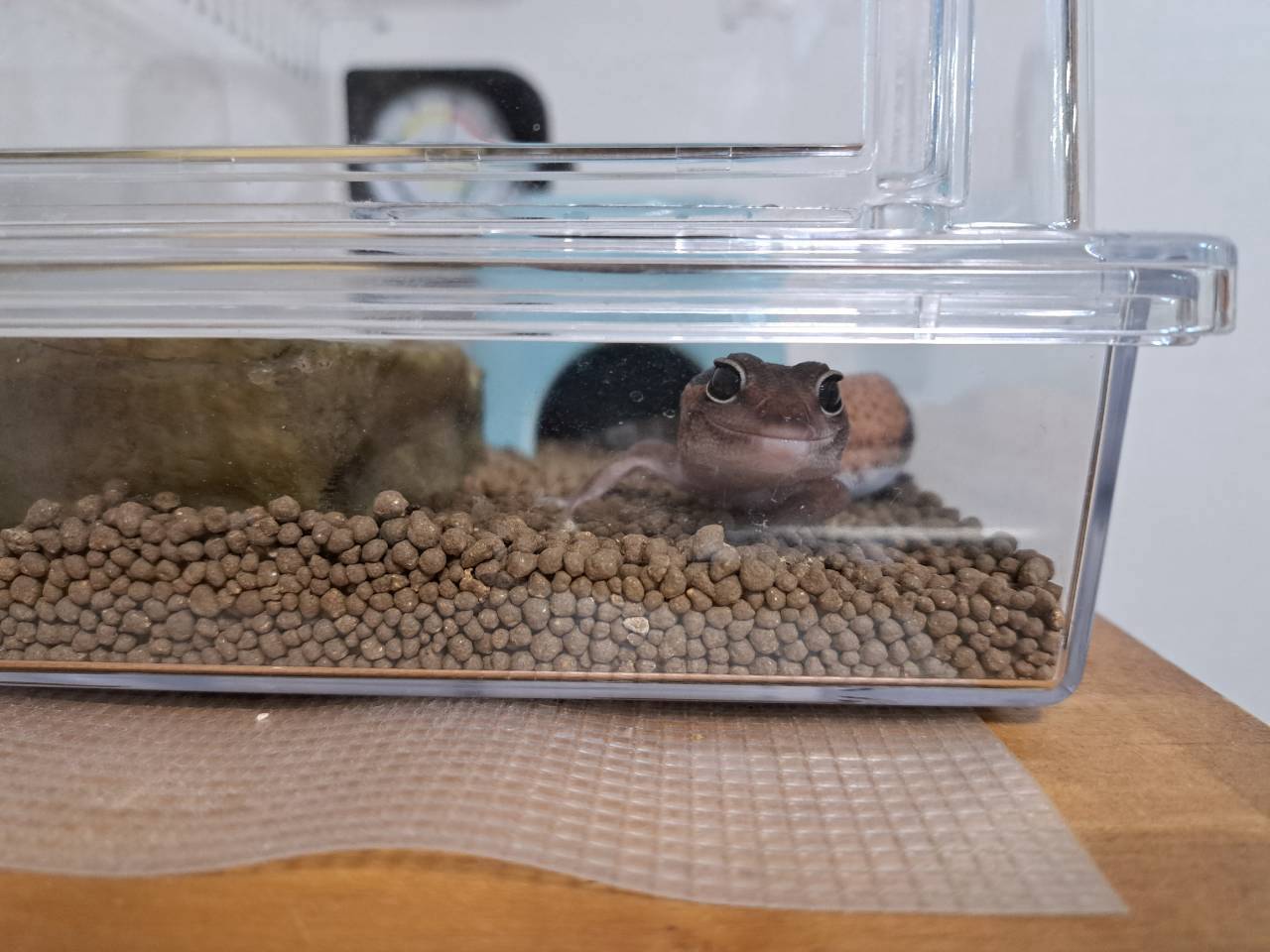
Ohagi. Normal het Oreo, het Zulu, 50% het Ghost, male. Came home in May 2026 at 24.2 g; 35 g four months later
1. The numbers (enough to get started)
| What | Common target | At my house | Full guide |
|---|---|---|---|
| Warm side (floor) | 86–90°F (30–32°C) | Just under 86°F (30°C) on the warm-side wall | Temperature · Heat mat |
| Cool side | 75–79°F (24–26°C) | Not measured (the room sits around 77°F / 25°C in summer) | Temperature |
| Night minimum | Don't drop below 68°F (20°C) | No winter yet | Temperature |
| Humidity | 60–70% (80–90% inside the moist hide) | 60–70%. Mist once a day; skip it on humid days | Humidity · Moist hide |
| Heat source | Under-tank heat mat. No lamp needed | One mat. No thermostat (I still recommend one) | Heat mat · UVB |
| Substrate | A moisture-holding granular soil, or similar | About an inch (2–3 cm) of desert soil | Substrate · Bioactive? |
| Enclosure | 18 × 12 in (45 × 30 cm) is the adult standard | 12 in (30 cm) wide; he'll move up as he grows | Tank size and setup |
| Food | Mostly crickets; calcium plus D3 in moderation | Three large crickets every three days (at 35 g). Tongs or a dish | Diet · Calcium |
| Weight | 50–80 g as an adult | 24.2 g → 35 g in four months | Size and growth |
| Shedding | Every two to three weeks while young | Every two to three weeks. A soak if skin sticks on the toes | Shedding · Stuck shed |
| Housing together | One gecko is the norm | One | Do they get lonely? |
2. Before you bring one home
The guides for deciding whether to keep one, and which one. If you read only these and decide not to, that's a fine outcome too.
- Are they good for beginners? Yes, with conditions. Calm and bite-free, but humidity and temperature need daily attention.
- Fat-tailed gecko vs leopard gecko They look alike, but the humidity needs and temperament are a different story. "Same as a leo" is the most common way this goes wrong.
- Choosing your first gecko Health before morph. I wanted an Oreo, the store had none, and we brought home the gecko my kid fell for. How I feel about it now.
- Keeping a gecko in Japan How the gear and the culture differ from the US and UK. A footnote for every time I say "this is how we do it here."
3. The first week
What to do, and what not to do, in the seven days after he comes home.
- The first week Day one: water only, no food. For the first few weeks, it's normal if he only comes out when food shows up.
- Tank size and setup Four things go inside: soil, a hide, a water dish, a thermometer. The full tour of my enclosure.
- Handling Don't "hold" him; let him climb onto you. The moment he objects, you're done.
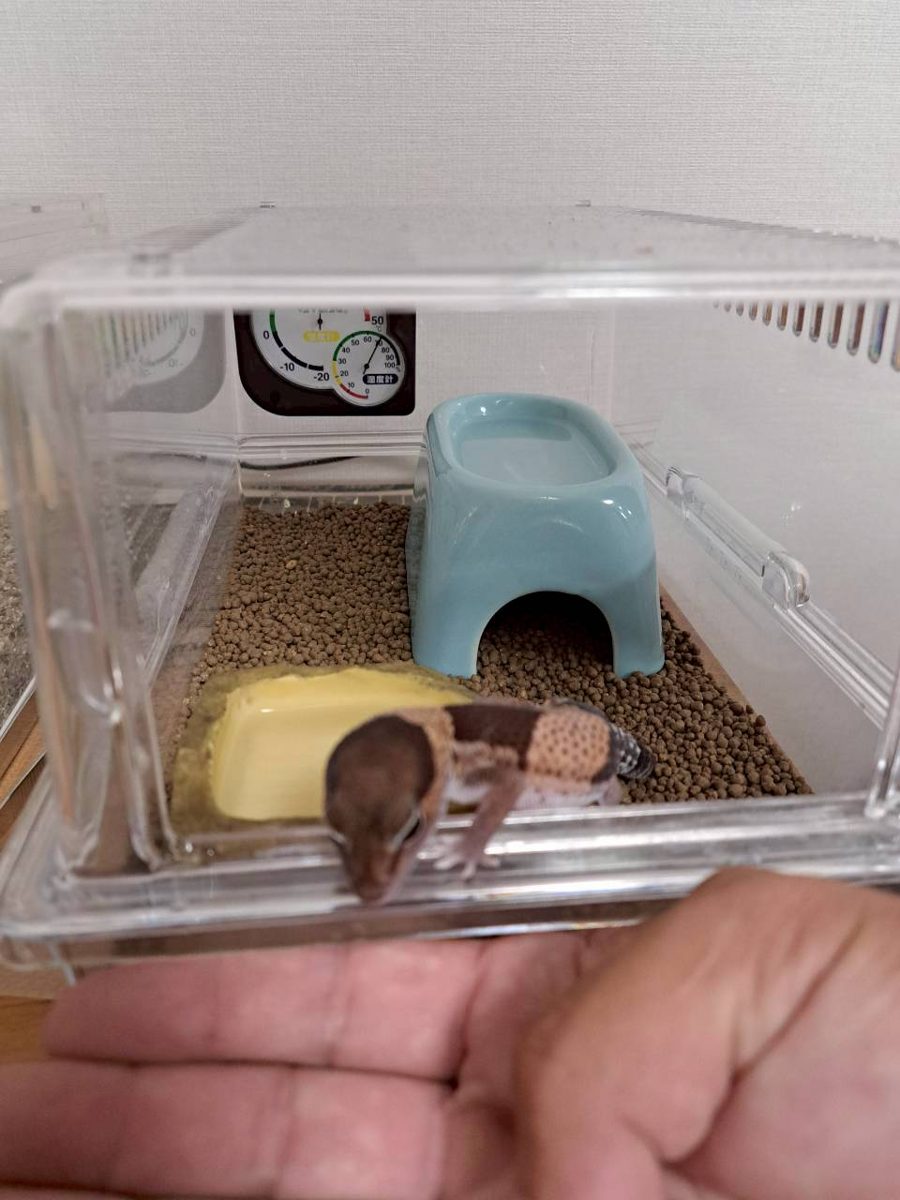
My enclosure. That's all of it. The less there is, the easier he is to watch and the easier it is to clean
4. The enclosure: heat, humidity, floor, size
The foundation. Most problems happen when one of these numbers drifts.
- Temperature The target numbers, and my mistake: running the heat mat by feel until his poop went loose.
- Heat mat or heat lamp? One mat and no lamp from May to September, with a caveat about Japan's climate. No winter yet.
- Humidity Why "same as a leopard gecko" fails. Mist until the walls fog, and no more.
- The moist hide A ceramic hide with a water dish on top. Why mine sits on the warm side.
- Substrate Bark chips, wood pellets, and desert soil, tried in that order. Why soil won.
- Do you need bioactive? Mine lives on plain soil. My honest reasons for skipping it.
- Summer heat The room itself scared me more than the heat mat did. Check the thermometer and forecast first.
- Do they need UVB? Nocturnal, so generally no. Four months without a lamp of any kind.
- Cleaning Five minutes a day, the hide weekly, a deep clean once or twice a month. No disinfectant.
5. Food and health
"Not eating," "thin tail," and "runny poop" usually go away once the enclosure numbers are back where they belong.
- What they eat Crickets, mealworms, gecko diet. My schedule and how I offer it (tongs or a dish).
- Calcium and supplements What, when, how much. I dust in a cup and offer them with tongs.
- Not eating Seven things to check before you panic. My gecko's own hunger strike.
- The tail as a health meter Tail thickness is his savings account. How to read it.
- Poop What healthy looks like, what runny means, when to see a vet.
- Shedding From turning cloudy white to done.
- Stuck shed Getting leftover skin off the toes. Photos of the soak.
- Size and growth Adult size, and Ohagi's weight chart with photos.
- Lifespan 15 to 20 years. What a long-lived animal asks of you.
6. Once you've settled in: behavior, genetics, the log
For when you're a few months in and "what was that?" and "does he know me?" start to come up.
- When do they come out? The hours I actually see mine. Hidden all day is normal.
- Body language Tongue flicking, glass surfing, standing up, sitting on the water dish. Eight behaviors and my read on each.
- Does he know me? "Used to you," not "bonded." Four months of change.
- Do they get lonely? One gecko is fine. If you want two, get two enclosures.
- What "het" means Reading "het Oreo" on a store card. The "pages and copies" way of picturing it.
- Ohagi's log (1) Everything that happened in the first four months.
- What I changed in the first four months Three real mistakes, and what I never changed.
7. Ohagi's first four months, in numbers (as of September 2026)
| What | Record |
|---|---|
| Came home | May 11, 2026. Weighed at home: 24.2 g |
| Weight | 24.2 g → 26 g (July) → 30 g (August) → 35 g (September) |
| Shedding | Every two to three weeks. Skin stuck on the toes once; a soak took care of it |
| Food | Three large crickets every three days. Mealworms as a treat |
| Times bitten | 0 |
| Vet visits | None yet |
| Mistakes | Ran the heat mat by feel / drowned a digital hygrometer while misting / fresh soil straight from the bag sent humidity to 100% |
This site grows as Ohagi does. Once we've been through a winter, there'll be a winter guide; at six months, the log gets its next entry. This table gets a new row at each milestone. If it isn't written here, we haven't lived through it yet.
FAQ
- I only have time for one guide. Which one?
- Temperature. Nearly every problem I've had traces back to it. Then humidity, then not eating.
- I keep a leopard gecko. Can I just do the same thing?
- The big difference is humidity: keep it higher than you would for a leo. Everything else is close, but read the comparison first.
- How much should I trust the numbers on this site?
- The "common target" column is what's widely recommended. The "at my house" column is one gecko over four months and may not transfer to yours. Use both, then go by your own thermometer and hygrometer.
- You use Japanese gear. Does any of this apply outside Japan?
- The names differ; the jobs don't (an under-tank heat mat, a moist hide with a water dish on top, a granular soil). The Japan guide has the equivalents.
• Primary source: my own records for Ohagi, May–September 2026. The "common target" numbers are general husbandry knowledge, collected here from the individual guides
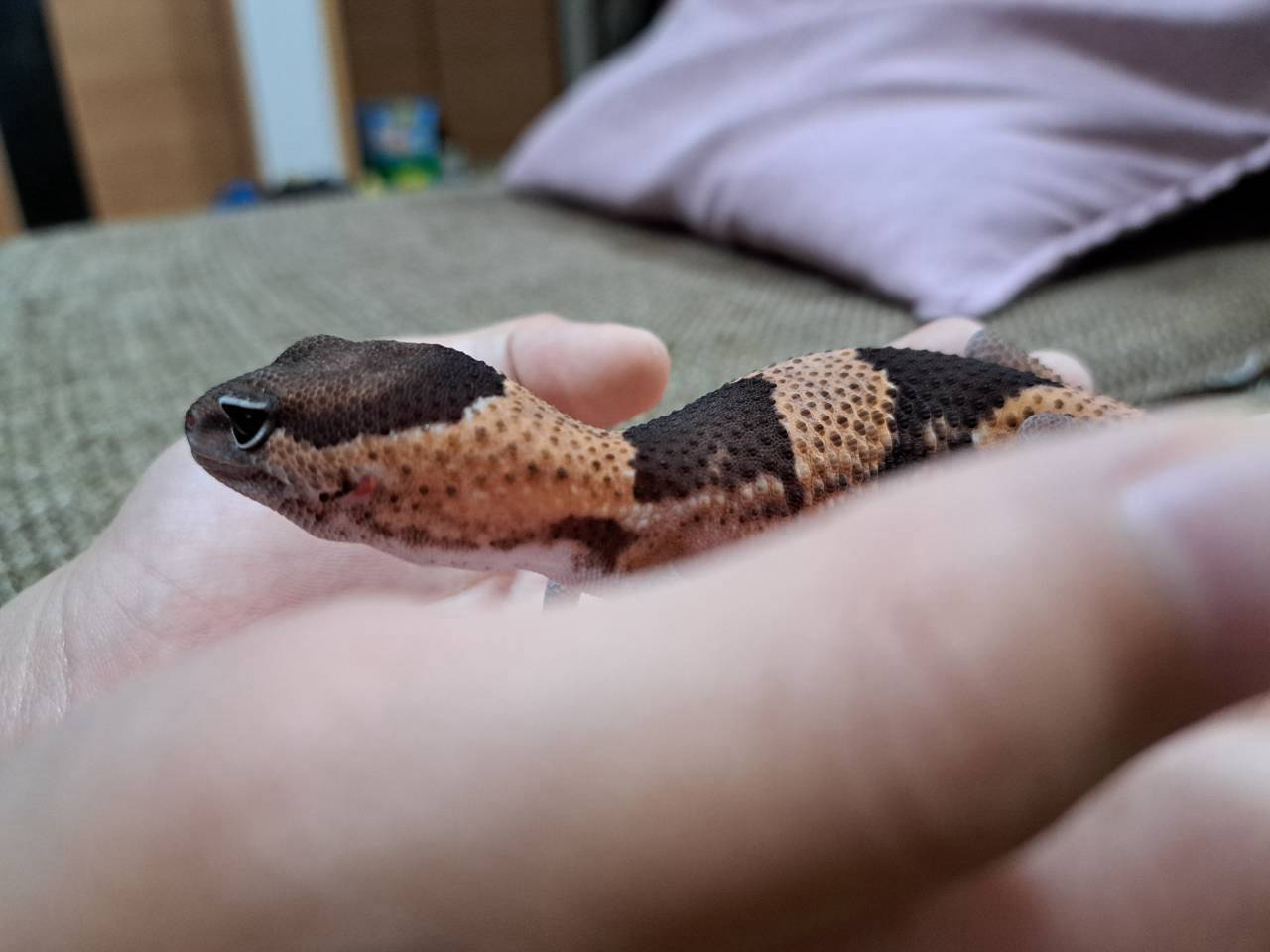
I keep Ohagi, an African fat-tailed gecko, at home in Japan. Every photo here was taken at our house. Written from my own notes and photos, with AI helping me put it into English.