
Keeping an African Fat-Tailed Gecko Cool in Summer: The Room Scared Me More Than the Heat Mat
Fat-tail care guides are all about warming things up. But the first seasonal problem my gecko Ohagi ran into wasn't cold. It was heat. A Japanese summer pushes room temperature past 86°F (30°C) and humidity toward 80%. You can switch the heat mat off, but the room itself keeps warming the enclosure anyway.
This is my record of getting a fat-tail through that kind of summer for the first time. What I did, how Ohagi behaved, and what to keep an eye on. Written for anyone in a hot climate, or anywhere heat waves roll through.
- Star playerAir conditioning (cooling the whole room is the surest method)
- EssentialThermometer/hygrometer, near the floor on the warm side
- EssentialWater dish plus the dish on top of the moist hide (they evaporate fast; top up daily)
- Nice to haveIce packs and a towel, for a power cut or an AC failure (I'll be honest: I haven't stocked these yet)
1. How hot is too hot
| Enclosure temperature | Status |
|---|---|
| 75–90°F (24–32°C) | Normal range (cool side to warm side) |
| Above 90°F (32°C) | Dangerous if there's no escape. Make sure there's a cool side |
| 95°F (35°C) or more, sustained | Heatstroke risk. Cool things down now |
What matters isn't the hottest spot. It's how warm the coolest spot is. If the warm side reads 90°F (32°C) but the other end is 79°F (26°C), he can move over and regulate himself. The truly dangerous situation is when the whole enclosure is past 90°F (32°C) and there's nowhere to go.
2. What I actually did all summer
His enclosure sits in our living area. Through the summer I kept the room around 77°F (25°C) with the AC. That alone kept the enclosure at 77–86°F (25–30°C) and 60–70% humidity. No special cooling gadgets.
The heat mat covers half the floor from underneath. There was a stretch of summer when I kept switching it off and on because it "seemed hot," and after I'd left it off too long his poop went loose. Switched the mat back on and it cleared up. Lesson: even in summer, the warm side matters. If you turn the mat off, do it only on days the room is genuinely warm enough.
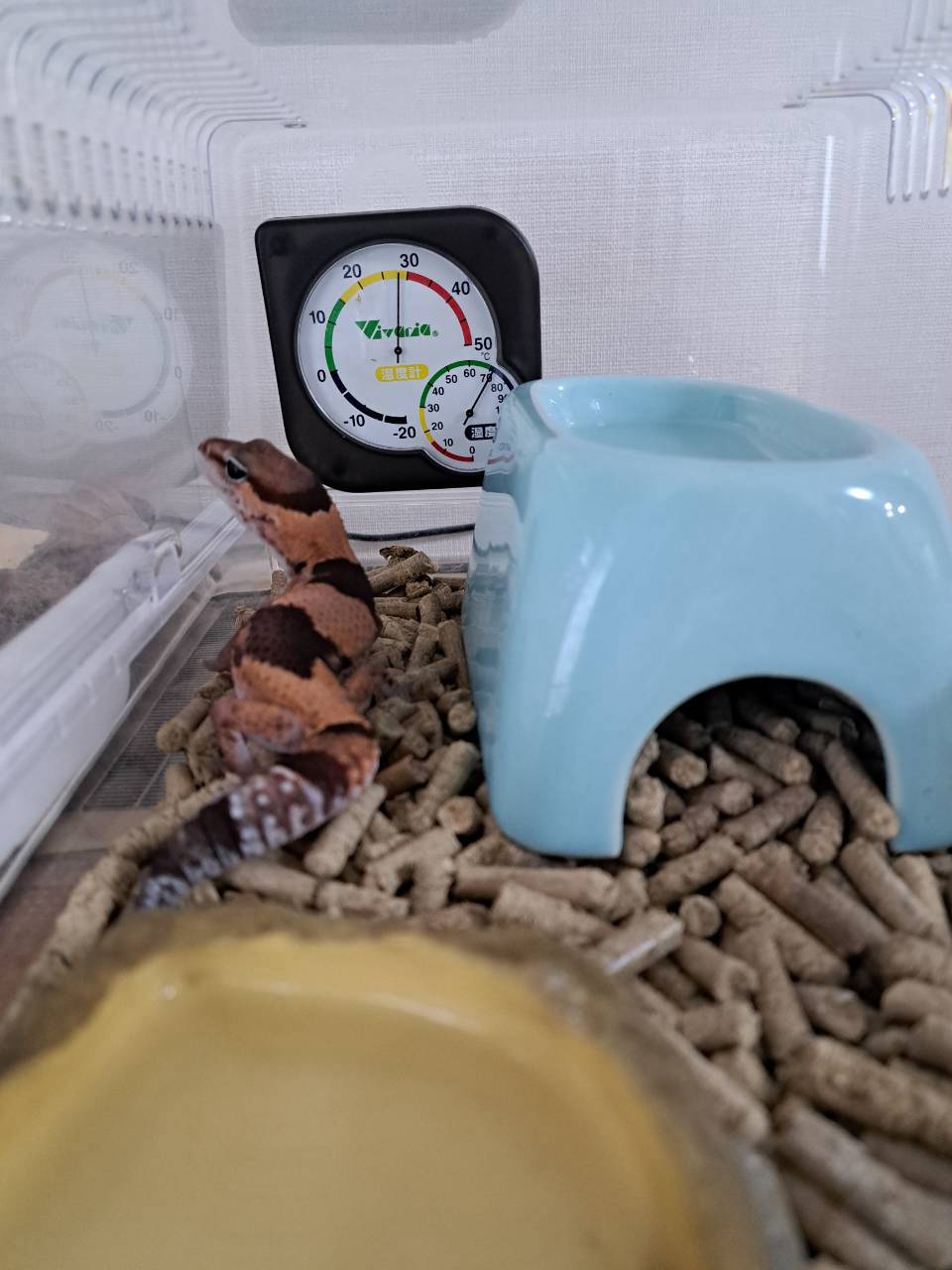
One summer day. Just under 86°F (30°C), humidity around 70%. This dial sits on the heat-mat side, so the far end runs a bit lower
Japanese summers bring humidity too. When it stayed above 80% for days, the substrate got clammy and mold became a worry, so I skipped misting on those days. Once, when it climbed too high, I put crumpled newspaper in to soak up the excess (that's in the humidity article).
3. How Ohagi tells me he's warm
Alongside the thermometer, it's worth watching the gecko himself. Ohagi shifts where he sits in three stages as it gets warmer.
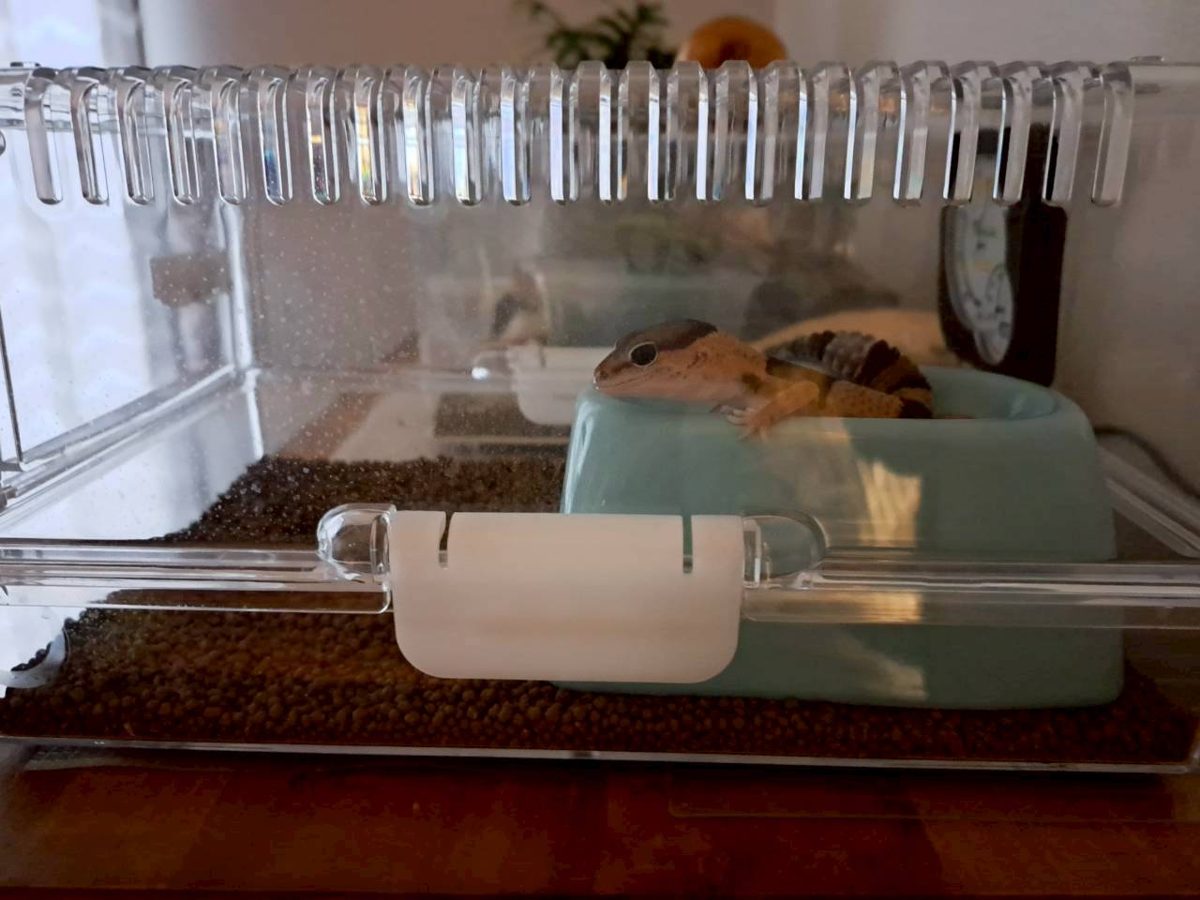
Stage three. Sitting in the dish on top of his hide. It startled me the first time. He only does it on hot days
4. Without air conditioning
- Keep the enclosure away from direct sun and windows. That alone is worth several degrees. Spots lower down, near the floor, run cooler.
- Turn off the heat mat. If the room is above 82°F (28°C), you don't need it.
- Ice packs wrapped in a towel, on top of the enclosure (outside the lid). Not inside. Direct contact gets too cold.
- A frozen water bottle set beside the enclosure. Chill one end only, so you keep a gradient.
- Fans: never aimed straight at the enclosure. Use one to keep the room's air moving, from a distance.
- Never let the water run out. It evaporates fast in summer. Check the dish and the hide's top dish every day.
5. Common summer mistakes
| Mistake | What happens | Fix |
|---|---|---|
| Heat mat left on, whole enclosure over 90°F (32°C) | No escape, heatstroke | Mat off on hot days. Put a thermometer on the cool side too |
| Heat mat off for the whole season | Digestion drops, loose stool (my mistake) | Back on for the cooler days. "Summer" doesn't mean "unnecessary" |
| Misting on the usual schedule | Humidity past 80%, mold | Check the hygrometer; skip it on humid days |
| Forgetting to top up water | Dehydration; tail thins out | Check daily. Summer evaporation is fast |
| Enclosure in a sunny window | Dangerous temperatures within hours | Move it |
FAQ
- Can I just switch the heat mat off all summer?
- On days the room is above 82°F (28°C), sure. But I don't recommend "off for the whole season." On cooler days, no warm side means poor digestion. That's exactly how Ohagi ended up with loose stool.
- He's eating less in summer.
- Appetite dips in heat are common. First check the cool-side temperature and make sure he has an escape. If he's sitting in the dish on the hide, he's warm.
- Can I put ice or cold water in the enclosure?
- Don't put ice in directly. Sudden temperature swings are stressful. Swapping the water for fresh room-temperature water is enough.
- What about winter?
- We haven't been through one yet, so that gets its own article once I have real notes. The plan so far is to add a Japanese ceramic-style overhead heater alongside the heat mat.
・Primary source: my own temperature and humidity notes and photos of Ohagi, summer 2026
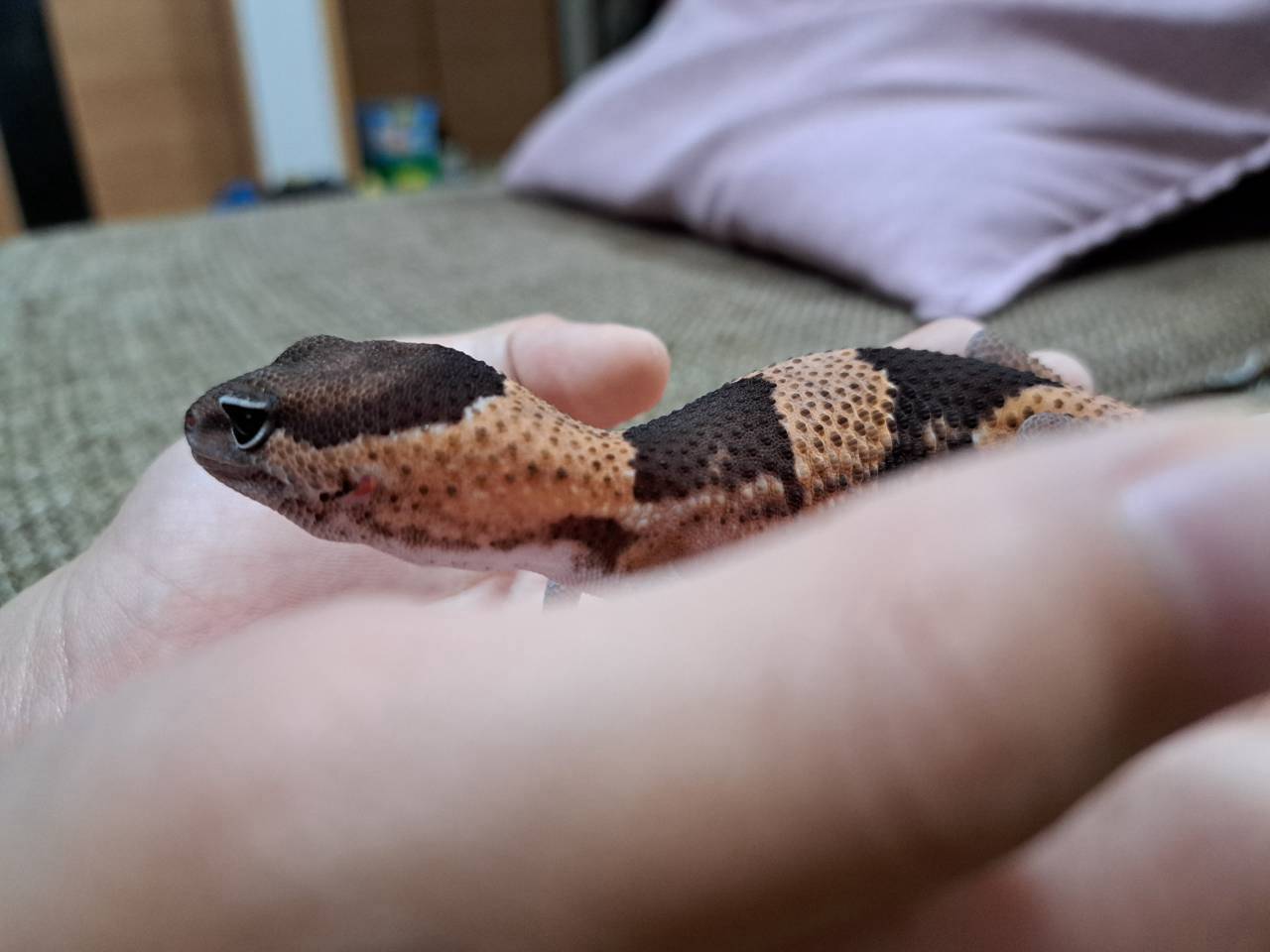
I keep Ohagi, an African fat-tailed gecko, at my home in Japan. Every photo here was taken in my home. Written from my own notes and photos, with AI helping me put it into English.