
About this site
Ohagi Gecko is a care site about one African fat-tailed gecko, written by the person who feeds him every night.
Why a keeper in Japan is writing this in English
I live in Japan. I brought Ohagi home on May 11, 2026, from a reptile shop where I could meet him in person, and I've kept notes and photos of almost everything since: his weight, every shed, the week he stopped eating, the day I ran his heat mat "by feel" and regretted it.
When I looked for English-language care guides, I found excellent care sheets, but very few records of someone actually living with one of these geckos day to day. That's the gap this site tries to fill. Not "here's what the book says," but "here's what happened, with photos, and here's what I changed."
A few things about keeping fat-tails in Japan are also genuinely different from the US or UK, and I think they're worth sharing: the ceramic moist hide with a water dish on top that almost every Japanese keeper uses, the individual ID card that came with Ohagi from the shop, and the rehydratable gecko diet that's common here.
What you can trust on this site
- Every photo is mine. They were all taken in my home, of Ohagi. No stock photos, no AI images.
- Every story actually happened. The mistakes included.
- Numbers are what I actually run, not copied targets. Temperatures are given in °F first with °C in brackets; weights in grams, because that's what the reptile world uses everywhere.
- About the writing: I keep my notes in Japanese. The articles are written from my own notes and photos, with AI helping me put it into English. I'm telling you that up front because the photos and the experience are the real thing, and the language help isn't something I want to hide.
Meet Ohagi
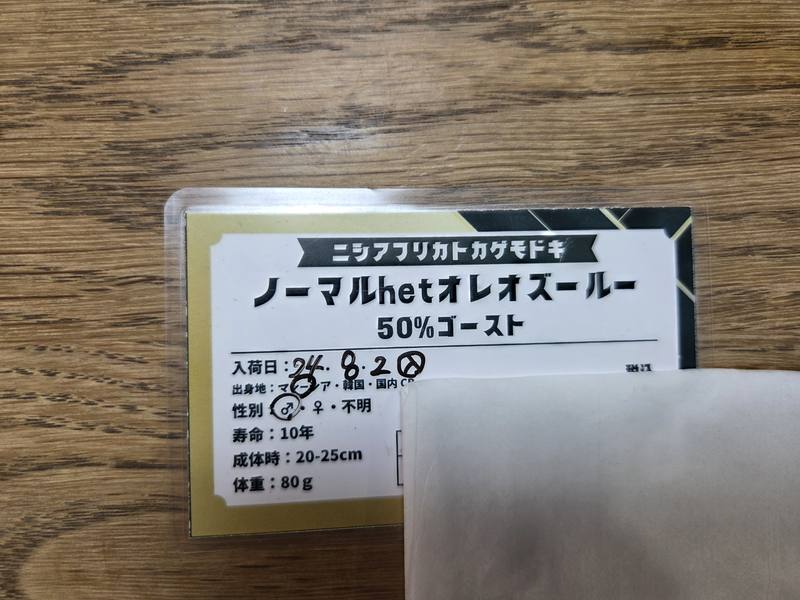
The ID card Ohagi came with. Japanese reptile shops often sell in person and hand you a card with the animal's morph and details
Ohagi is a male African fat-tailed gecko (Hemitheconyx caudicinctus), Normal het Oreo, Zulu, 50% het Ghost. He was 24.2 g when he came home and passed 35 g four months later. He is named after ohagi, a Japanese sweet made of dark sticky rice and brown bean paste, because his colors matched it perfectly.
He shares the house with Japanese grass lizards I've kept for three years, which is how I got into reptiles in the first place.
What isn't here yet
This site is young. More guides are on the way, along with Ohagi's ongoing growth log and a fat-tail morph calculator. If a topic you need is missing, it's probably being written.
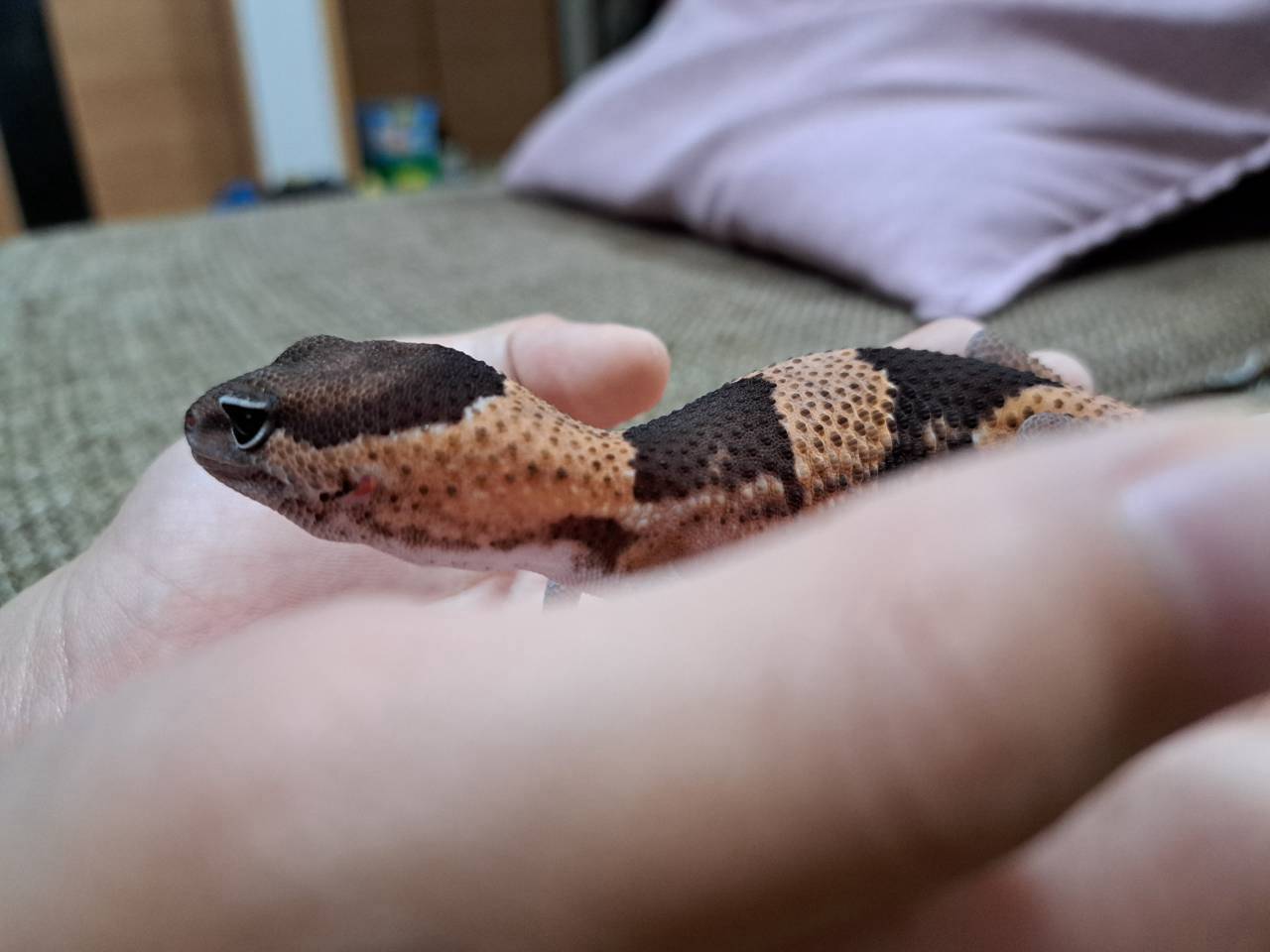
I keep Ohagi, an African fat-tailed gecko, at my home in Japan. Every photo here was taken in my home. Written from my own notes and photos, with AI helping me put it into English.