African Fat-Tailed Gecko Temperature: The Simple Numbers, and the Mistake Everyone Makes
The temperature numbers for a fat-tailed gecko are simple. The hard part isn't the numbers. It's the very human habit of running things "by feel." I know, because that's exactly the mistake I made (more on that below).
This article covers the target temperatures, how to set them up, and the one piece of safety gear you should never skip. No lights required — the star of the show is an under-tank heat mat.
- EssentialUnder-tank heat mat — I use a Japanese-made Pitari Tekion Plus
- EssentialThermostat — your overheating safeguard. Never skip it
- EssentialThermometer/hygrometer combo — ideally two, one for the warm spot and one for the cool side
1. The target numbers
| Where | Temperature | Notes |
|---|---|---|
| Warm spot (floor) | 86–90°F (30–32°C) | Right above the heat mat |
| Cool side | 75–79°F (24–26°C) | The side without the mat |
| Nighttime low | Don't let it drop below 68°F (20°C) | Any lower and you get poor digestion and food refusal |
The big idea: don't make the whole enclosure one temperature. Set up a gradient — a warm zone and a cool zone — and let the gecko pick. And since fat-tails are nocturnal, basking lights and UVB are generally unnecessary; bright light actually stresses them out.
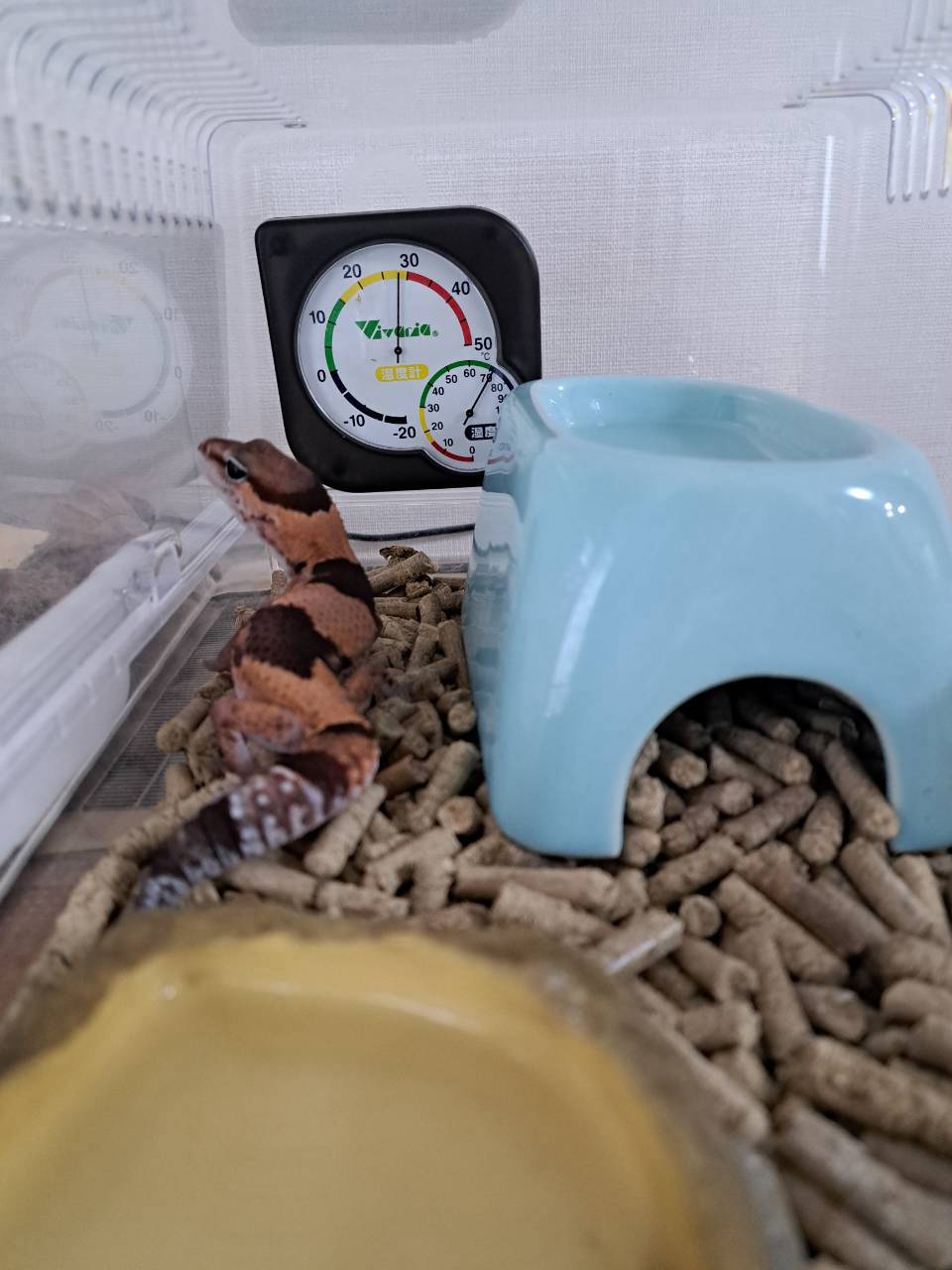
My analog thermometer/hygrometer, mounted on the wall. It hovers around 86°F (30°C) and 60–70% humidity
2. Placing the heat mat: "half the floor" is the rule
The heat mat goes under just one-third to one-half of the floor. Cover the whole floor and the gecko has no way to get away from the heat — and that's dangerous. Sticking it to the outside, underneath the enclosure, is the standard approach.
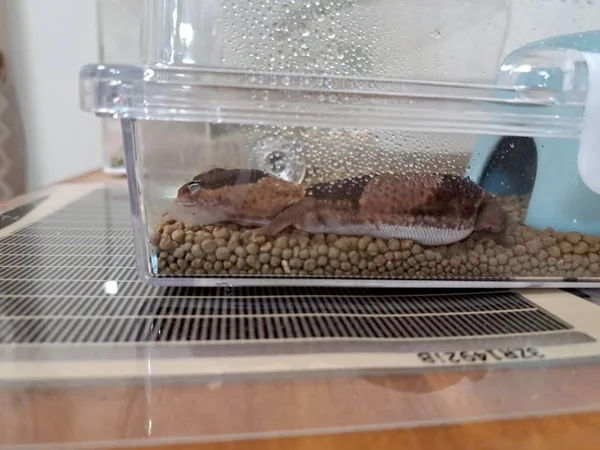
My setup. The mat covers the lower half of the enclosure, and Ohagi loves lounging right on top of it
As a rough wattage guide: 5–8 W for a small enclosure (12×8 in / 30×20 cm), 14–16 W for a standard one (18×12 in / 45×30 cm).
3. Why the thermostat is non-negotiable
4. My story: running the mat by feel cost him his appetite
Early on, I was switching the heat mat on and off by feel — "it's warm today, I'll turn it off." During a stretch when it was off, Ohagi's appetite clearly dropped. I finally measured, and the floor was cooler than I'd pictured. How warm a human feels and how warm the floor is are two different things.
I switched to running the mat 24/7 on a thermostat, with a thermometer to double-check. His appetite came straight back. The enemy of temperature management isn't complicated theory. It's your own "eh, it feels warm enough today."
5. Seasonal notes (from Japan)
- Summer: the heat is the problem, not the mat. I keep the room around 77°F (25°C) with the AC
- Winter: in some rooms and regions, a mat alone won't cut it. I'm looking into adding an overhead ceramic-style heater
- Power outages and failures: keep some disposable hand warmers around as an emergency backup
FAQ
- Can I heat with a lamp instead?
- Fat-tailed geckos are nocturnal and find bright light stressful, so light-free heat sources (a heat mat, a dark overhead heater) suit them better.
- He sits on the heat mat all the time. Is that okay?
- Yes, as long as a thermostat is controlling it. Ohagi's favorite spot is right above the mat. Without that control, constant contact risks low-temperature burns.
- Where should the thermometer go?
- Ideally you have two — warm spot and cool side. If it's just one, put it near the floor on the warm side. Air temperature and floor temperature can be surprisingly far apart.
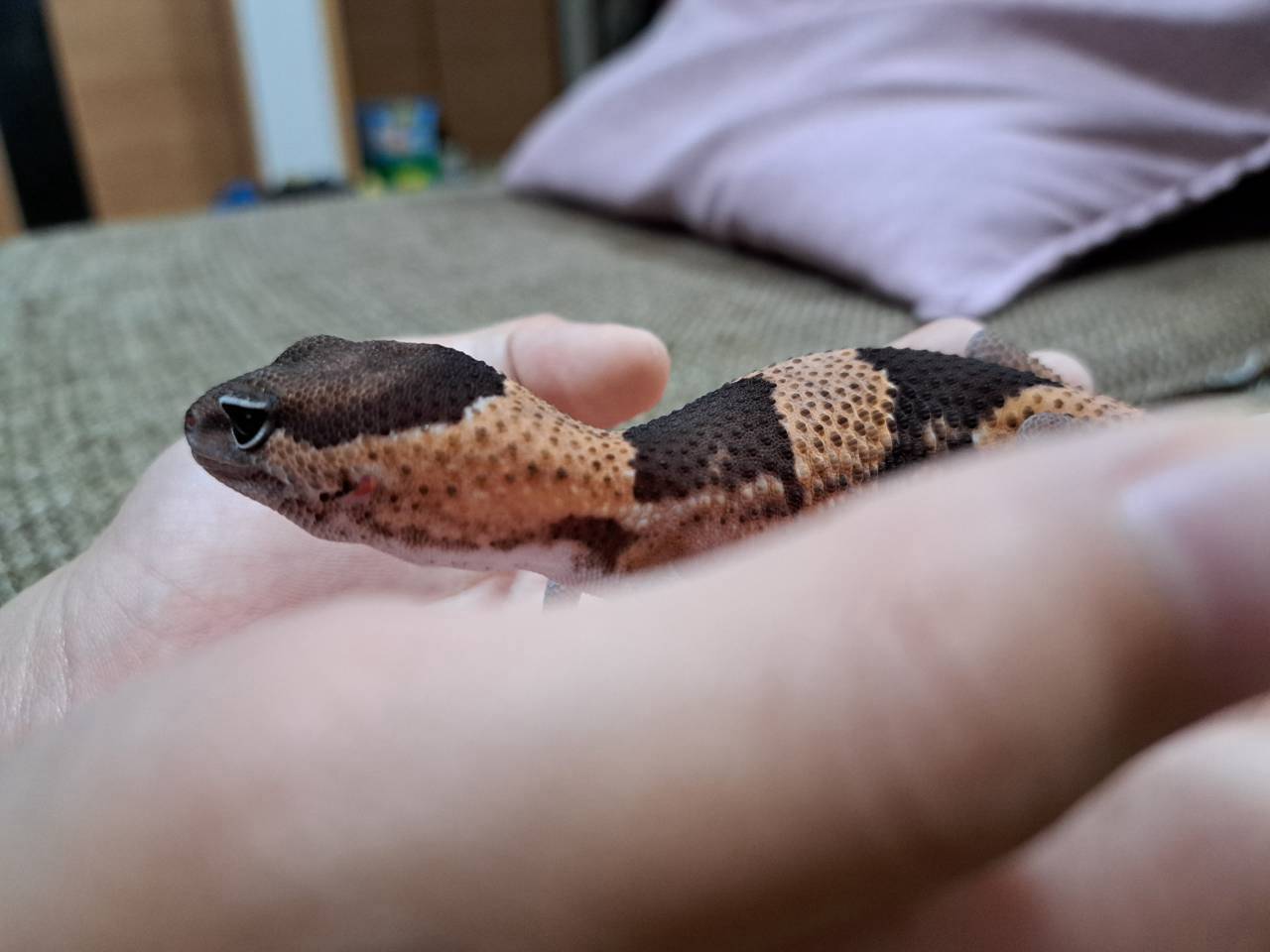
I keep Ohagi, an African fat-tailed gecko, at my home in Japan. Every photo here was taken in my home. Written from my own notes and photos, with AI helping me put it into English.