
African Fat-Tailed Gecko Humidity: Why "Same as a Leopard Gecko" Gets You in Trouble
Fat-tailed geckos look so much like leopard geckos that people assume the care is the same. There's one difference that really matters: fat-tails want a lot more humidity. Get this wrong and it comes back to bite you as stuck shed and dehydration.
The target is 60–80% humidity. In a room with the AC or the heat running, it can slip below 40% before you even notice. This article shows exactly how I keep humidity up day to day, with the numbers off my own hygrometer and photos.
- EssentialSpray bottle — a dollar-store one is fine. Mine's from a 100-yen shop (Japan's version of the dollar store)
- EssentialThermometer/hygrometer combo — your gut is unreliable; read the number
- EssentialMoist hide — the MVP for creating one damp spot in the enclosure
1. The target: 60–80%
Normally 60–70%; before a shed, push it up toward 80%. Too low leads straight to stuck shed (skin left behind on the toes). But you don't need to keep things soaking wet — a stuffy, swampy enclosure brings its own problems. Remember it as "60–70 is the baseline, extra only before a shed."
My own setup — daily misting plus a moist hide — sits at a steady 60–70% on the hygrometer. Since I set it up this way, sheds have been pretty much trouble-free.
2. How I make humidity (just two things)
No special equipment. Just two things.
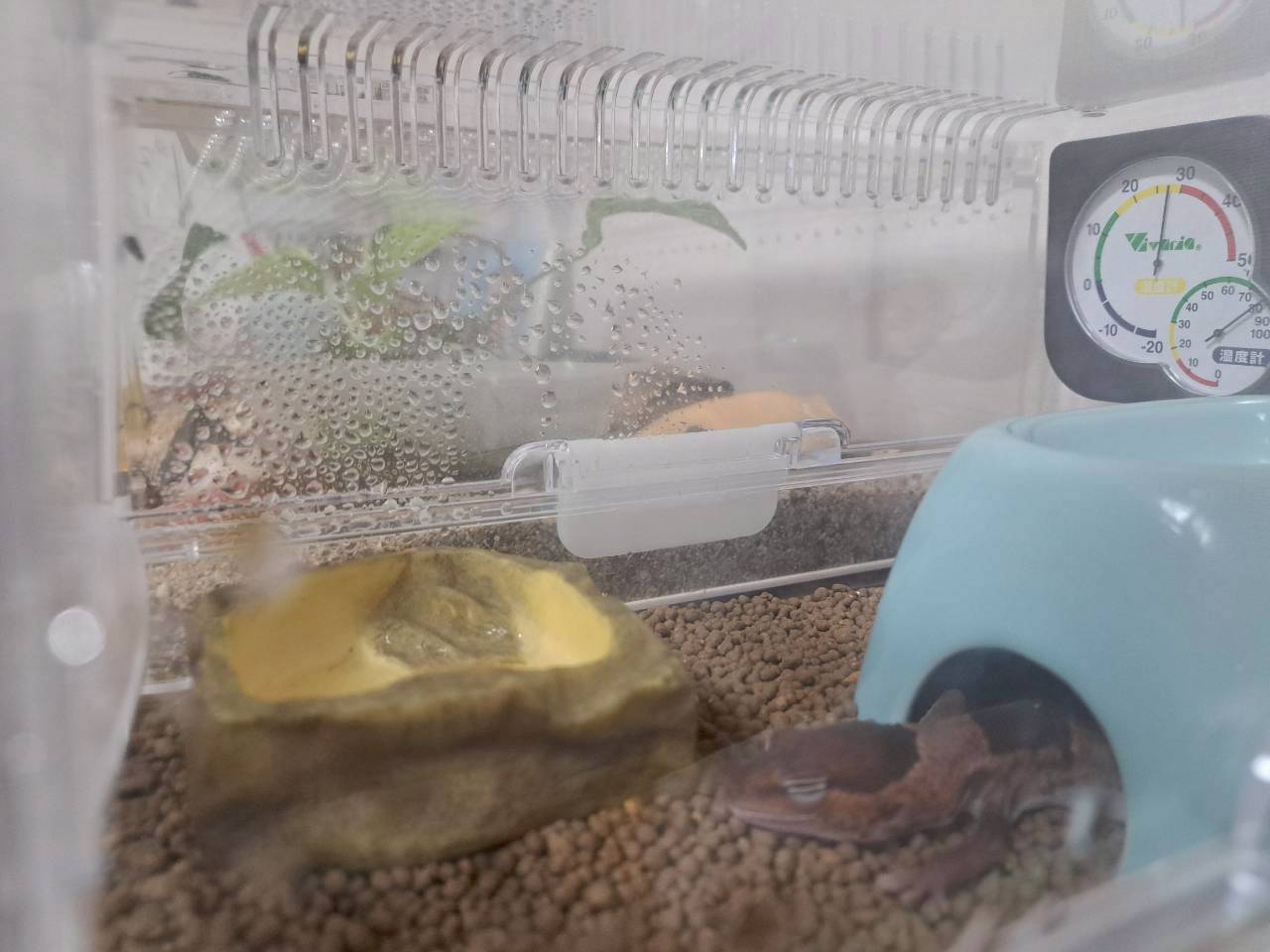
My enclosure right after misting. Fogged-up walls like this are plenty. It dries out within a few hours
3. Misting: when and how much
- How often: once a day. Twice (morning and evening) in dry winter air or when the AC is running
- How much: enough to lightly fog the walls. Puddles mean you've overdone it
- When: they're nocturnal, so evening — right as they wake up — is ideal (morning works too)
- When the body turns whitish (pre-shed): mist more often and aim for 80%
4. A word on drinking
"I've never once seen my gecko drink from the water dish" is a common worry. Since they're nocturnal, they usually drink when you're not looking. I managed to catch it on camera.
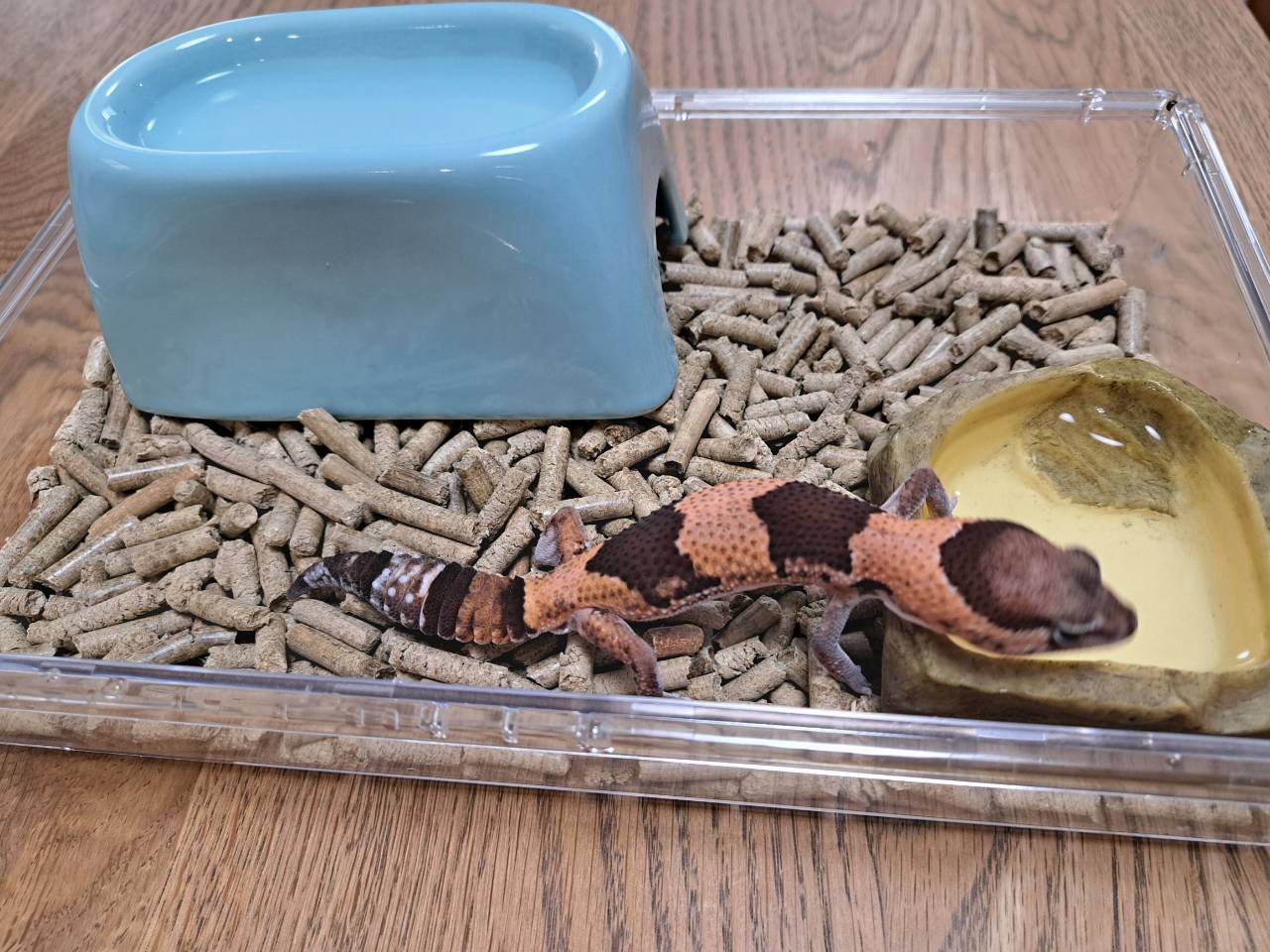
Ohagi lapping up water from the dish with his tongue. He does drink — this was a rare lucky shot
Change the dish water every day. Some geckos would rather lick misted droplets off the walls, so offering both covers all the bases.
FAQ
- Do I need a humidifier or a fogger?
- Usually not. Misting plus a moist hide does the job. If your room is bone-dry it can be an option, but start with those two.
- I think my humidity is too high.
- Constantly above 90% with poor airflow gets stuffy. Cut back on misting and check the vents. "Wet" and "humid" are not the same thing. My own emergency fix is in the photo below.
- Does a soil-type substrate affect humidity?
- Yes. Soil soaks up the misting water and releases it slowly — a natural humidity buffer (more on that in the substrate article).
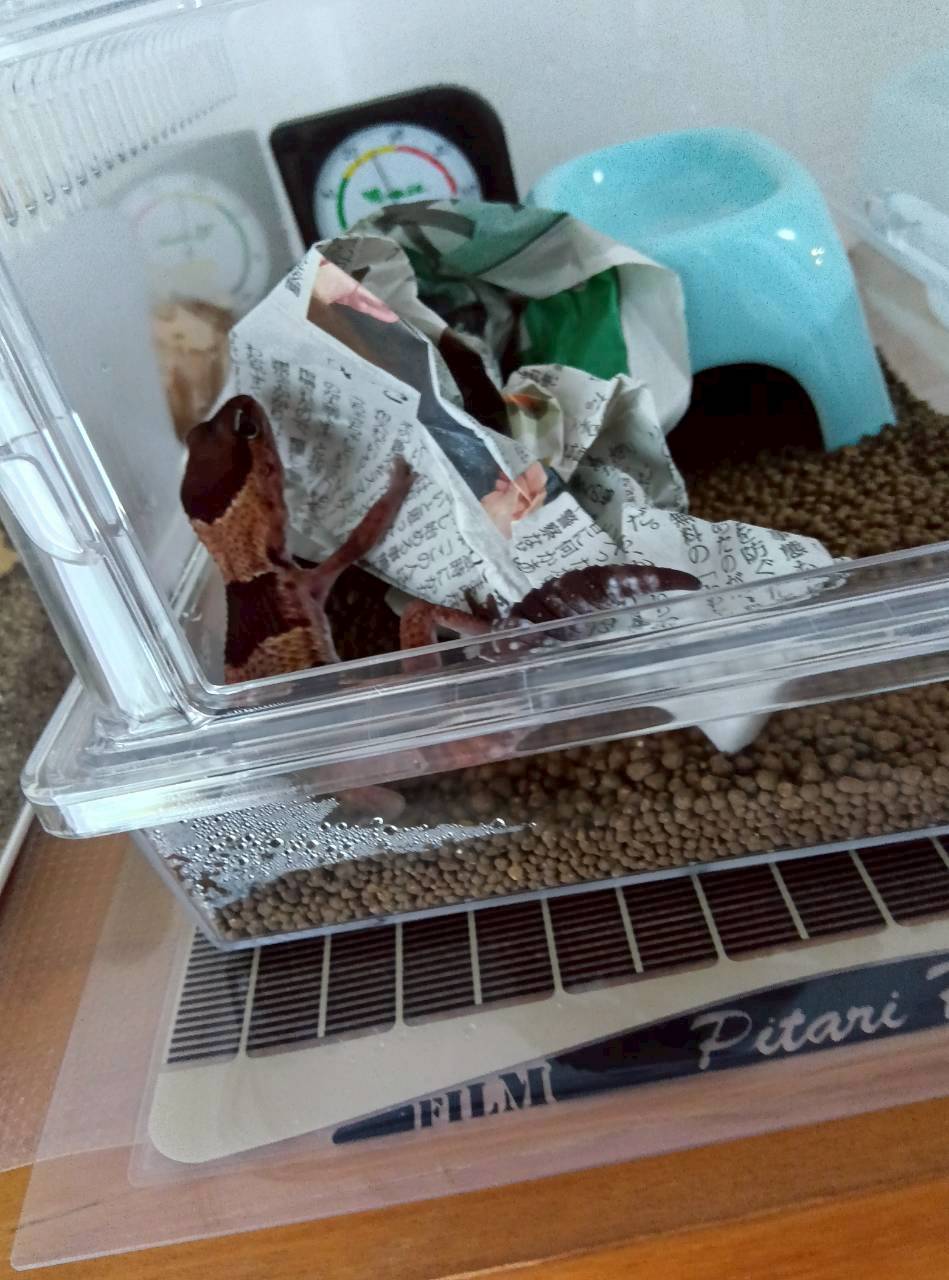
My emergency fix on a day the humidity ran too high: crumpled newspaper to soak up the excess. I honestly can't tell you whether it's the "correct" method, but Ohagi seemed to enjoy hiding behind it
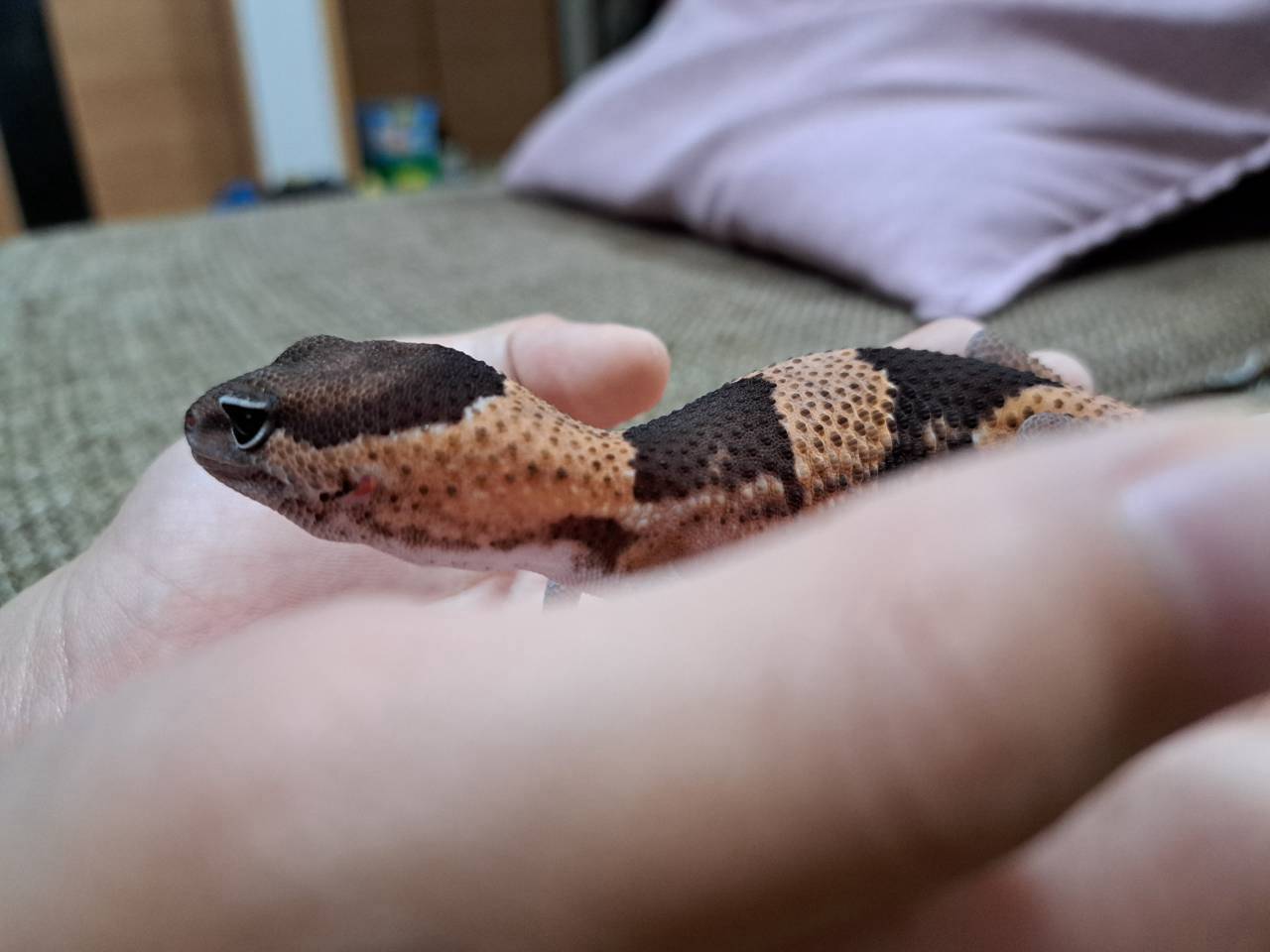
I keep Ohagi, an African fat-tailed gecko, at my home in Japan. Every photo here was taken in my home. Written from my own notes and photos, with AI helping me put it into English.