
Best Substrate for African Fat-Tailed Geckos: I Tried Three, and Here's Why I Landed on Soil
Substrate isn't a "one right answer" kind of question — it's about what fits your household. In the three months after I brought Ohagi home, I actually went through bark chips → wood pellets → clay soil, and soil is where I've landed.
This article gives you the honest pros and cons of each — not the specs off the bag, but the take of the person who cleans the enclosure every single day.
- Current pickDesert Soil (GEX Exo Terra, 2 kg / 4.4 lb) — granules of compressed natural soil
- Cleaning kitTongs for poop duty — keep a separate pair from your feeding tongs, for hygiene's sake
1. Honest takes on all three
| Substrate | What was good | What was meh |
|---|---|---|
| Bark chips | Natural look. Lightweight | Poop falls down into the gaps — a pain to clean. Dries out fast |
| Wood pellets | Great absorption and odor control. Cheap | Crumbles into dust. Swells up and falls apart when misted |
| Clay soil granules | Moisture retention on a whole other level. Poop clumps up for easy removal. Diggable | Small granules — some impaction worry (my fix is below) |
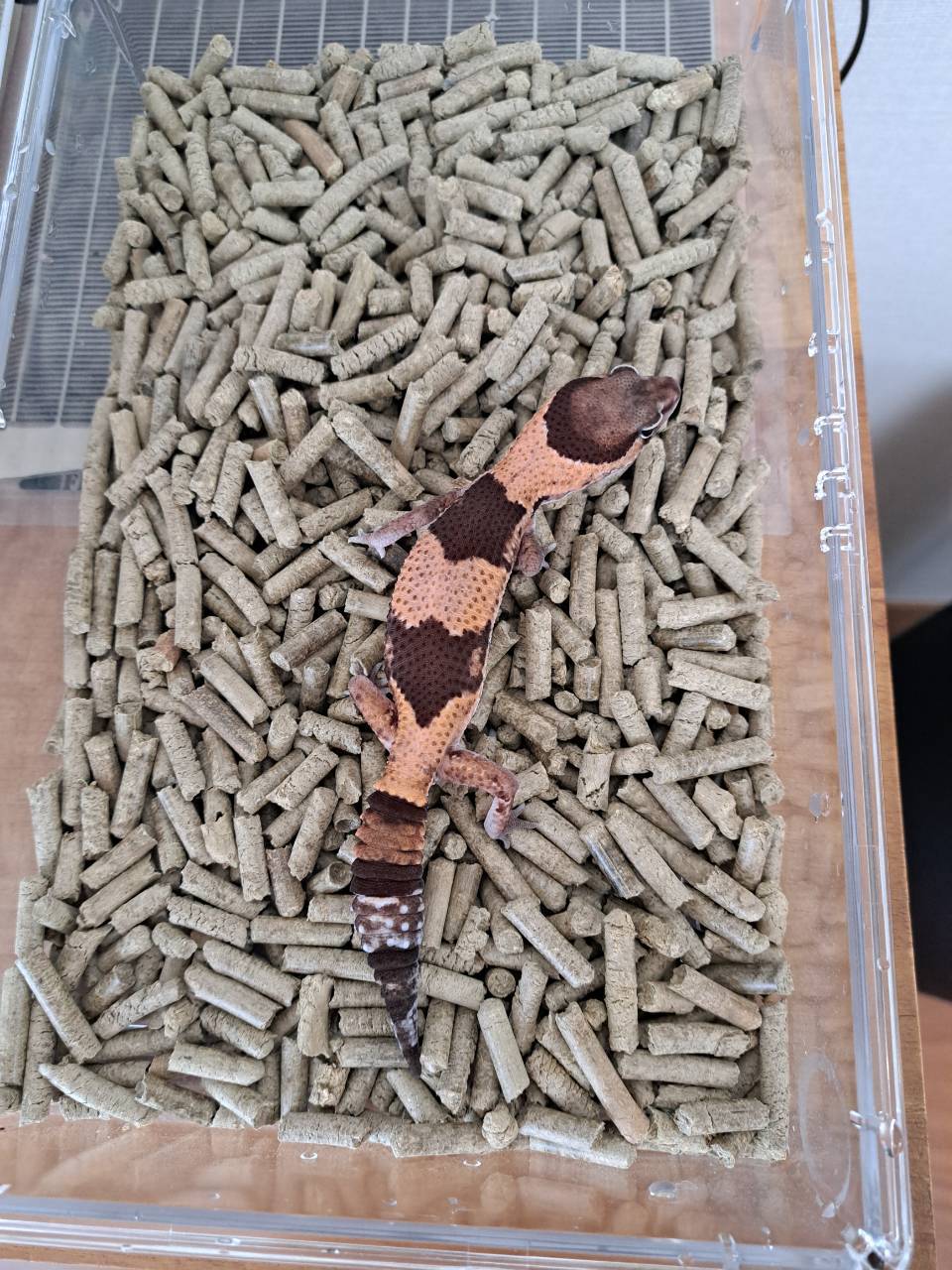
Ohagi in the pellet era. Not bad, but watching it crumble every time I misted was the headache
2. What sold me on soil
The deciding factor was how it plays with humidity. Fat-tailed geckos need 60–80% humidity. Soil granules soak up the misting water and release it slowly — the whole floor turns into a gentle humidifier. Pellets couldn't pull this off (they absorbed, then fell apart).
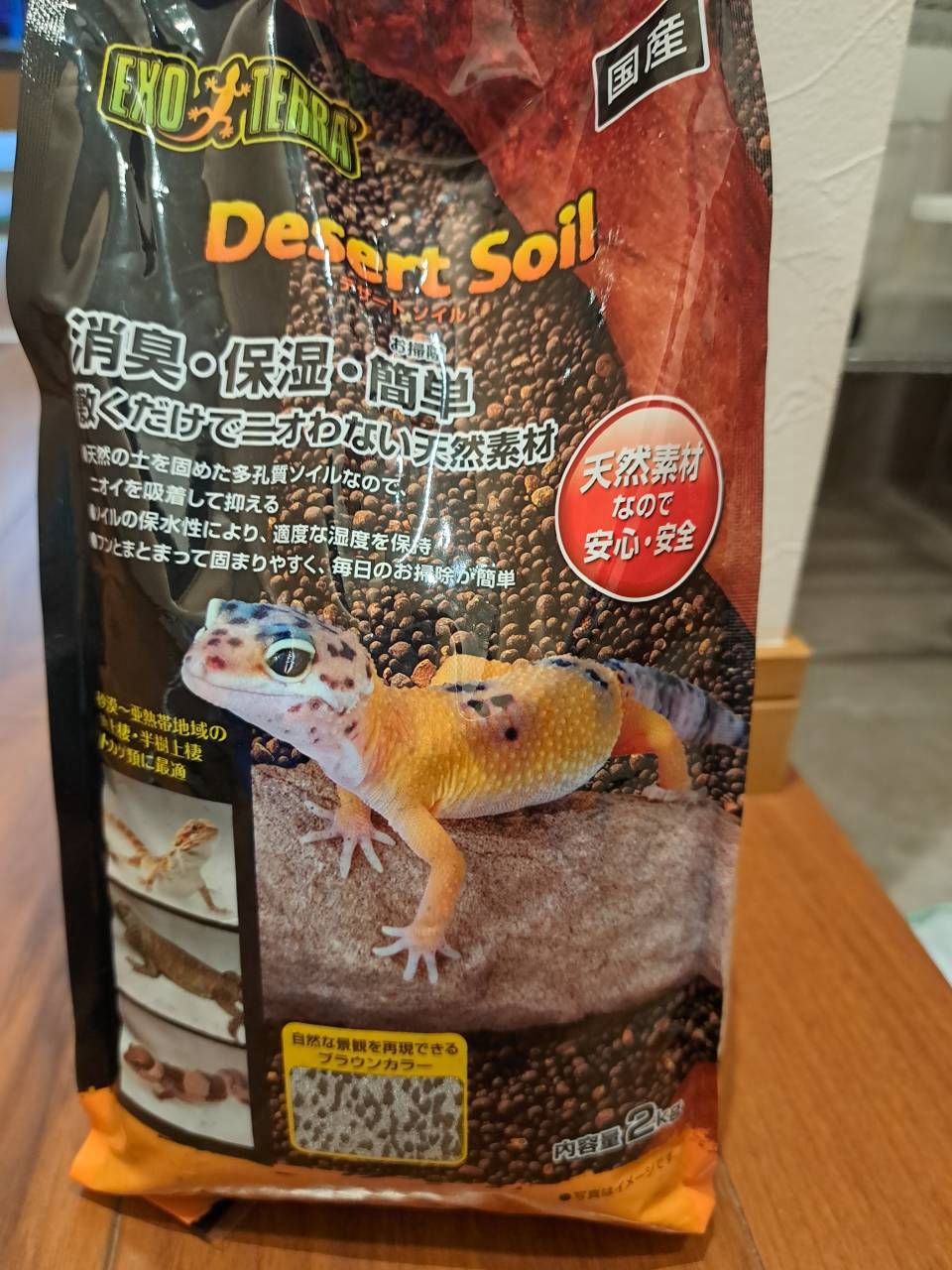
The Desert Soil I use. The bag promises "odor control, moisture retention, easy cleanup" — and it delivers
The other discovery: he can dig in it. The moment I switched to soil, Ohagi started digging. These geckos live in burrows in the wild, and a floor they can dig into seems to scratch some instinctive itch.
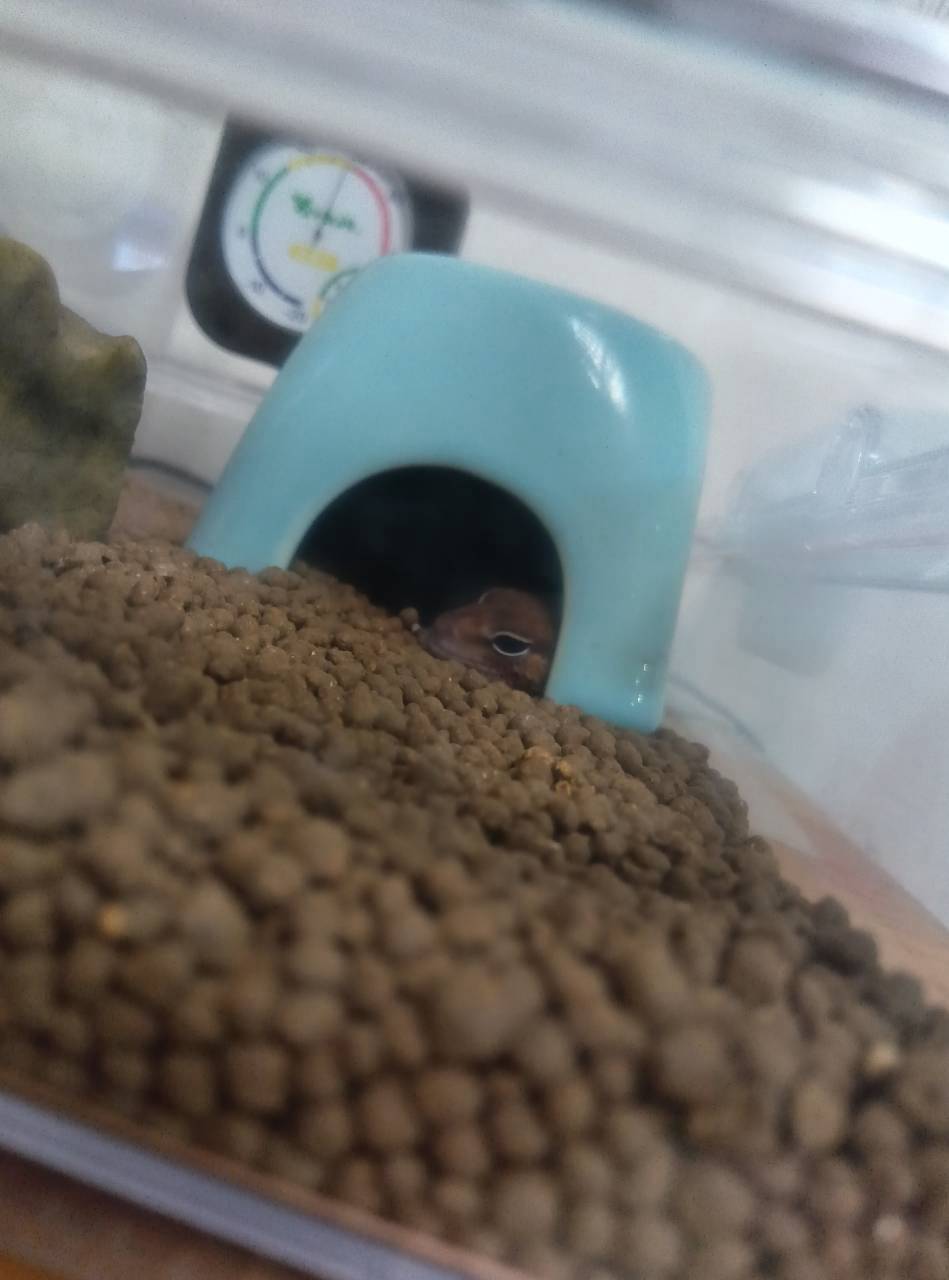
Ohagi watching me from behind a mound of soil he dug up himself. Never once saw this in the pellet era
3. Impaction risk: dish feeding as insurance
My fix is simple: gecko diet goes in a small dish, never straight on the floor. That alone cuts the risk way down. Crickets go straight to his mouth with tongs, so they never touch the floor either.
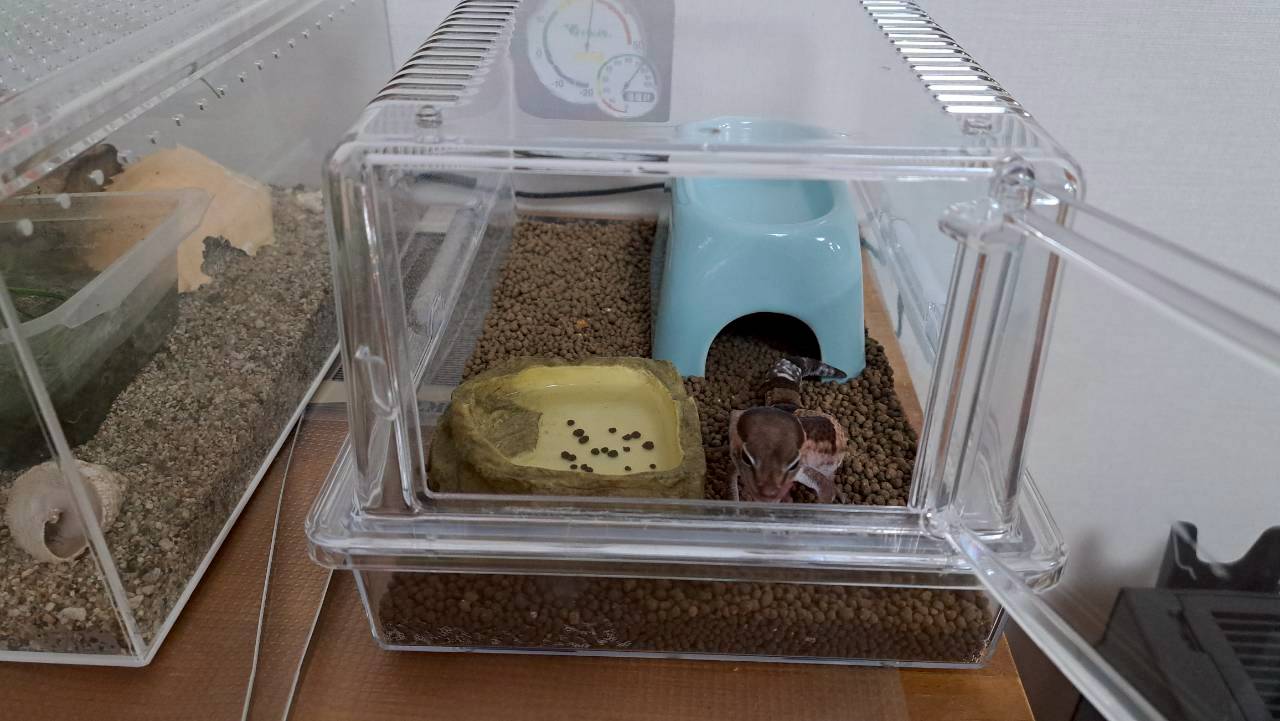
My feeding setup. The dish is from a dollar store (a 100-yen shop, actually — Japan's version). Cheap gear, sound logic
4. How often to swap it out
- Daily: pick out poop with tongs whenever you spot it (the soil clumps around it, which makes this easy)
- Dirty patches: swap out just that spot as needed
- Full change: roughly every six months (the manufacturer suggests about the same)
FAQ
- What about paper towels?
- Perfectly fine. Zero impaction risk and the easiest thing to clean — ideal for juveniles and for geckos getting over an illness. The downsides: zero moisture retention and nothing to dig in. If it's your long-term choice, bring in humidity some other way.
- What about sand?
- Fine sand tends to clump up if swallowed. I wouldn't recommend it for beginners.
- I saw him eat a soil granule.
- A single granule usually passes with the next poop. If he keeps eating it, stops pooping, or goes off his food, see a vet.
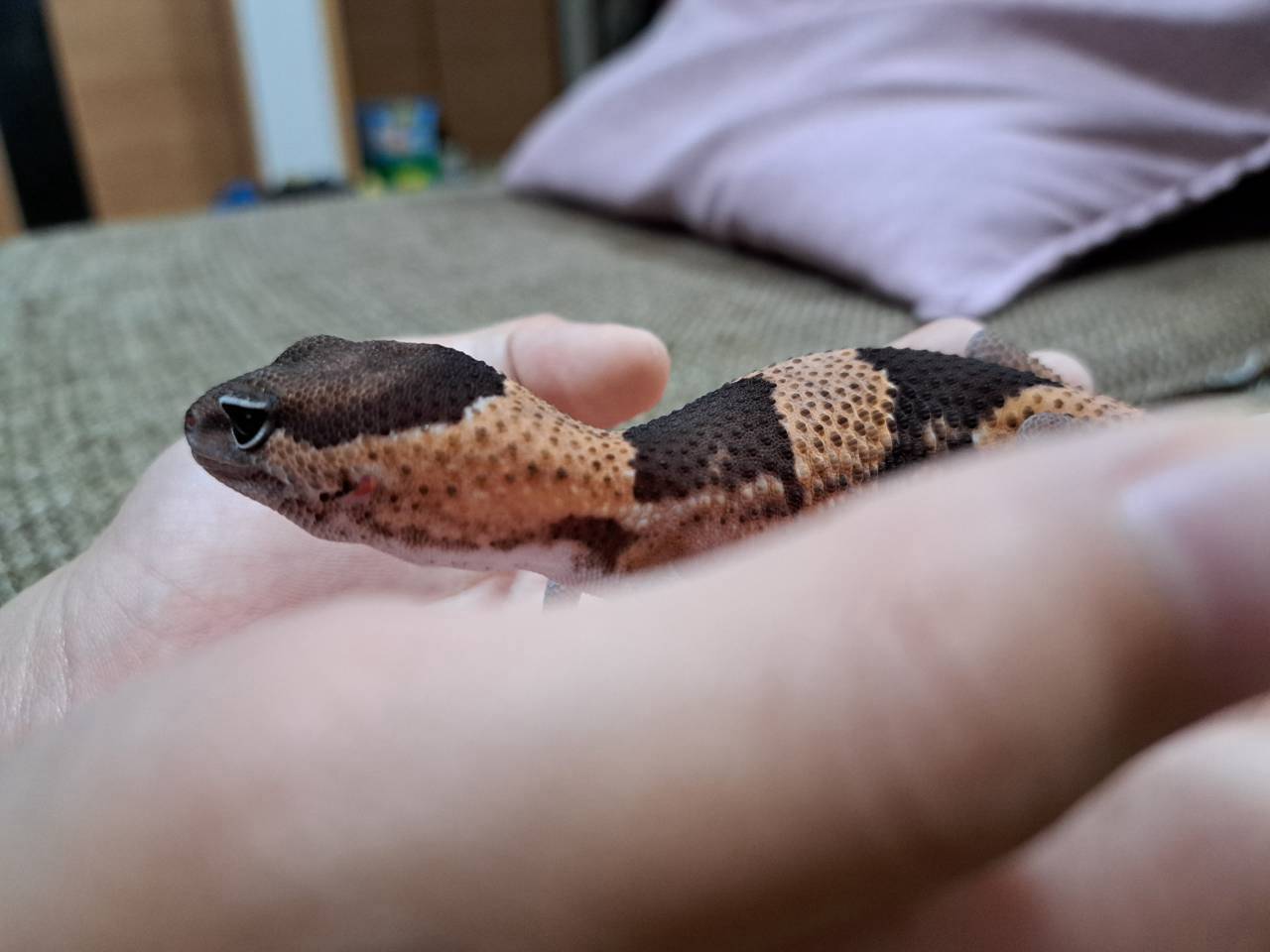
I keep Ohagi, an African fat-tailed gecko, at my home in Japan. Every photo here was taken in my home. Written from my own notes and photos, with AI helping me put it into English.