
Do You Need a Bioactive Setup for a Fat-Tailed Gecko? Mine Lives on Plain Soil, and Here's Why
Spend any time on reptile forums and you'll see it: someone announcing they "went bioactive!" Live plants, a cleanup crew of tiny bugs in the soil, a little ecosystem that breaks down waste on its own. The photos are gorgeous, and there's a quiet assumption that this is what serious keepers do.
Let me say it up front: I don't do bioactive. My gecko Ohagi lives on plain granular soil. Four months in, his sheds are clean and his weight is climbing. This isn't an article about bioactive being bad. It's an article about how you can keep a healthy fat-tail without it, and why I chose not to. If you're on the fence, I hope it helps you decide.
- UsingDesert soil, granular (GEX Exo Terra, a 2 kg bag)
- UsingTweezers for cleanup (100-yen shop, Japan's version of the dollar store)
- UsingSpray bottle (100-yen shop)
- Not usingDrainage layer, live plants, springtails or isopods, plant lights
1. What bioactive is (the one-minute version)
A bioactive enclosure turns the floor into a small ecosystem. It's built in layers, roughly like this.
| Layer | Job |
|---|---|
| Bottom: drainage layer (pumice or similar) | Holds excess water so the soil doesn't get waterlogged |
| Soil, several inches deep | Roots for the plants, a home for the bugs |
| Cleanup crew (springtails, isopods) | Breaks down poop and leftover food |
| Live plants and leaf litter | Hiding spots, humidity, looks |
| Plant light | For the plants, not the gecko |
When it's running well, the bugs handle the poop, you almost never do a full substrate change, and the whole thing looks like a little slice of the wild.
The catch: it takes time and effort to get up and running, it needs deep soil and floor space, it needs a plant light, and until the bug population stabilizes, you're still picking up poop yourself. It's not something you set up and forget.
2. My four reasons for skipping it
And one more honest reason: I can see him. The more plants and leaf litter, the harder a gecko is to find. He's a hider by nature and spends most of the day out of sight, so I keep the floor simple. Is he out? Is there poop? One glance tells me.
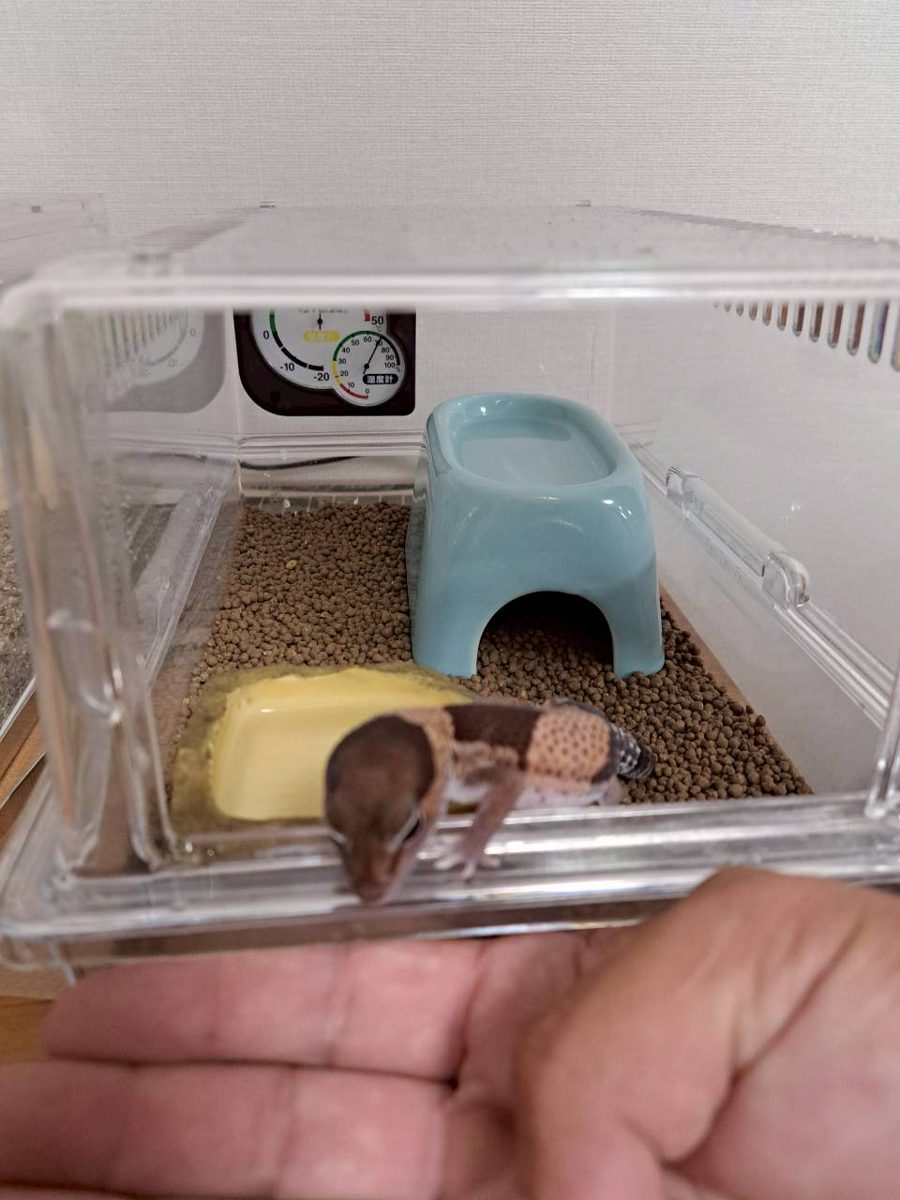
The whole floor: granular soil, a hide, a water dish. No plants, no leaf litter. Everything visible at a glance
3. What I do instead
| What bioactive would handle | What I do |
|---|---|
| Breaking down poop | Tweezers, when I spot it (same corner every time, so it takes seconds) |
| Stable humidity | One misting a day, plus a ceramic hide with a water dish on top |
| A floor he can dig in | About an inch (2–3 cm) of granular soil. He digs |
| Long-lasting substrate | Spot-change dirty patches as needed; full wash once or twice a month |
| Looks | I've given up on that one. The trade-off is that I can always see the gecko |
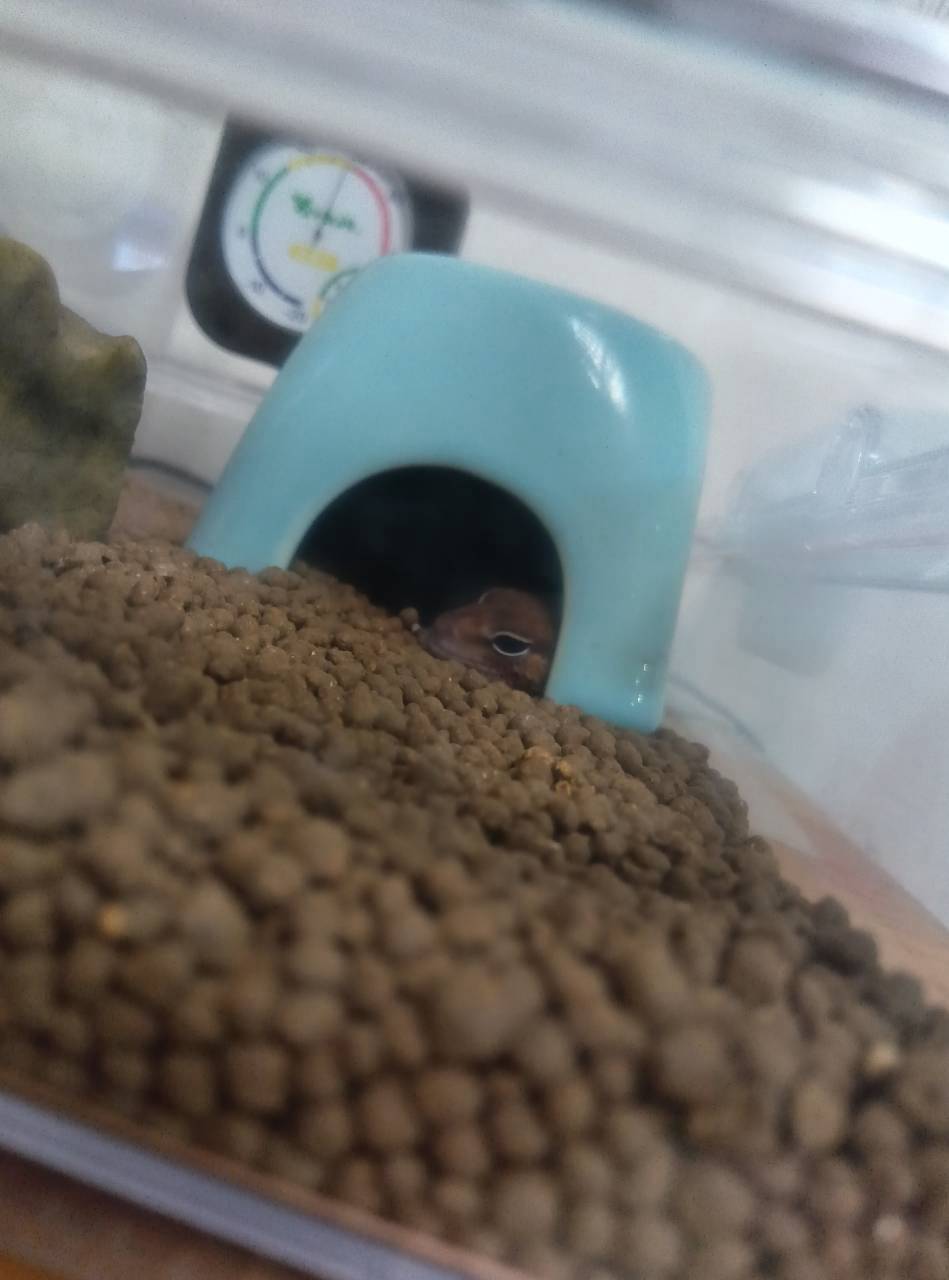
Plain granular soil still gets you digging behavior. Just his eyes showing from behind a mound he pushed up
He started on bark chips when he came home, moved to wood pellets, and has been on desert soil since June. I switched to soil because I wanted to watch him dig, and because it holds the moisture from misting better. Since it's granular, I serve his gecko diet on a dish and feed him insects by hand or from a cup, so he doesn't swallow substrate (more on that in the substrate article).
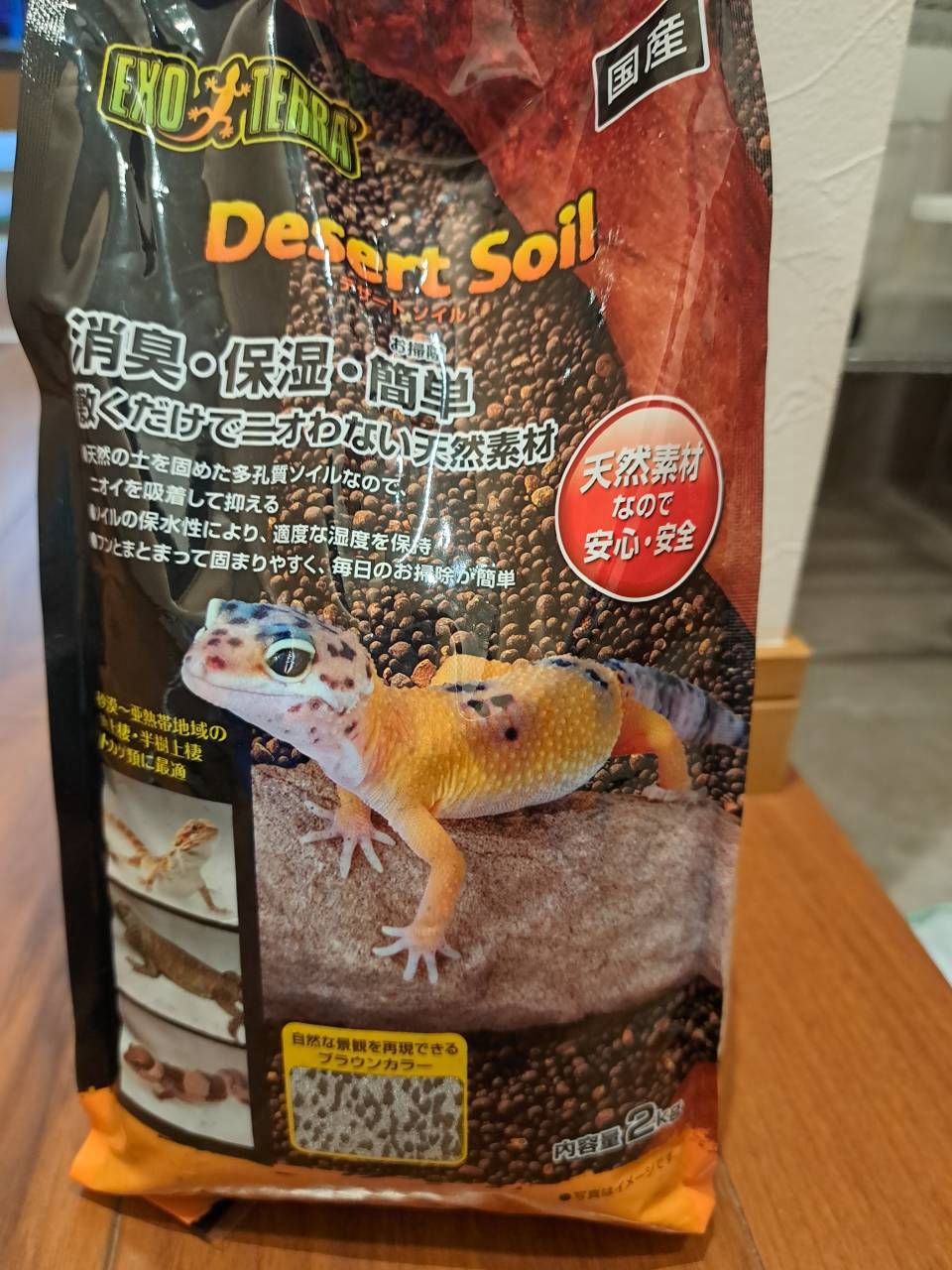
The desert soil I use. About an inch of this, and that's the whole floor
4. Who bioactive is right for
- You have a big enclosure. At 24 inches (60 cm) or more, a drainage layer and deep soil still leave room for the gecko.
- Your gecko is an adult with no move coming. You get to use what you built for years.
- You like growing plants. Bioactive is half gardening. If that part sounds fun to you, it's a good fit.
- You live somewhere dry. The humidity-holding benefit matters most where the air is dry.
- You can front-load the work. Setup is the hard part; it gets easier once it's stable.
Flip that around: a small enclosure, a young gecko, a move on the horizon, and no humidity problems. That's me, and it's why there's no rush. When Ohagi moves up to an 18- or 24-inch enclosure, I'll think about it then.
5. What doesn't change either way
There is no reason to feel like you're falling short because your enclosure isn't bioactive. I wrote this hoping Ohagi's four months can serve as one more data point for that.
FAQ
- Doesn't plain soil get moldy or smelly?
- Not if you remove poop the day you find it and don't overdo the misting. I skip misting on the most humid summer days. There's essentially no smell.
- I'm worried about him swallowing soil.
- That's the main worry with any loose substrate. Gecko diet on a dish, insects from your hand or a cup, nothing eaten straight off the floor. Four months on soil, and I've never found substrate in his poop.
- Can I switch to bioactive later?
- Yes. A lot of keepers do it when they upgrade to a bigger enclosure. That's my plan too, if I do it at all.
- Does bioactive really mean zero cleaning?
- No. The bugs handle the small stuff; larger poop and uneaten food still need picking up. Think "less," not "none," and you won't be disappointed later.
• Primary source: my own setup and records for Ohagi, 2026. The description of bioactive setups is general husbandry knowledge; I have not run one myself
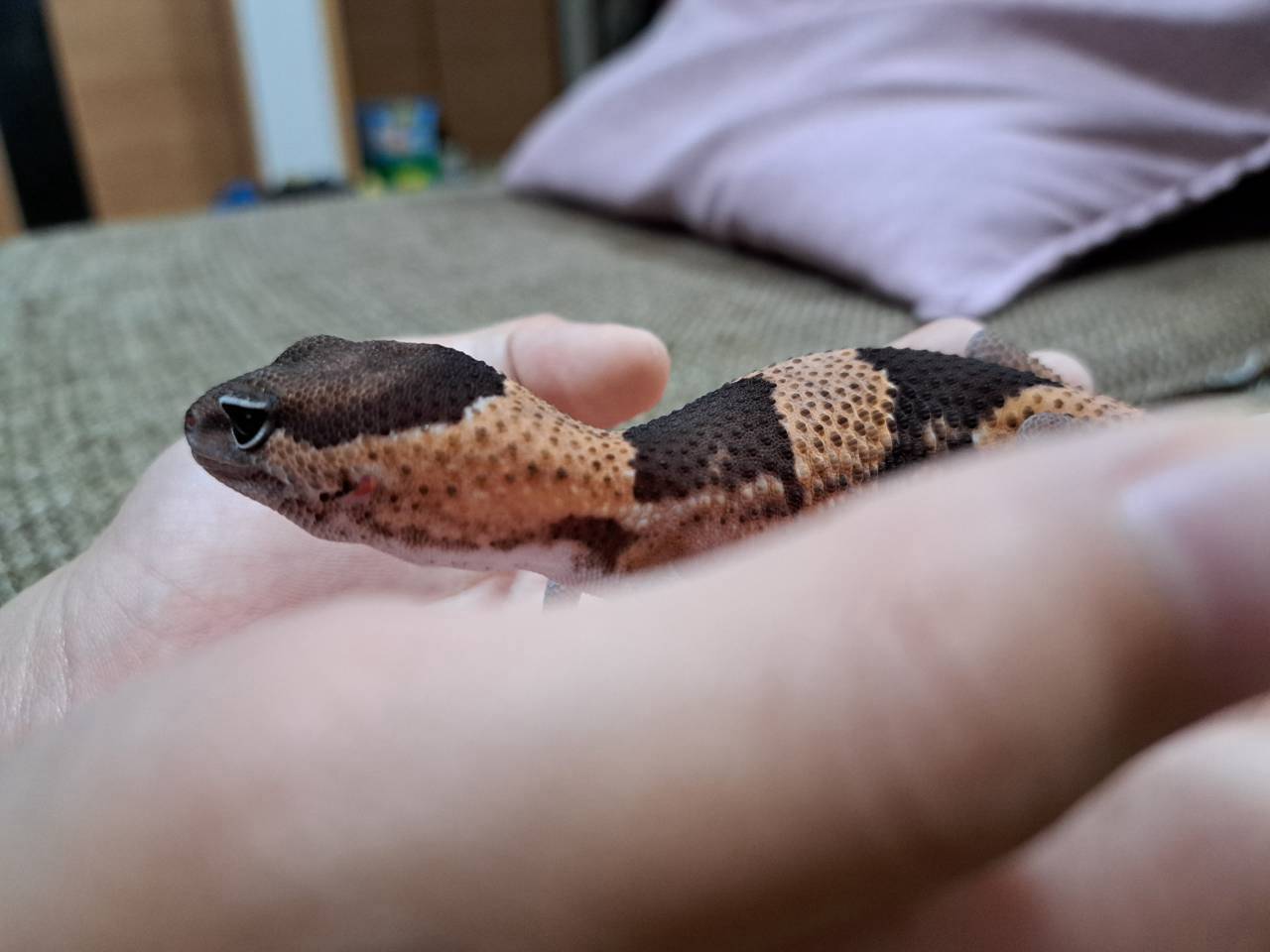
I keep Ohagi, an African fat-tailed gecko, at my home in Japan. Every photo here was taken in my home. Written from my own notes and photos, with AI helping me put it into English.