Cleaning a Fat-Tailed Gecko Enclosure: My Daily, Weekly, and Monthly Routine
"How often do I need to clean this thing?" comes up almost as soon as you bring a gecko home. Some people scrub everything daily, some don't touch the enclosure for a month, and the forum answers are all over the place.
Here's mine: five minutes a day, plus a 30-minute full clean once or twice a month. Four months in, there's essentially no smell and no mold. A fat-tailed gecko is small, poops in the same spot, and leaves very little uneaten food, so the cleaning load is far lighter than with a dog or cat. This post is exactly what I do, when, and how.
- UsingTweezers for poop pickup (100-yen shop, Japan's version of the dollar store)
- UsingA small box with a lid, where Ohagi waits during the full clean
- UsingA spare bag of desert soil, to replace whatever I scoop out
- Not usingSoap, disinfectant, air freshener
1. The whole schedule at a glance
| How often | What | Time |
|---|---|---|
| Daily | Remove poop, change the water, check the thermometer/hygrometer | 5 min |
| Every day or two | Change the water in the dish on top of the moist hide (even if it's still full) | 1 min |
| Weekly | Wash the ceramic moist hide with water (prevents slime and mold) | 5 min |
| As needed | Scoop out any dirty patches of substrate and add fresh | A few min |
| Once or twice a month | Full clean of the enclosure. Ohagi waits in a box | 30 min |
| Every six months | Replace all the substrate (the manufacturer suggests about six months too) | During a full clean |
The key is keeping the daily job small. If you do five minutes every day, the monthly full clean is basically a rinse. Skip the daily stuff and the full clean turns into a project.
2. Daily: poop and water (5 minutes)
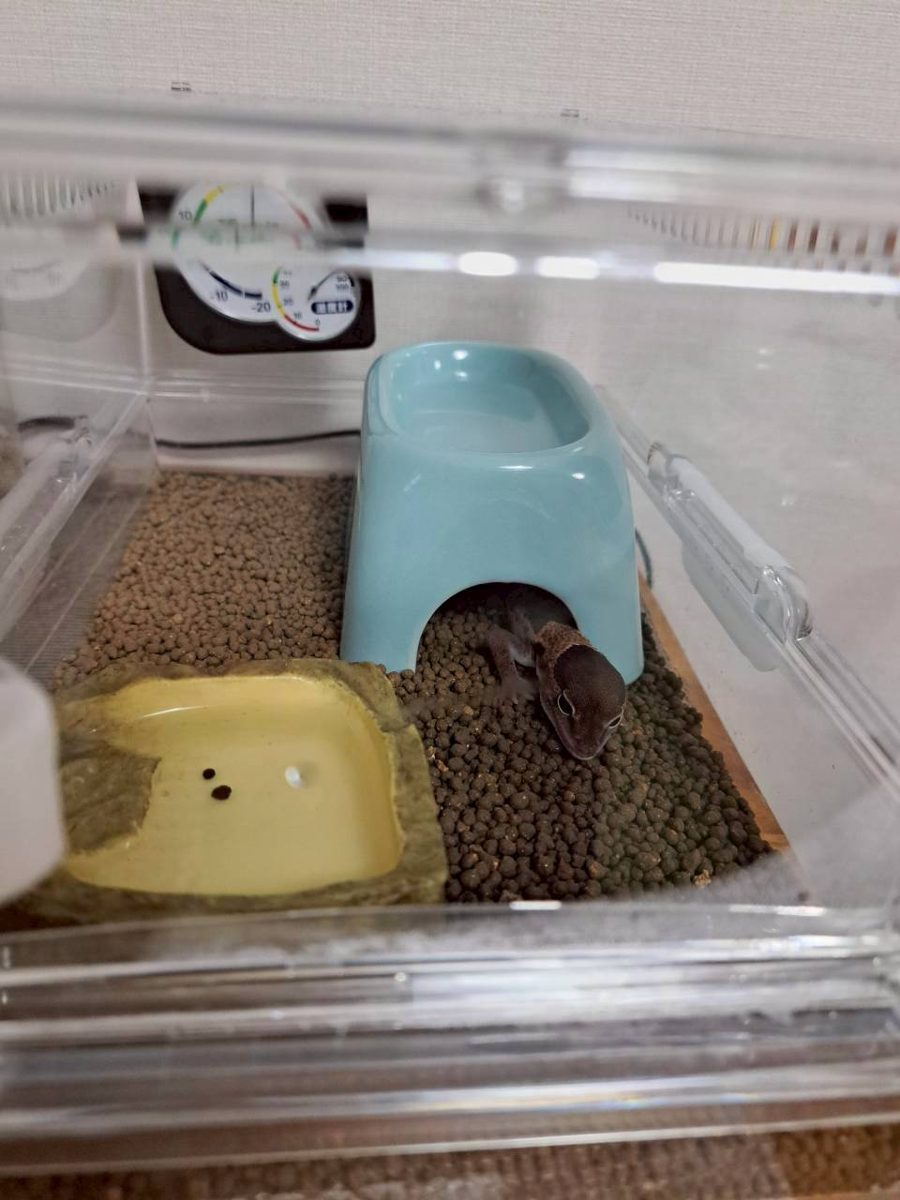
For daily care I go in through the small door on the short end, reaching in from the side. He startles less than when a hand comes in from above
That's the five minutes. He's inside his hide during the day, so he rarely comes out for any of this, and if I'm quiet he doesn't even wake up.
3. Weekly: wash the moist hide
Ohagi's moist hide is the Japanese ceramic type with a water dish built into the top. The inside stays humid, which is the point, but left alone it will grow slime and mold. So once a week it gets a wash with plain water. It's ceramic; water is all it takes. No soap.
He's usually asleep inside when I do this, so I lift the hide gently, leave him sitting on the soil, and walk off with just the hide. A few minutes to wash, shake off the water, put it back. He walks straight back in.
4. Once or twice a month: the full clean (30 minutes)
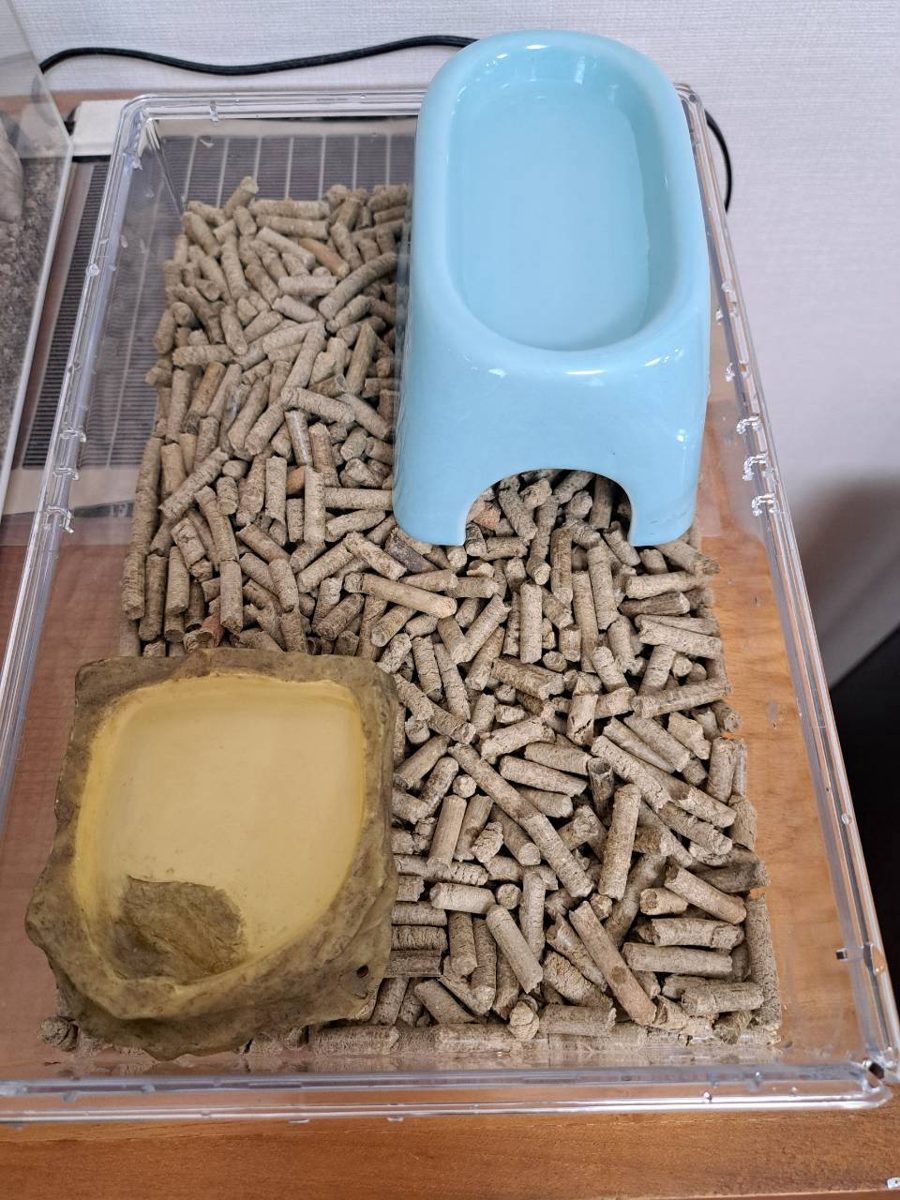
Soil, hide, water dish, thermometer, and that's it. The less stuff in there, the shorter the full clean
5. Do I disinfect?
No. Hot water, no soap, let it dry. That's the whole process. Three reasons.
- I keep one gecko. There's nothing to pass between animals, so the case for disinfecting is weak.
- Poop gets removed daily. Nothing builds up, so the monthly clean really is just a rinse.
- Residue worries me more than dirt. Geckos lick the floor. A poorly rinsed disinfectant seems more dangerous to me than a bit of soil.
There are times disinfecting makes sense: after an animal has been sick, before bringing a new one home, or when you're starting with a used enclosure. The standard approach is a reptile-safe disinfectant, rinsed thoroughly and dried completely before anything goes back in. Diluted household bleach is a commonly recommended alternative, but then rinsing and drying matter even more. So far I've had no reason to do any of it.
6. Why there's no smell and no mold
People assume a gecko enclosure smells. Healthy fat-tail poop barely smells at all. In four months, I have never once smelled the enclosure from across the room, and there's been no mold. I think that has less to do with how often I clean and more to do with not overdoing the moisture.
| What I do | Why it works |
|---|---|
| Remove poop the day it appears | The source of any smell is gone before it becomes one |
| Mist once a day, just enough to fog the walls | The floor never gets soaked; it dries out in a few hours |
| Skip misting on humid days | Japanese summers push indoor humidity past 60% on their own. Adding more just makes it soggy |
| Granular soil labeled as odor-absorbing and moisture-holding | It lives up to the label. Less lingering smell than wood chips |
| Don't add clutter | No hidden corners for grime to collect in |
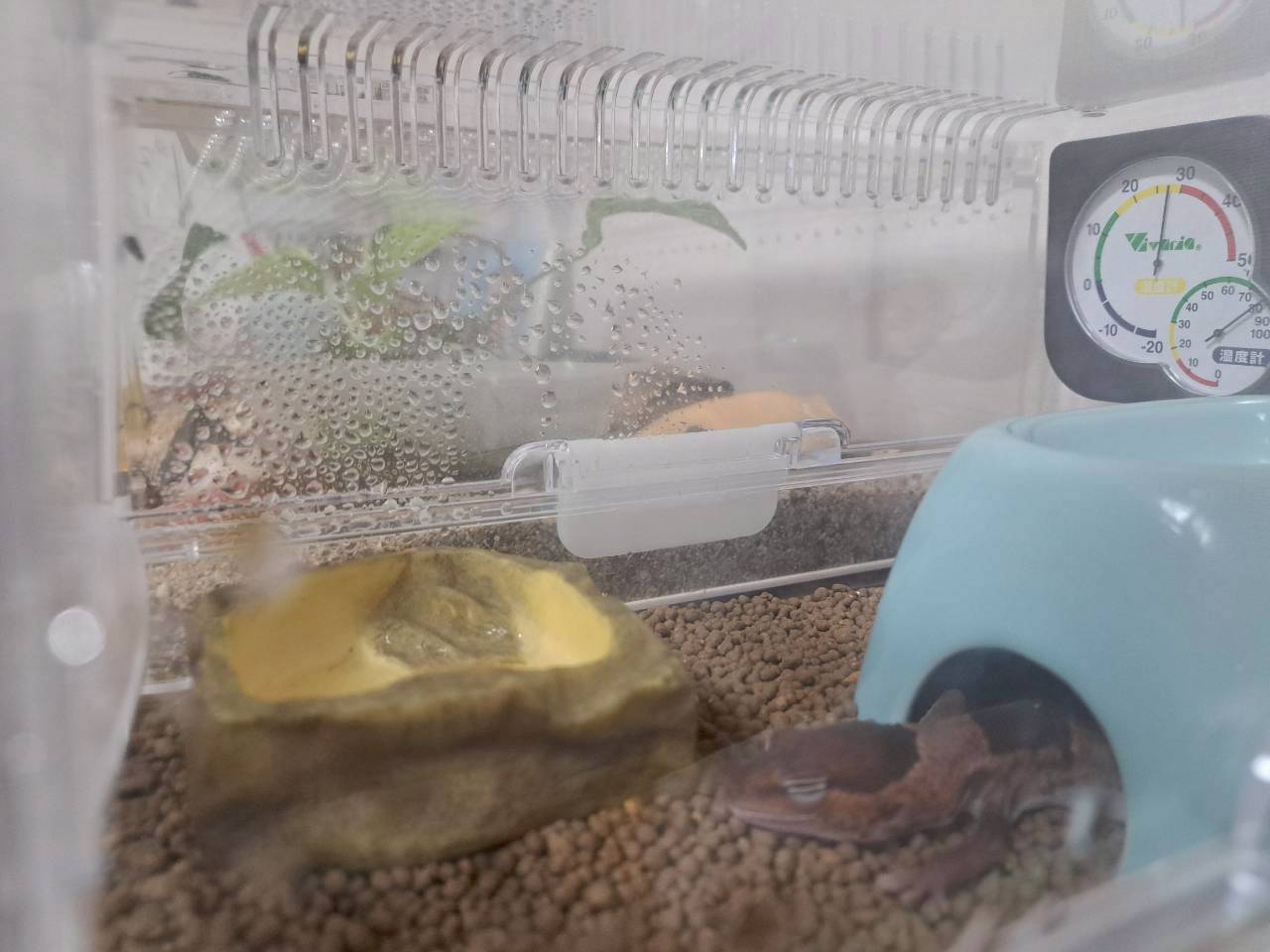
Right after misting. Fogged walls are enough, and it dries in a few hours. Never letting it stay wet is the trick to keeping mold away
If you do get a smell, it's one of three things: missed poop, misting so much the floor never dries, or a feeder insect that got loose and died somewhere. Before you clean more often, check those three. It's faster.
FAQ
- Where does the gecko go during cleaning?
- A small box with a lid. Something to hide under keeps him calm. Lid on, always. I aim to have him back in the enclosure within 30 minutes.
- Does it really get clean without soap?
- If you're removing poop daily, yes. What's left in the enclosure is mostly soil and water spots. Hot water and a wipe handle that. If you do want soap, a little diluted dish soap is fine; just rinse thoroughly.
- Does the full clean stress him out or make him skip meals?
- Not so far. Because the hide and dish go back exactly where they were, from his point of view the soil just got a little fresher. I've read that rearranging everything can leave a gecko unsettled for a while.
- How often should I replace all the substrate?
- I go with about every six months (the manufacturer's guidance is roughly six months too). Day to day it's just scooping out dirty patches and adding a little fresh soil. Cheaper than a full swap, and easier on the gecko.
- Do I need to wash the gecko himself?
- No. A healthy gecko keeps himself clean. The one exception is a soak in lukewarm water when shed skin gets stuck, and I cover that in its own post.
• Primary source: my own routine and records for Ohagi, May–September 2026. The notes on when disinfecting makes sense and how to do it are general husbandry knowledge; I haven't needed to do it myself
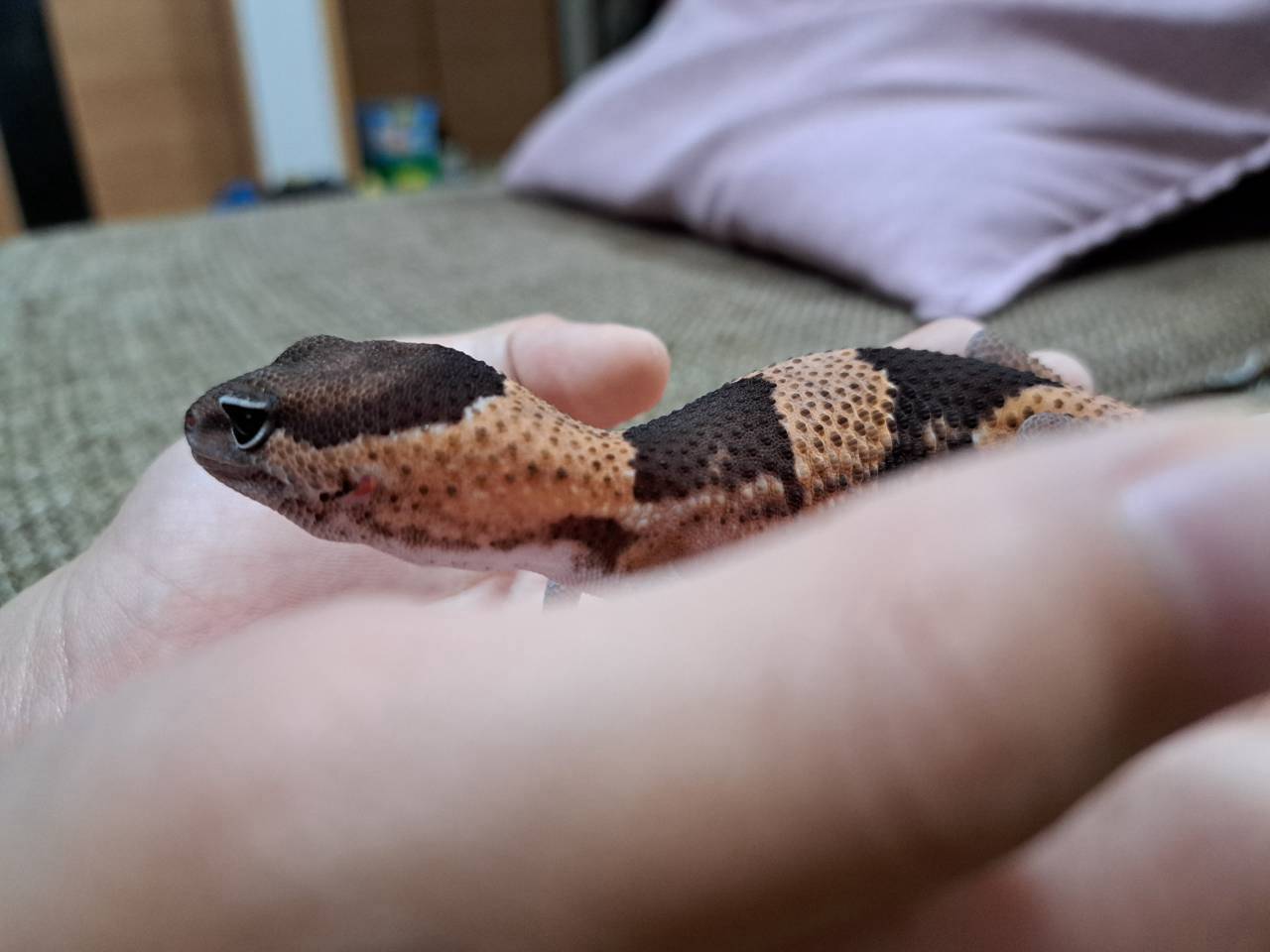
I keep Ohagi, an African fat-tailed gecko, at my home in Japan. Every photo here was taken in my home. Written from my own notes and photos, with AI helping me put it into English.