African Fat-Tailed Gecko Tank Size and Setup: What's Actually Inside My Gecko's Enclosure
Every tank-size article ends the same way: "18 × 12 inches or bigger." That's true, but it isn't what I wanted to know when I was setting up. What I actually wanted to know was: okay, but what goes in there, and where? So this article does both: the general size guide first, then a photo tour of everything inside my own gecko Ohagi's enclosure.
Fair warning up front: my enclosure is on the small side, a 12-inch-wide case. It fits Ohagi fine while he's young, and I'm planning to size up as he grows. I'll explain that call too.
- EssentialThe enclosure itself (mine is an acrylic case with a small door on one end and a lift-off top half)
- EssentialMoist hide (the Japanese ceramic type with a water dish on top)
- EssentialWater dish, shallow and heavy
- EssentialUnder-tank heat mat plus a thermometer/hygrometer (details in the temperature article)
- EssentialSubstrate (I use a granular desert soil; the substrate article compares three)
- Nice to haveA dry hide for the cool side, and something low to climb on
1. Tank size: the general guide
An adult fat-tailed gecko is only about 8 inches (20 cm) long, but you need enough width to build a warm side and a cool side inside the enclosure. That's what sets the minimum.
| Floor size | Where it fits | Notes |
|---|---|---|
| 12 × 8 in (30 × 20 cm), roughly a 5-gallon footprint | Bare minimum (hatchlings to juveniles) | Hard to build a real temperature gradient. Upgrade as he grows |
| 18 × 12 in (45 × 30 cm), about a 10-gallon | Standard for an adult | Room for a gradient and two hides without crowding |
| 24 × 12 in (60 × 30 cm) or bigger, a 20-gallon long | Roomy | Lots of layout freedom. If he seems unsettled in the space, add more hides |
The key idea is width over height. Fat-tails live on the ground, so a tall enclosure buys you nothing. Long and low, with heat on one end only, is the shape you want.
2. Why I went with a 12-inch case
Ohagi was a 24 g juvenile when he came home. Putting a gecko that size in an 18-inch tank felt like a lot of empty space between him and his hide, so I started small. The other reason was the design of this particular case. There's a small door on one end, and that's where all the daily stuff happens: feeding, water changes, picking up poop. Reaching in from the side startles him a lot less than reaching in from above.
Then for cleaning, two latches on the long sides release the entire top half of the case, so substrate changes and full washes are quick. I'm fairly sure that little side door is why Ohagi now comes over with a "food?" look every time I open it.
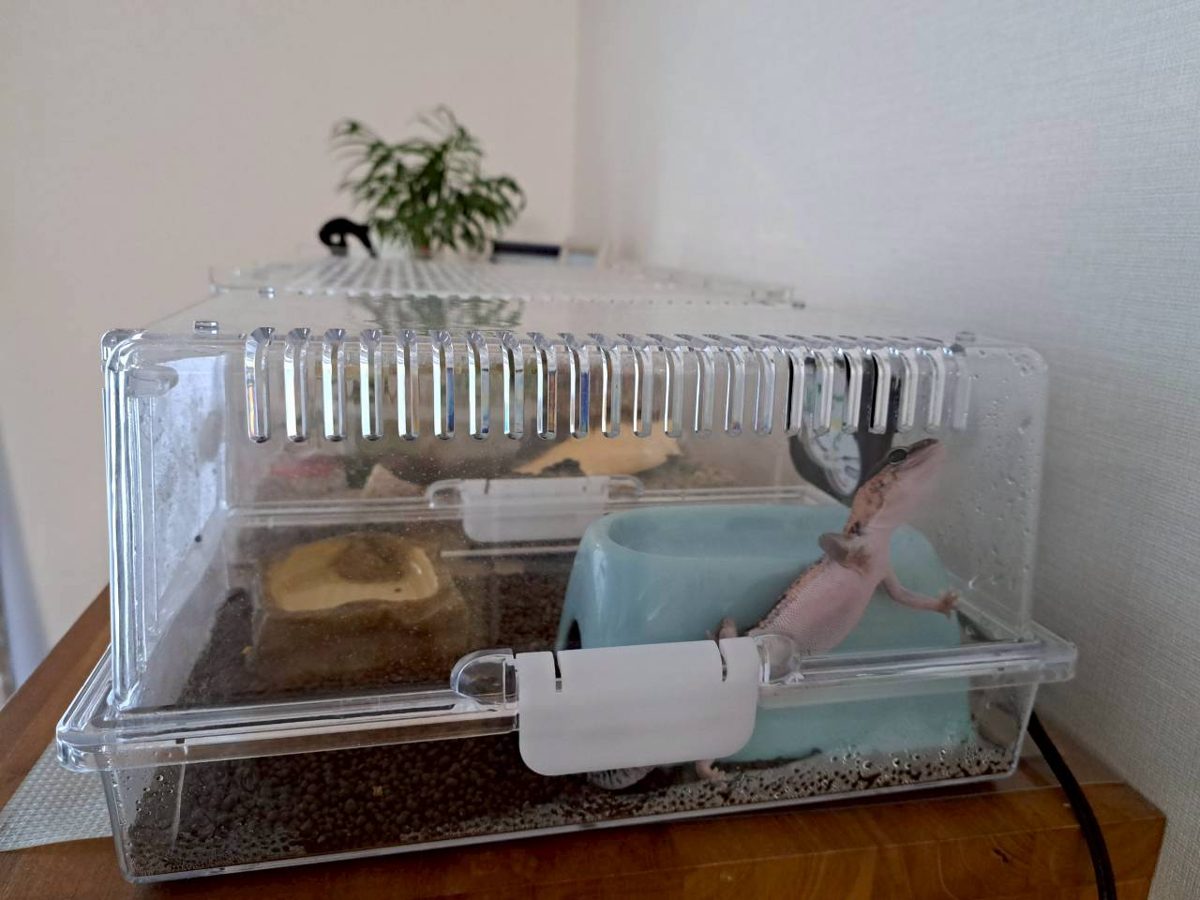
The enclosure from outside. The white tab on the long side is one of two latches; undo both and the whole top half lifts off. Vent slits along the top. Ohagi is climbing onto his hide
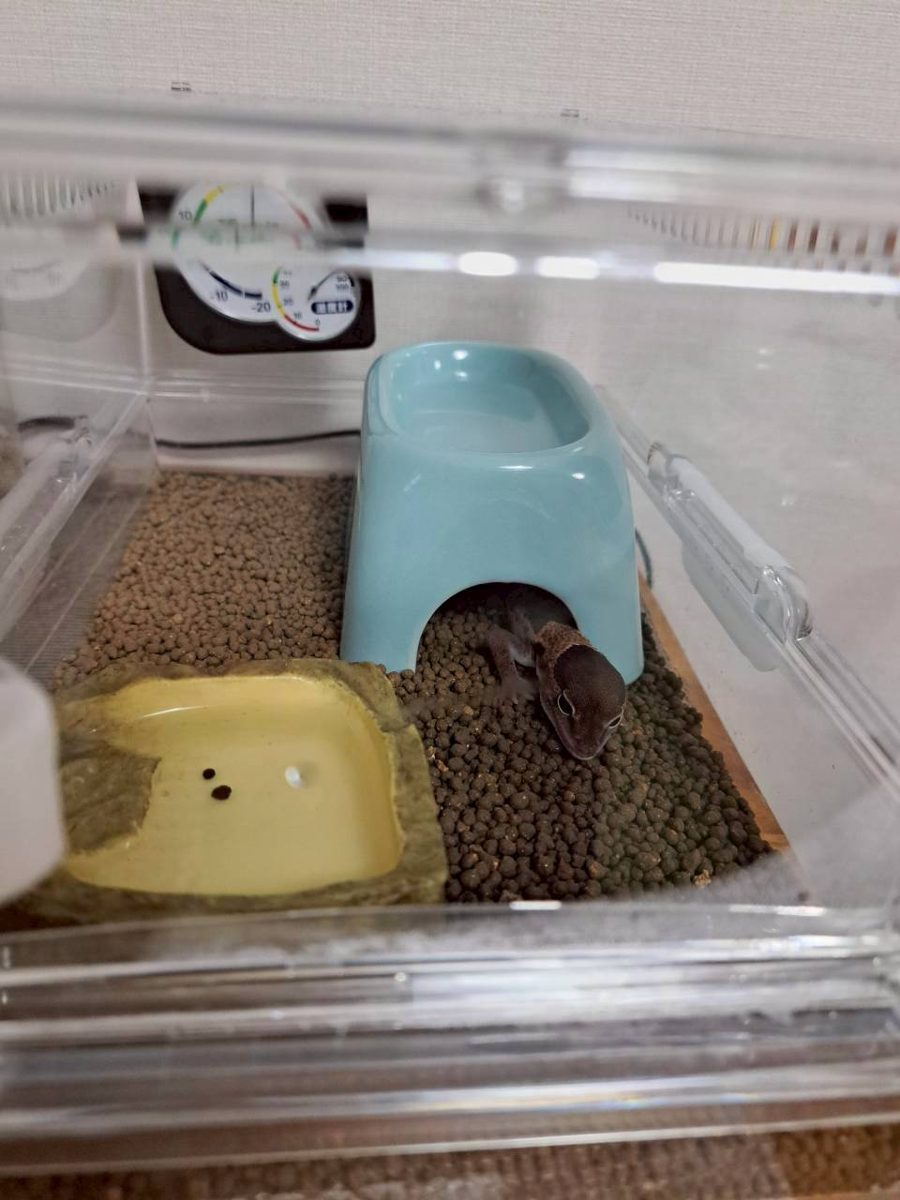
The door on the end of the case, open. Daily care happens through here. Coming in from the side means no shadow falling over him from above
3. Everything inside my enclosure
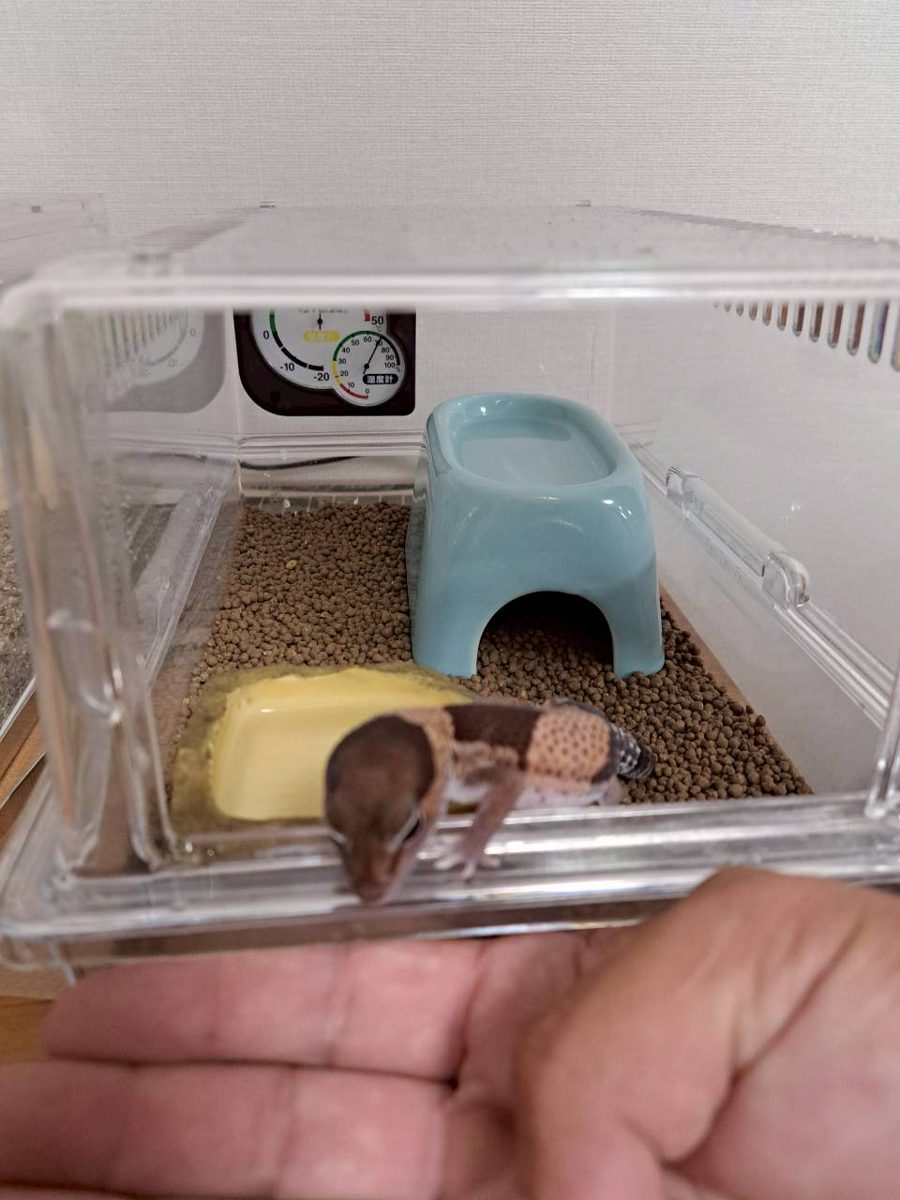
The full view. Yellow water dish on the left, light-blue dome on the right is the moist hide, thermometer/hygrometer on the back wall. Desert soil on the floor
| Item | What I actually use | Where it goes, and why |
|---|---|---|
| Moist hide | Ceramic type with a water dish on top (light blue) | On the heat-mat side. He sleeps in here most of the day, so I warm the place he spends the most time |
| Water dish | Shallow yellow ceramic dish | Opposite end from the hide. Heavy, so it doesn't tip |
| Substrate | Granular desert soil | About 1 inch (2–3 cm) over the whole floor. He digs, so don't go thin |
| Thermometer/hygrometer | Analog dial (Vivaria), stuck to the wall | Back wall. One glance gives me temperature and humidity together |
| Under-tank heat mat | Pitari Tekion Plus size 2, a Japanese mat about 8.5 × 8.5 in (22 × 22 cm) | Under the enclosure, covering about half the floor. Leaves him somewhere to get away from the heat |
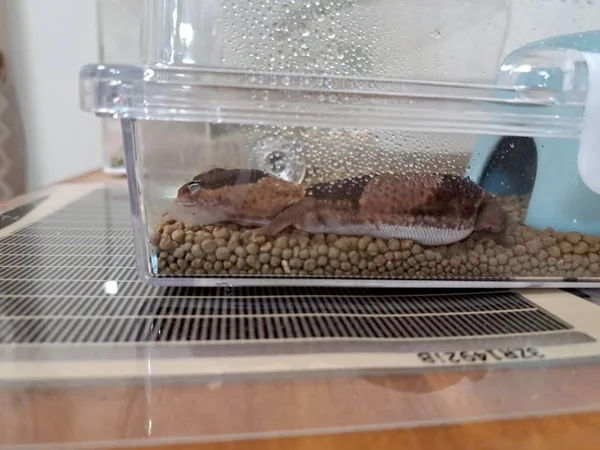
The heat mat slid under the case. It only reaches half the floor, so if he's too warm he can move to the other end
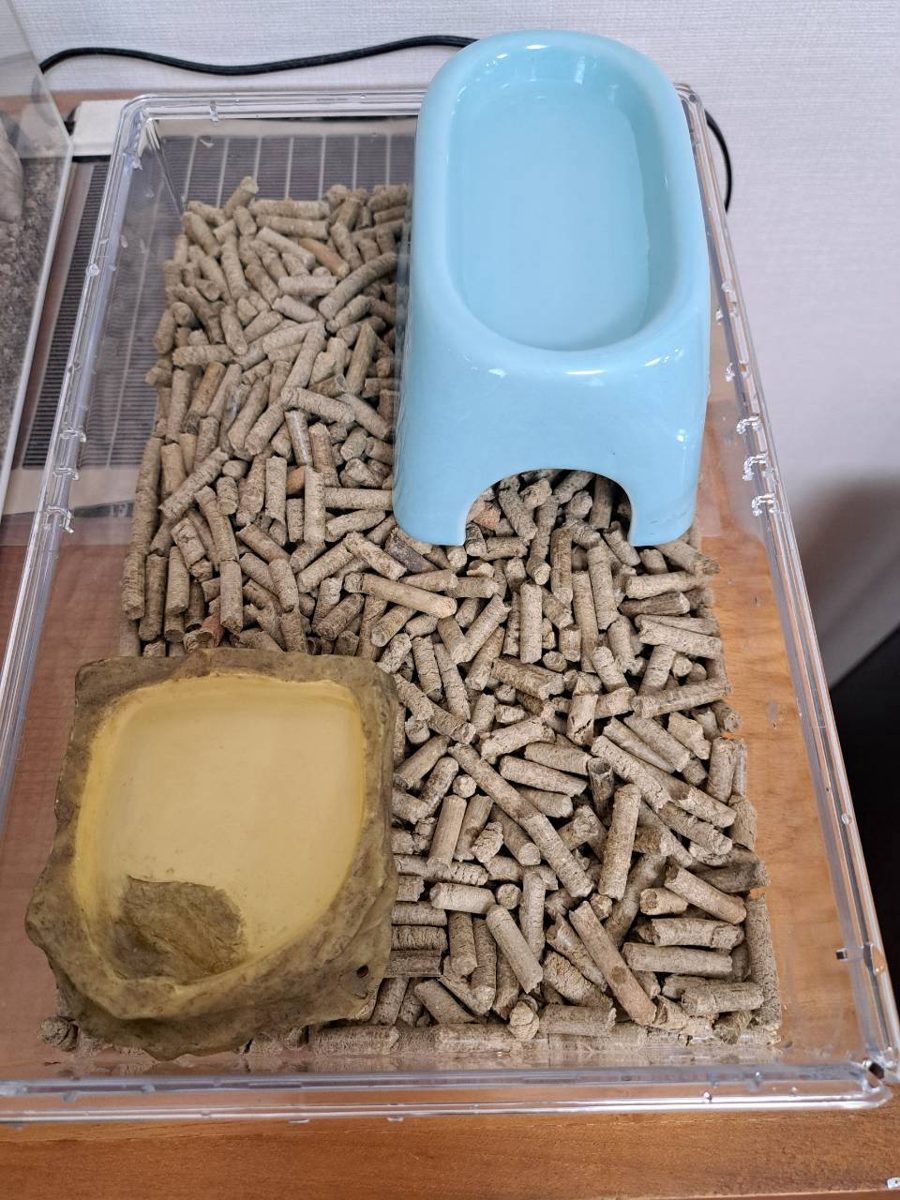
The layout from above (this was back on wood pellets). Hide and water dish at opposite ends is the basic rule
4. Setting it up, step by step
Skip the decorations at first. The more stuff in there, the more annoying cleaning gets and the more places he has to disappear into. Add things once you've both settled in.
5. Cleaning schedule
| Task | How often |
|---|---|
| Remove poop | Whenever I spot it. Ohagi uses the same corner every time, which makes it easy |
| Change the water | Daily to every other day |
| Top up the dish on the moist hide | Whenever it's low |
| Spot-change substrate | As needed, just the dirty patches |
| Full wash | Once or twice a month. Ohagi waits in a small lidded box in the meantime |
FAQ
- Glass, acrylic, or a plastic tub?
- Any of them works. Glass is heavy and holds heat well; acrylic is light but scratches; plastic tubs are cheap but need some thought on ventilation. For a first enclosure, prioritize two things: a side door you can reach through that closes securely, and a way to open the whole thing up for cleaning.
- Is it true a tank can be too big?
- What unsettles a gecko is too few hides, not too much space. If you go big, add two or three hides.
- Does he need something to climb?
- Not required, but Ohagi climbs onto his hide and the rim of his water dish all the time. One low step adds a lot of behavior to watch. Skip anything tall; falls are the danger.
- Can I keep two together?
- I wouldn't. Males in particular will fight over territory. One gecko per enclosure is the rule.
・Primary source: my own setup and photos of Ohagi's enclosure (2026)
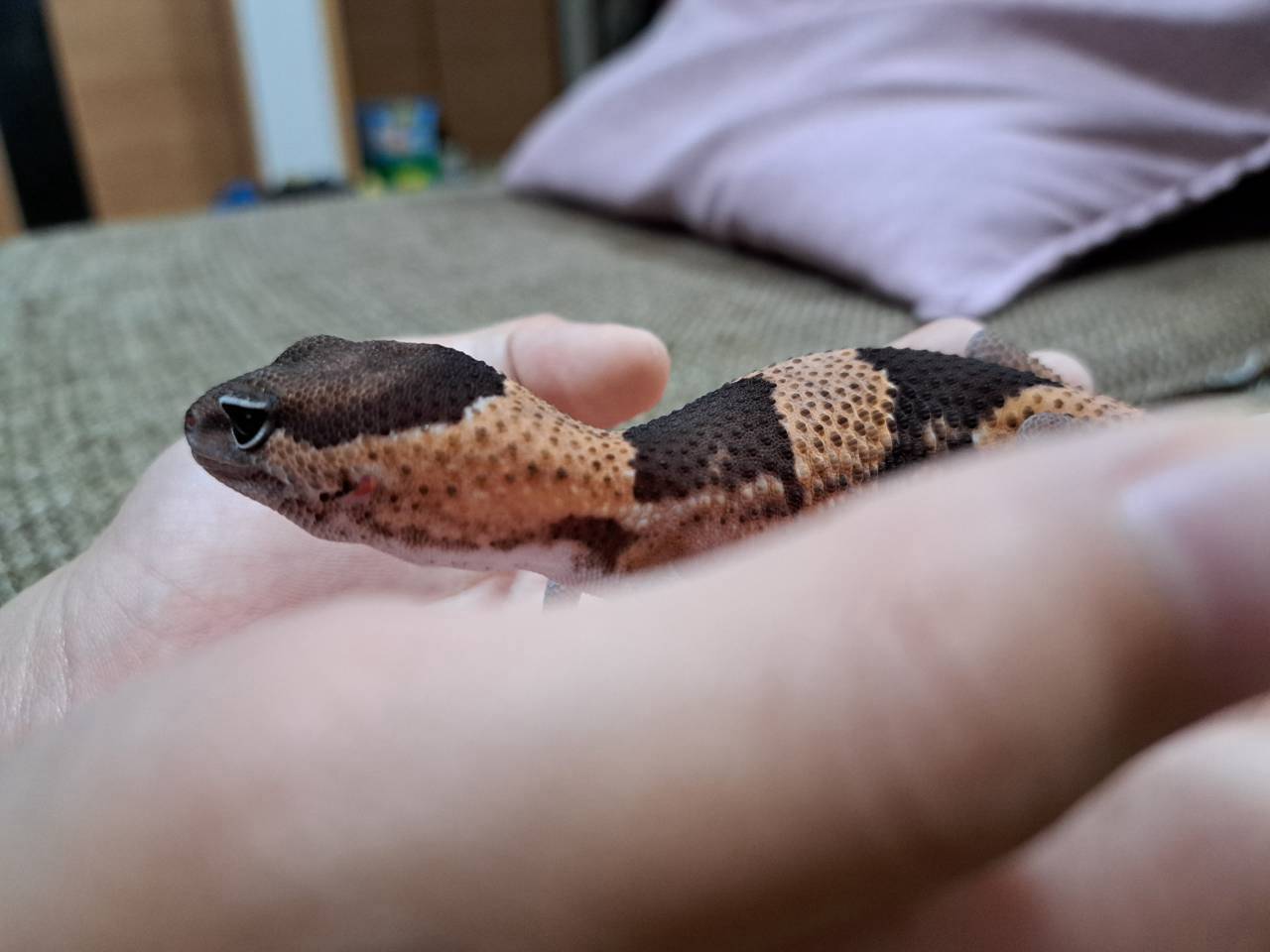
I keep Ohagi, an African fat-tailed gecko, at my home in Japan. Every photo here was taken in my home. Written from my own notes and photos, with AI helping me put it into English.