
The Moist Hide: The Hardest-Working Thing in My Fat-Tailed Gecko's Enclosure
If you asked me which item in my enclosure works the hardest, I wouldn't even hesitate: the moist hide. Hiding spot, humidifier, nap spot, shedding helper — four jobs in one.
In the English-speaking hobby, a "moist hide" usually means a DIY job: a plastic tub with a hole cut in the side. In Japan we've got something different: a ready-made ceramic hide with a water dish built right into the top. This article covers how it works, and how my gecko, Ohagi, actually uses it.
- The starMoist hide (the Japanese ceramic type with a water dish on top) — mine's a light-blue one
- AlternativeA plastic tub plus damp sphagnum moss or paper towels — for the DIY crowd
1. How it works: why only the inside gets humid
The top of a ceramic moist hide is a water dish. Fill it up, and the unglazed ceramic slowly wicks the water down, releasing moisture into the chamber below — a humidifier that runs on zero electricity. The enclosure as a whole stays at 60–70%, while the inside of the hide turns into a humid little retreat.
Fat-tailed geckos are good at picking their own comfort zone. Give them a dry spot and a damp spot, and they'll move between the two as they see fit.
2. How Ohagi actually uses it
Care sheets just say "it's a hiding place." Watch an actual gecko and you'll see a lot more going on.
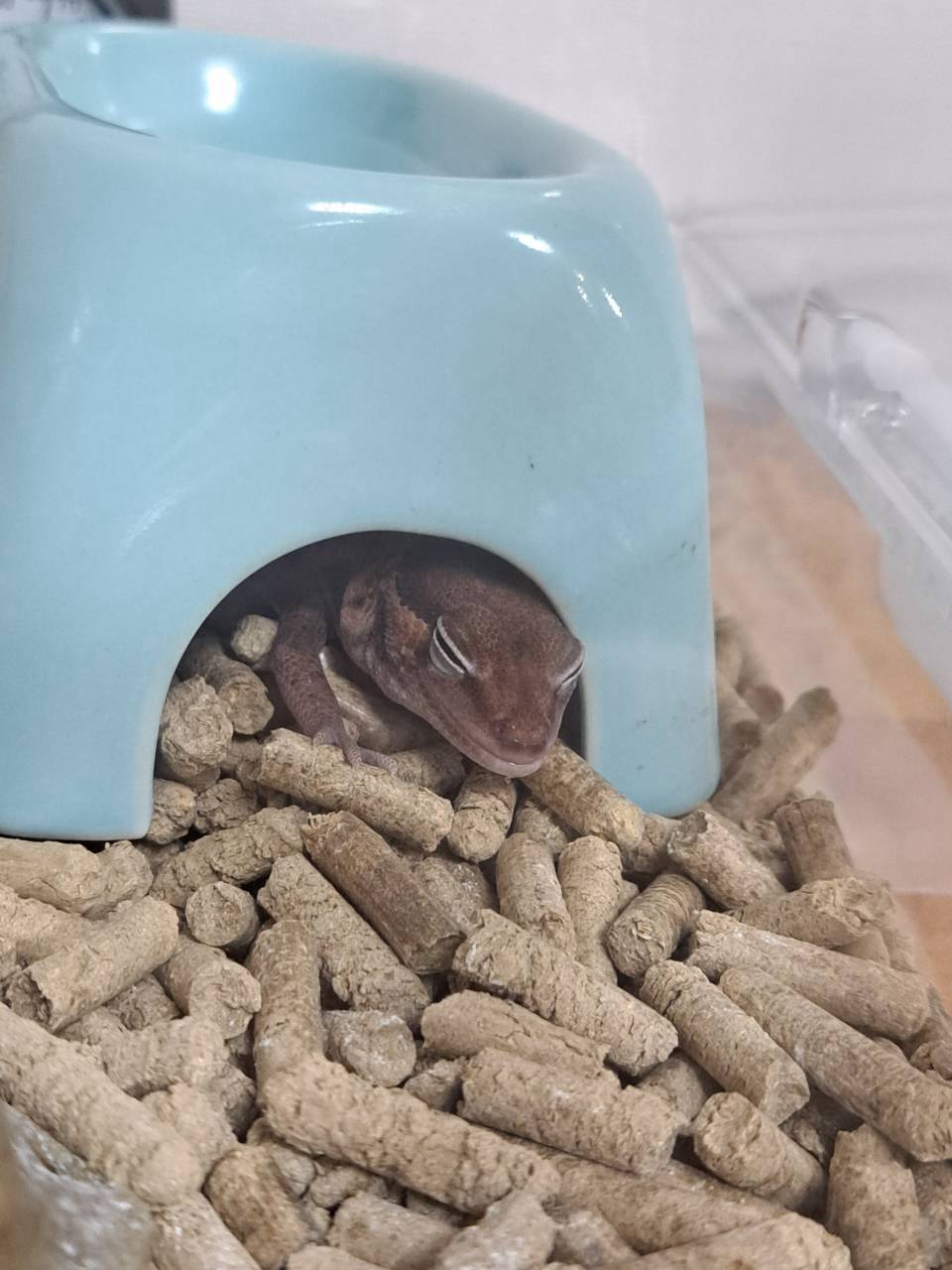
The basic mode: napping inside. Sleeping with just his face poking out of the doorway is Ohagi's signature look
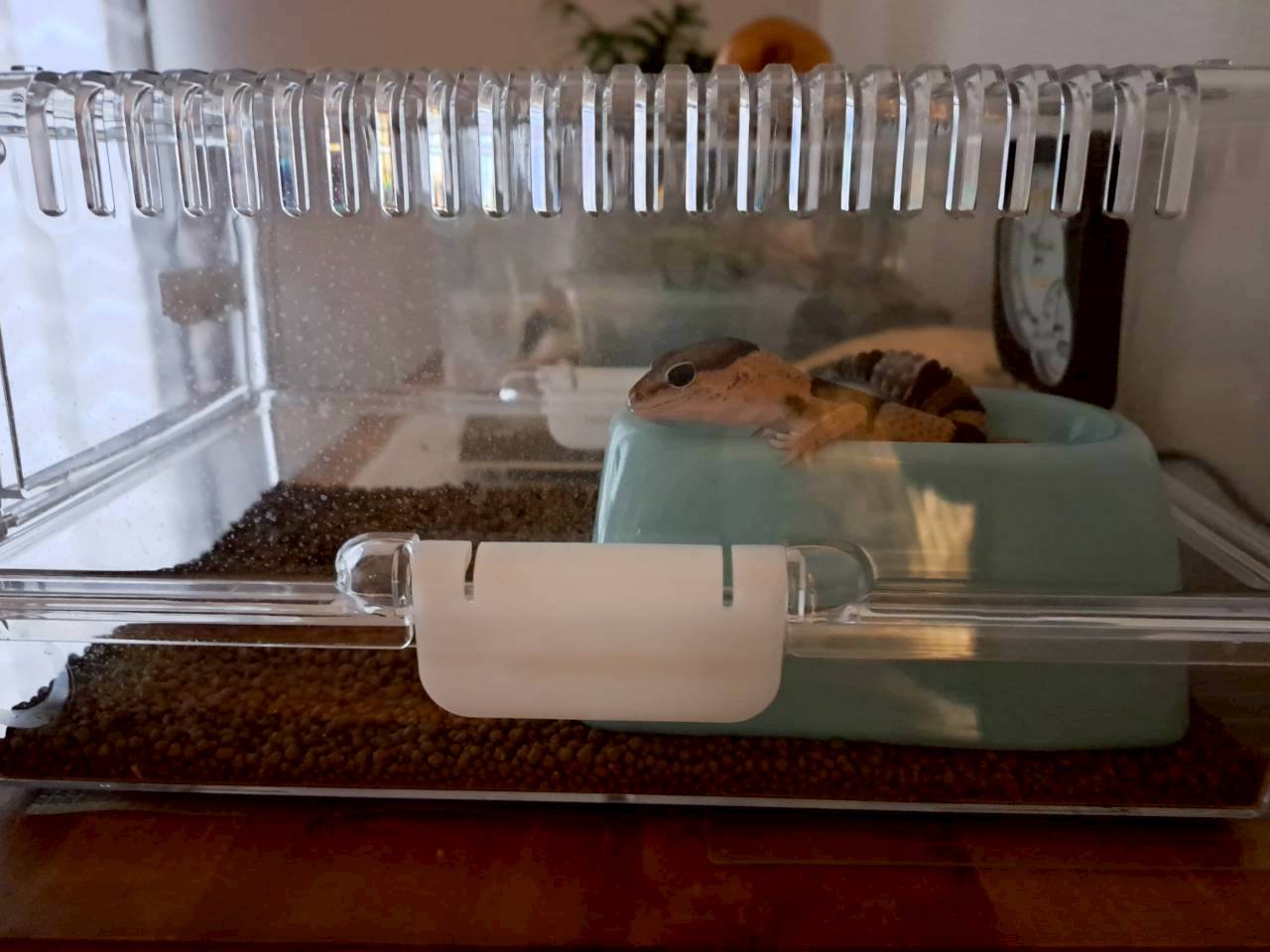
The advanced move: on hot days he climbs into the water dish on top to cool off. That's the last stage of his "built-in thermostat" (explained in the log below)
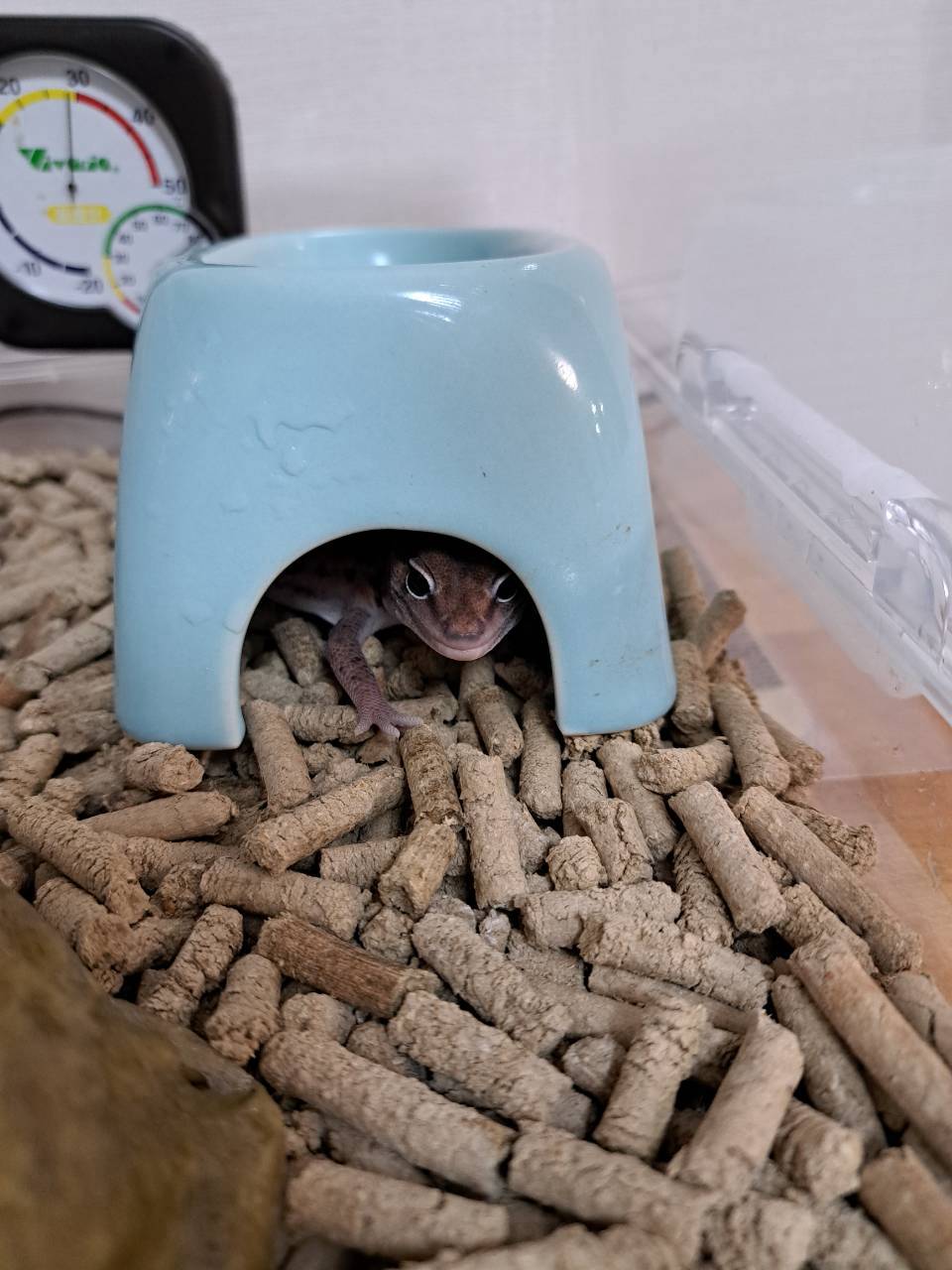
And when he senses someone nearby, this is how he sizes things up
3. Placement and upkeep
- Placement: the textbook says "the side without the heat mat" (the cool side). But I deliberately put mine on the heat-mat side — my reasoning, and how it turned out, are in the log below
- Water changes: refresh the top dish every day or two, even if the level hasn't dropped
- Full wash: about once a week to keep mold and slime away. It's ceramic, so plain water does the trick — no soap needed
- Winter note: in a cold room, the inside can get too chilly. Check it now and then with a thermometer/hygrometer
Honestly, I went back and forth on which side. There was a case for both. What settled it was the Japanese climate: outside of summer, room temperatures here rarely hit 86°F (30°C). So shouldn't the place where Ohagi spends most of his day — inside the hide — be the warm place? With that logic, I put the heat mat under the spot where he spends the most time: the hide. My bet was that warm plus enclosed would feel the safest to him.
Here's how Ohagi responded. On just-right days, he sleeps inside the hide. On warm days, he comes out and cools off in the open. On days that are still too warm, he climbs into the water dish on top of the hide and soaks. Three stages — inside → outside → water — and he picks his own temperature. The photo of him in the water dish above is that final stage.
One thing worth knowing: if you'd like to see more of your gecko, you might try the opposite. Put the heat mat on the side without the hide, and he may start sleeping out in the open to stay warm. I went with "comfort first," but this is one of those choices with more than one right answer.
FAQ
- Do I need two hides?
- Ideally, yes: a dry hide on the warm side plus a moist hide on the cool side. If space is tight, one moist hide is a perfectly good start.
- He never comes out of the hide.
- Nocturnal geckos hide all day — that's normal. Ohagi spends most of the day asleep in his. The only time to worry is if he "never comes out at night either, and isn't eating." Then check the temperature and how he's looking.
- Does a DIY tub work just as well?
- For humidity, yes. What the ceramic type has going for it is looks, weight (it won't tip over), and a top dish that doubles as a water bowl.
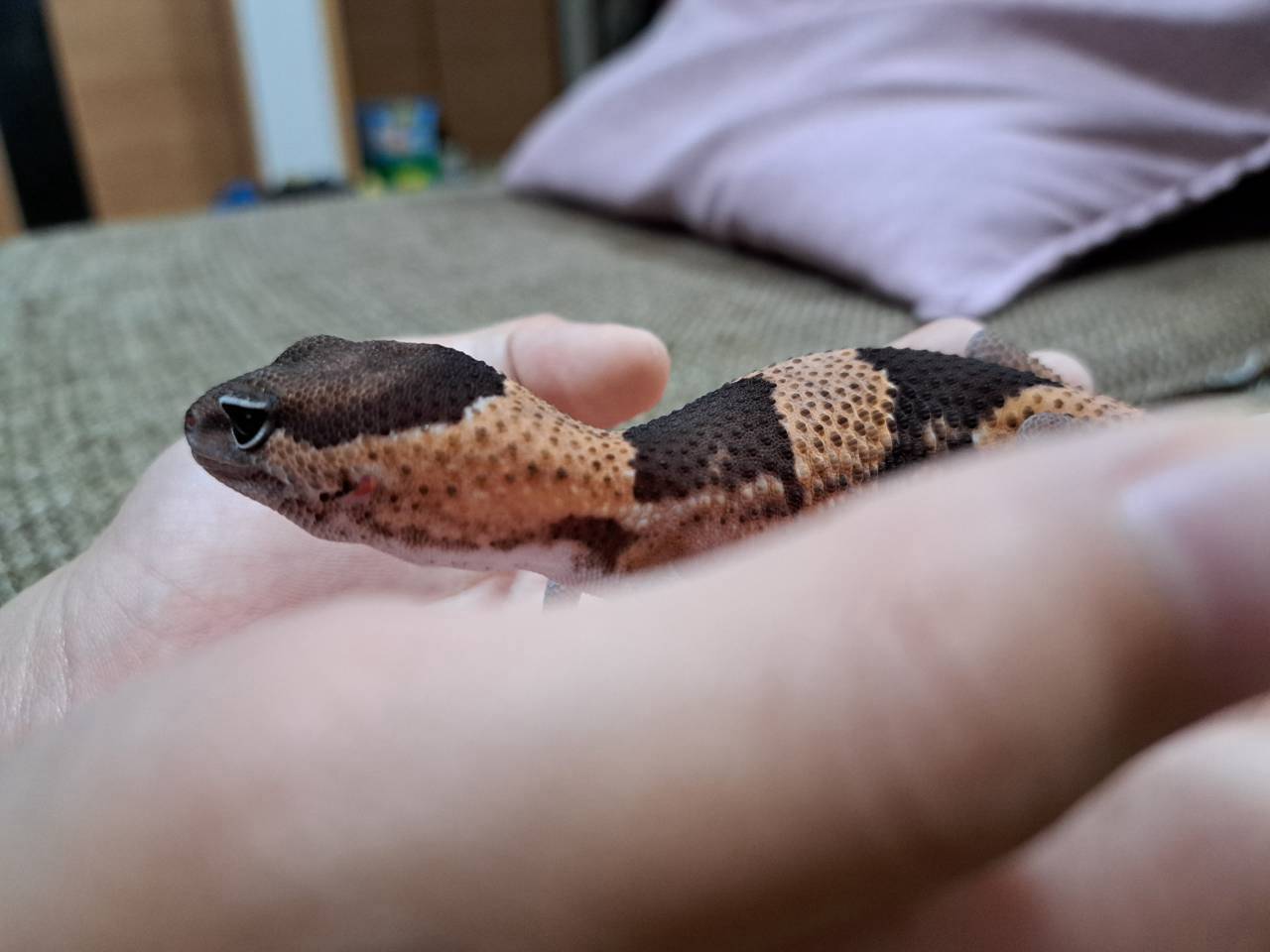
I keep Ohagi, an African fat-tailed gecko, at my home in Japan. Every photo here was taken in my home. Written from my own notes and photos, with AI helping me put it into English.