
African Fat-Tailed Gecko Shedding: The Whole Process From "Turning White" to Done (All Photographed)
"My gecko's body looks white — is he sick?" It's one of the first things a new fat-tailed gecko keeper googles. The short answer: a shed is on its way, and there's nothing to worry about.
But because shedding happens at night, quietly, inside the hide, surprisingly few keepers have ever watched the whole thing. I got lucky (and stubborn) and photographed it start to finish — so this article shows you what shedding actually looks like, beyond what the care sheets tell you.
- Shedding's best friendMoist hide — about 80% of sheds happen entirely inside it
- Pre-shedSpray bottle — once he turns white, mist more often and shoot for 80% humidity
1. Pre-shed: turning white (the part people search for)
A few days before a shed, the body goes dull and whitish. The telltale sign: the head stays dark while everything from the neck down goes pale. A thin layer of air forms between the old skin and the new — the "shirt" is lifting off.
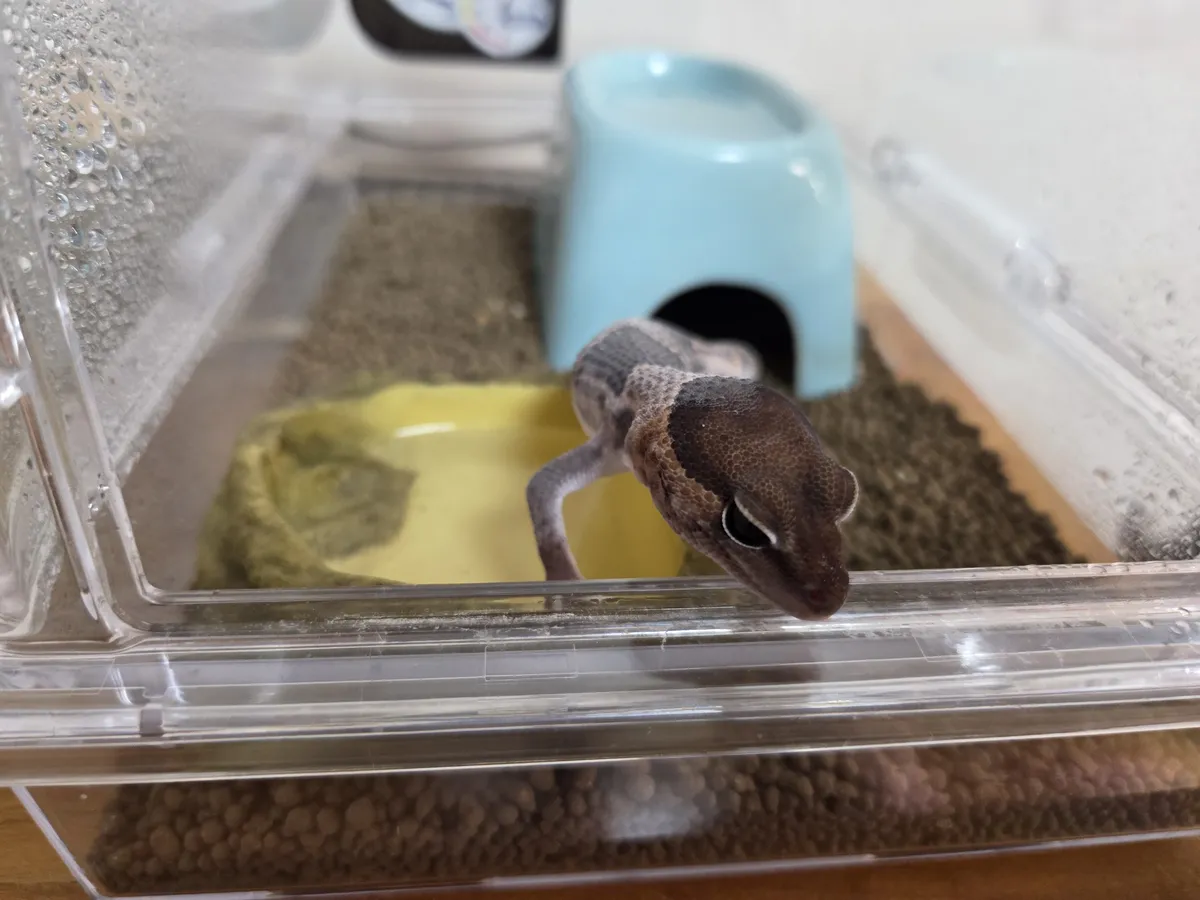
Ohagi pre-shed. The first time you see this "dark face, white body" look, you'll probably assume he's sick (he's not — it's normal)
His appetite drops and he hides more during this stretch. Also normal. Your job is to mist more and push the humidity toward 80% — and to leave him alone. Just those two things.
2. Mid-shed: he peels it off and eats it
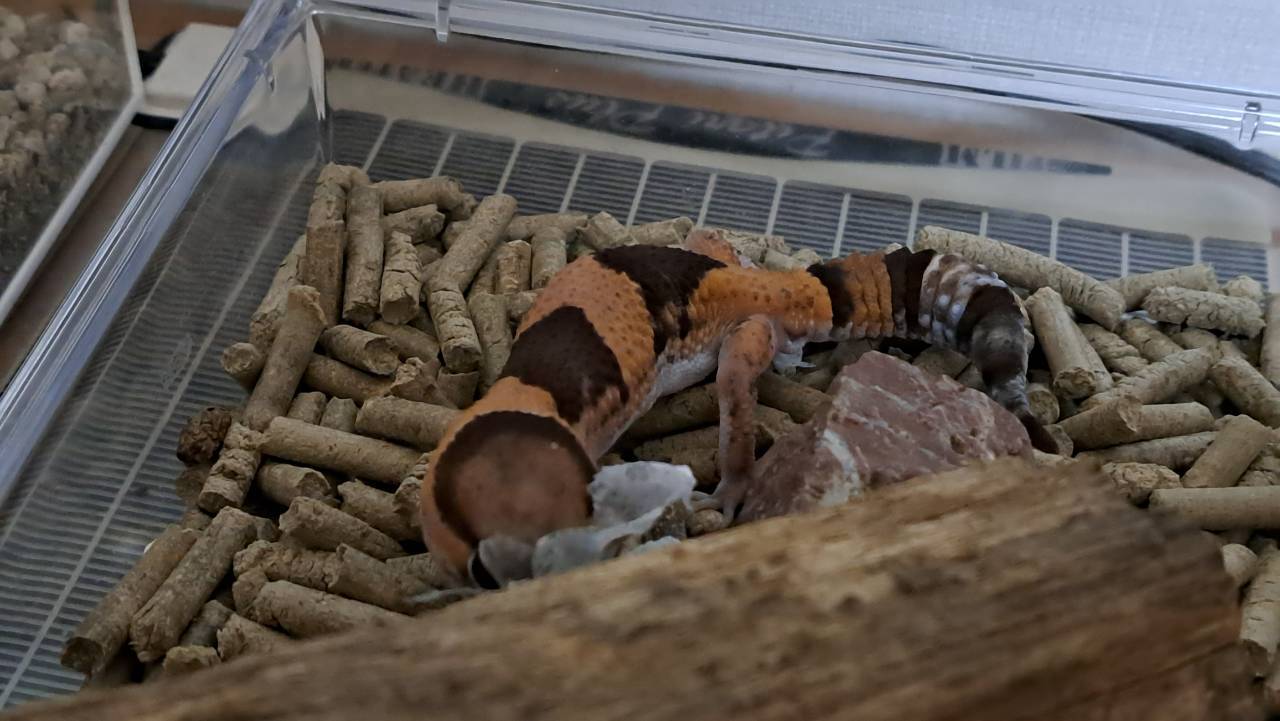
The shed itself usually happens somewhere between midnight and dawn. He grabs the skin in his mouth, peels it off, and eats it as he goes. Picture pulling off a sock and eating it, and you've got the idea.
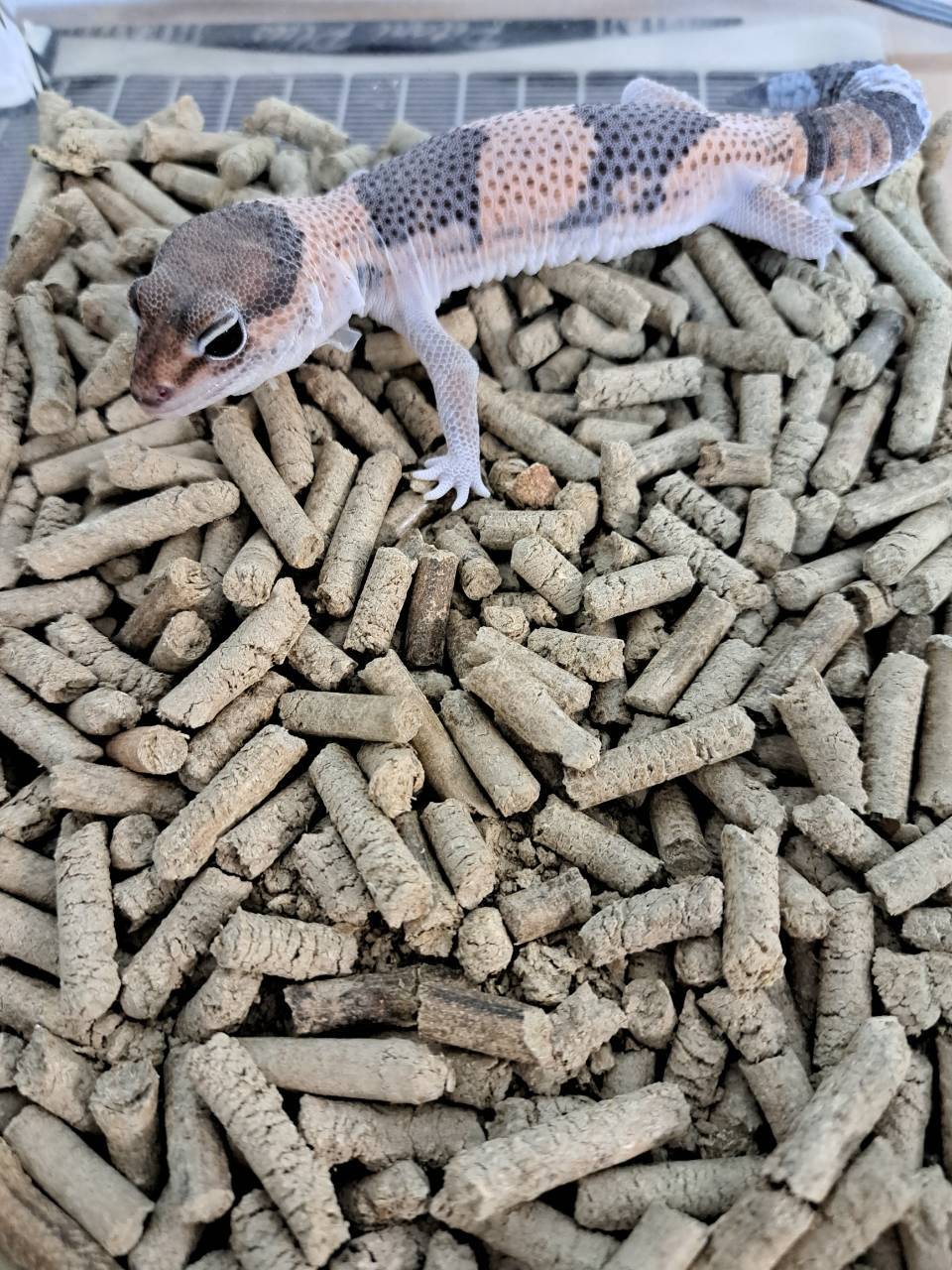
Mid-shed. New skin showing through under the peeling old layer
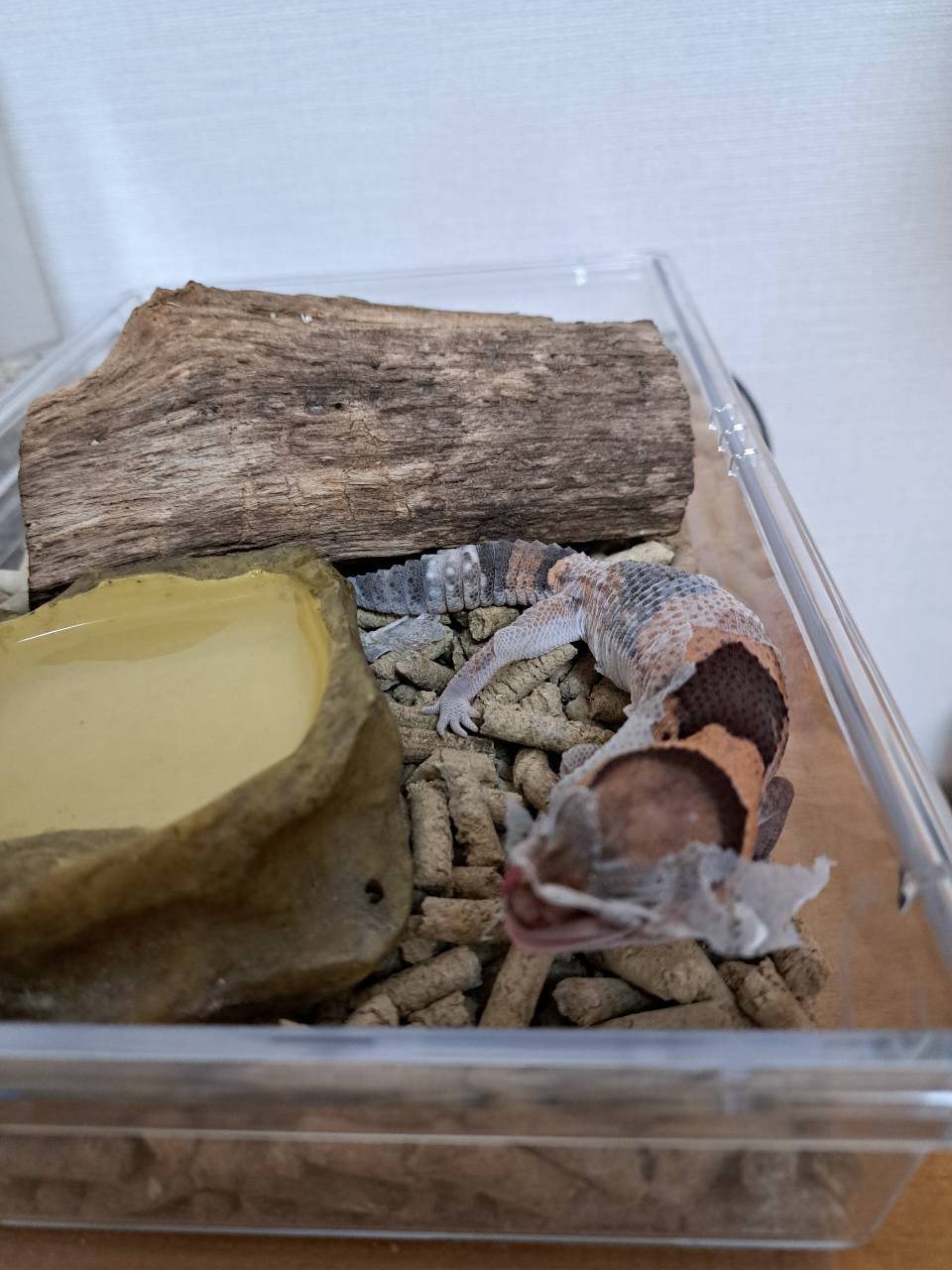
And then he eats it. In the wild, this is thought to wipe out any "a gecko was here" evidence predators could find. It recycles nutrients too — nothing goes to waste
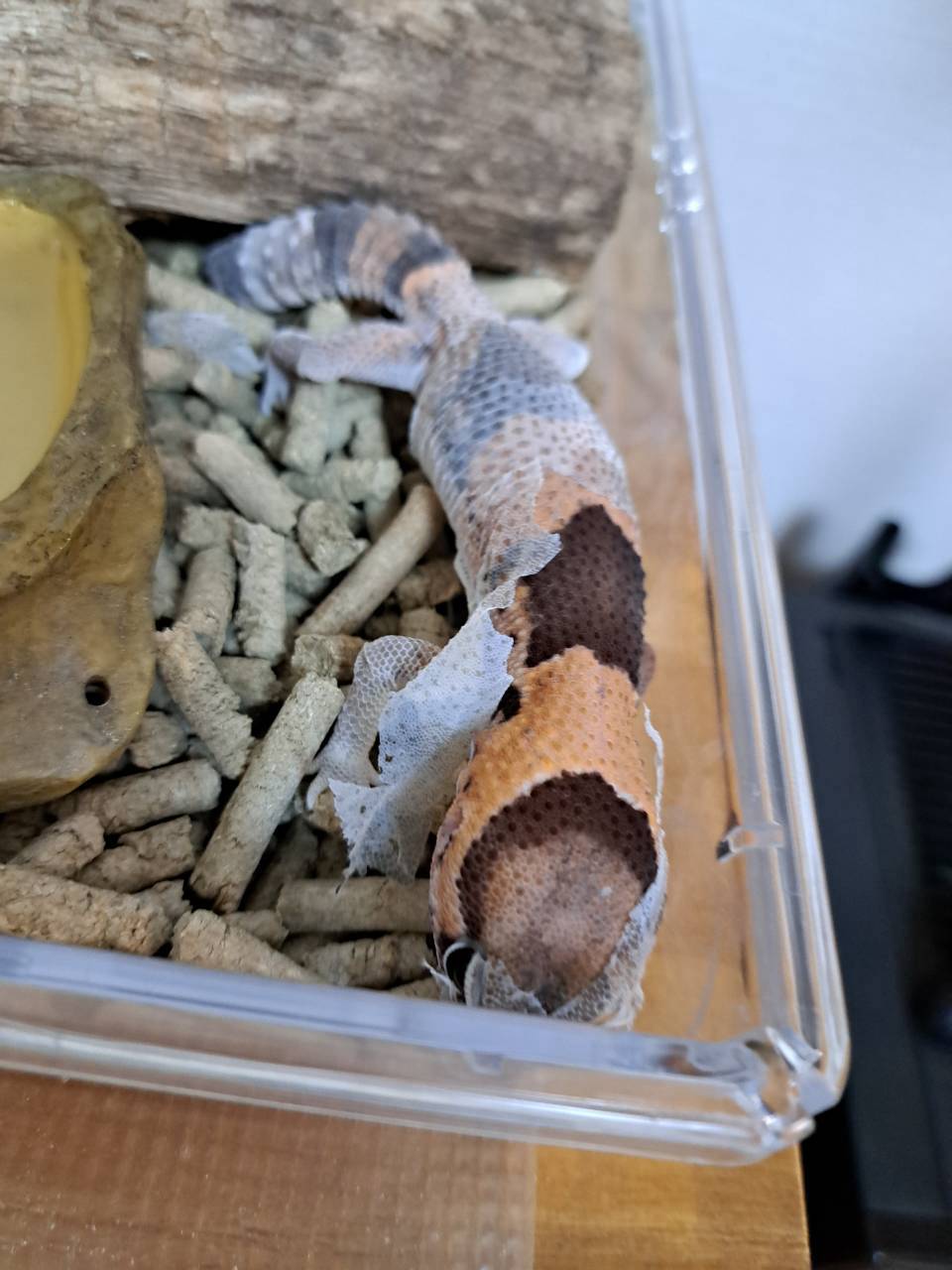
The bit he didn't finish. You can still make out the pattern — a tiny work of art
3. Afterward: the one check you have to do the next morning
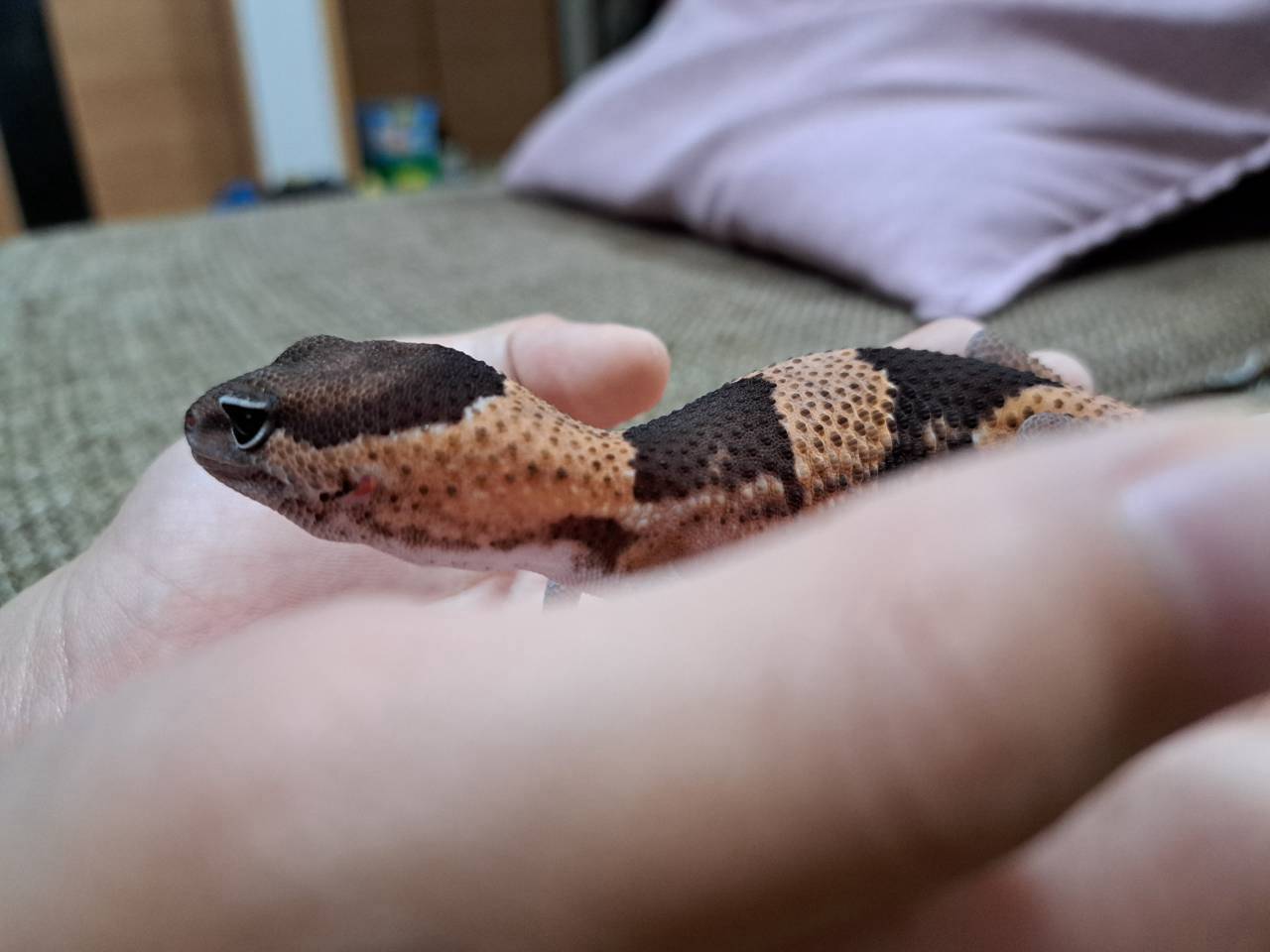
A freshly shed gecko looks a full shade brighter. The band pattern pops. Honestly, the day after a shed is the best photo day there is.
Ohagi right after a shed. The orange brightens a notch and the pattern looks crisp
But there's one job left. Check the toes, the tip of the tail, and around the eyes for leftover skin. Even a near-perfect shed can leave a scrap on a toe (it happened to us). What to do when you find one is covered in the companion piece, the stuck shed guide.
4. How often, and your job at each stage
| Stage | Your job |
|---|---|
| Turning white | More misting (shoot for 80%). No handling. Feed as usual if he'll eat |
| Mid-shed | Nothing. Just watch (if you're lucky enough to catch it) |
| Next morning | Check toes, tail tip, and eyes for leftover skin. Finding no shed lying around is normal |
| How often | Every 2–4 weeks for young geckos. The gaps get longer as growth slows down |
FAQ
- How many days from turning white to the actual shed?
- In my experience, a few days at most. Start misting more the day you notice the whitening, and let him handle the timing.
- Won't eating the skin make him sick?
- No — eating it is by design. Just check now and then that he isn't swallowing substrate along with it.
- He seems to shed way too often.
- Frequent sheds while he's growing are normal. If an adult keeps shedding twice a month or more, there may be a skin issue — take photos and ask a vet.
I keep Ohagi, an African fat-tailed gecko, at my home in Japan. Every photo here was taken in my home. Written from my own notes and photos, with AI helping me put it into English.