African Fat-Tailed Gecko Stuck Shed: What It Looks Like, Why It Happens, and How I Actually Fixed It
If you're new to African fat-tailed geckos, stuck shed is probably the first real scare you'll run into. A ring of old skin left on a toe tightens like a rubber band, cuts off the blood supply, and in the worst case your gecko loses the toe.
Don't panic, though. Nine times out of ten it comes down to low humidity, and the fix is a quick warm soak. Below, I'll walk you through exactly what happened when my own gecko, Ohagi, had a scrap of shed stuck on his toe — including the part where he refused to follow the textbook — with photos of the whole thing.
Already staring at something white on your gecko's toes? Skip straight to the treatment section using the table of contents.
- PreventionMoist hide (a.k.a. humid hide) — gives your gecko somewhere damp to retreat to. Hands down the best prevention there is
- PreventionThermometer/hygrometer combo — I use an analog dial stuck to the enclosure wall
- TreatmentA shallow container — any washbasin or food-storage tub you already own. No special gear needed
- TreatmentCotton swabs — for nudging softened skin loose. Always use them wet
1. What a normal shed looks like
Young fat-tails shed about every 2–4 weeks. A day or so beforehand, the body goes dull and milky from the neck down while the head usually stays dark. Nothing's wrong — that's just the "getting ready" phase. Your gecko might eat less and hide more for a few days. Also normal.
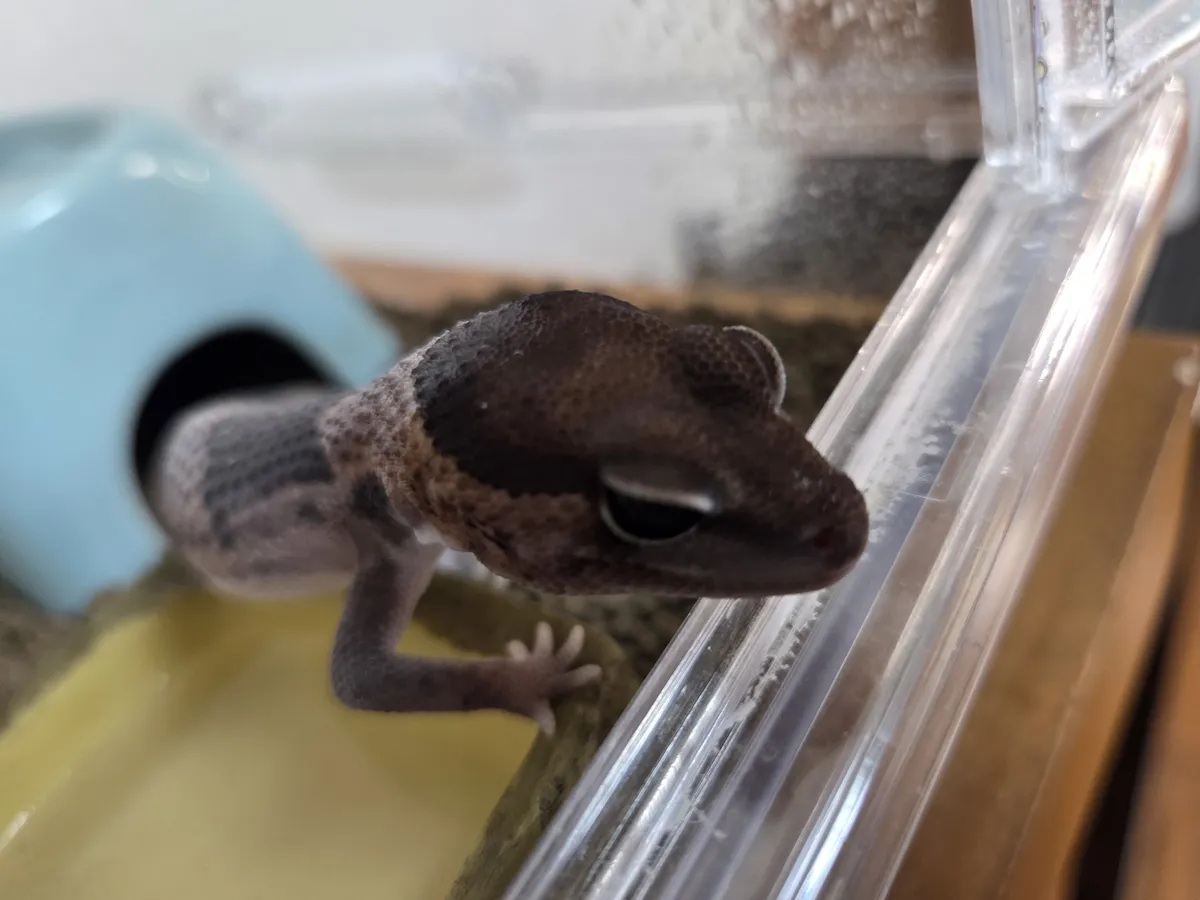
Ohagi the night before a shed. Head still dark, everything below the neck gone pale — textbook pre-shed
The shed itself usually happens overnight, inside the hide, where you can't see it. And here's what catches new keepers off guard: he eats the skin as he peels it off. So if you check the tank in the morning and can't find a single scrap of shed anywhere, that's not a failed shed. That's a successful one.
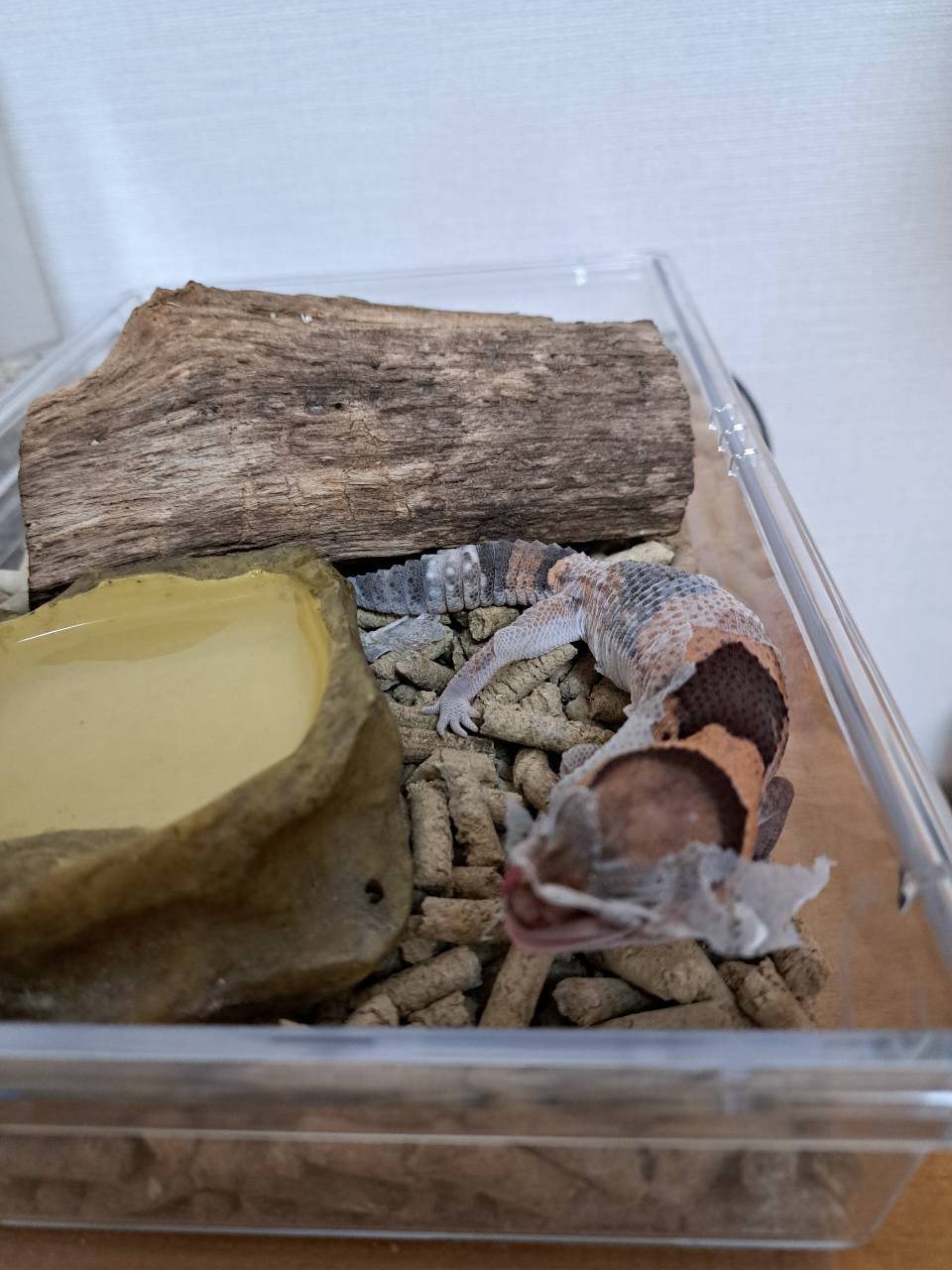
Ohagi chowing down on his own shed. Weird the first time you see it — and completely normal
2. The only three spots you need to check
Stuck shed is just old skin that didn't come all the way off. There are only three places you need to look: ① the toes (the dangerous one), ② the tip of the tail, and ③ around the eyes. Toes are the big worry — as the leftover skin dries, it shrinks, squeezes the toe, and can eventually kill the tissue.
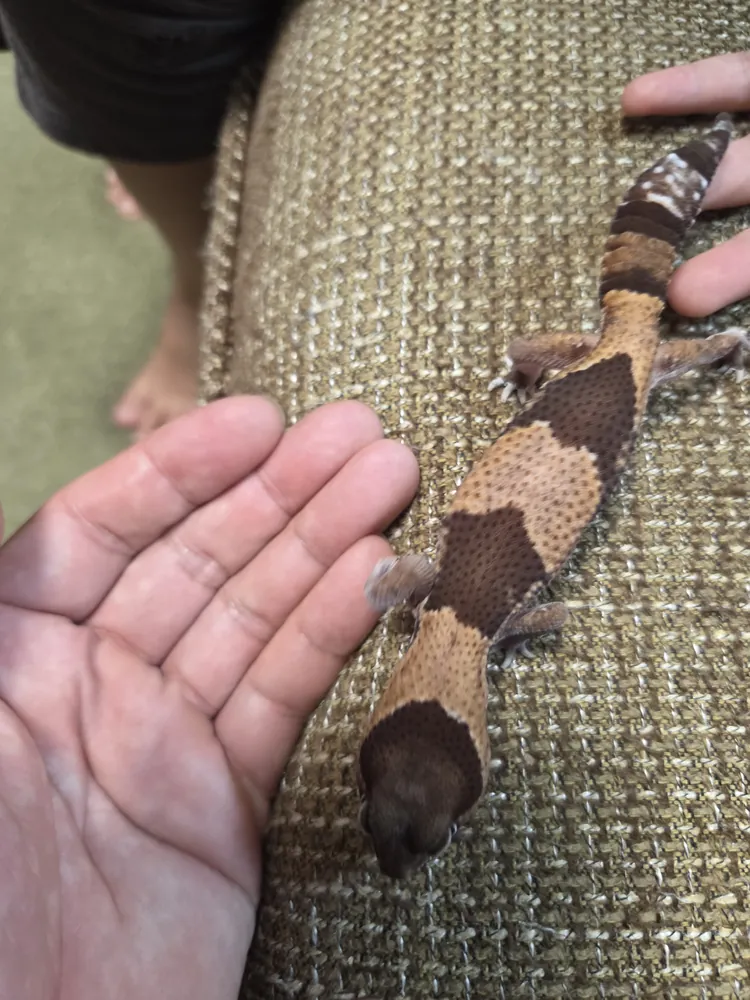
Here's what it actually looks like: a whitish scrap left on a back toe. On Ohagi it was about the size of a toothpick tip
Any time you think a shed has happened — and honestly, once a week regardless — look at each toe one by one. Doing it during handling time works just fine.
3. Nine times out of ten, it's humidity
African fat-tailed geckos need 60–80% humidity. In a room with the AC or the heat running, humidity can quietly drop below 40%, and dry skin just won't peel. Temperature plays a part too: aim for a warm spot of 82–90°F (28–32°C) and a cool side around 73°F (23°C).
For what it's worth, my setup — an under-tank heat mat plus a daily misting — sits at 77–86°F (25–30°C) and 60–70% humidity. Since I dialed that in, every shed except the one I'm about to tell you about has gone off without a hitch.
4. Treatment: how to do a warm soak (with real photos)
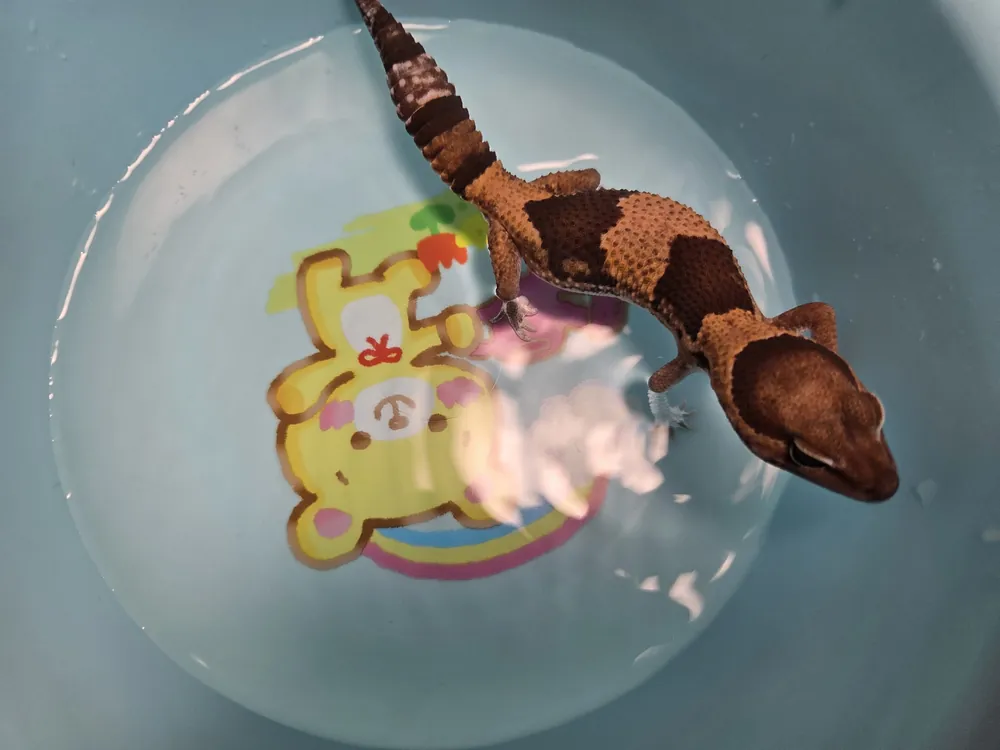
Ohagi at the start of his soak — just a shallow layer of lukewarm water in a washbasin. Nothing has softened yet; from here you wait a few minutes
The morning after a shed, I spotted one scrap of skin still on a back toe, so I set up a warm soak in a washbasin. So far, straight out of the textbook. Except Ohagi wanted out. Immediately. Every guide says "5 to 10 minutes," but my gecko is not the sit-quietly-in-water type — and holding him down just to hit a number felt wrong, so I didn't.
After I lifted him out, I gently held the toe with the stuck skin — and the moment Ohagi moved his own foot, the skin slid right off. Even a few minutes of soaking had softened it enough. Lesson learned: what matters isn't the minutes on the clock. It's whether the skin has softened.
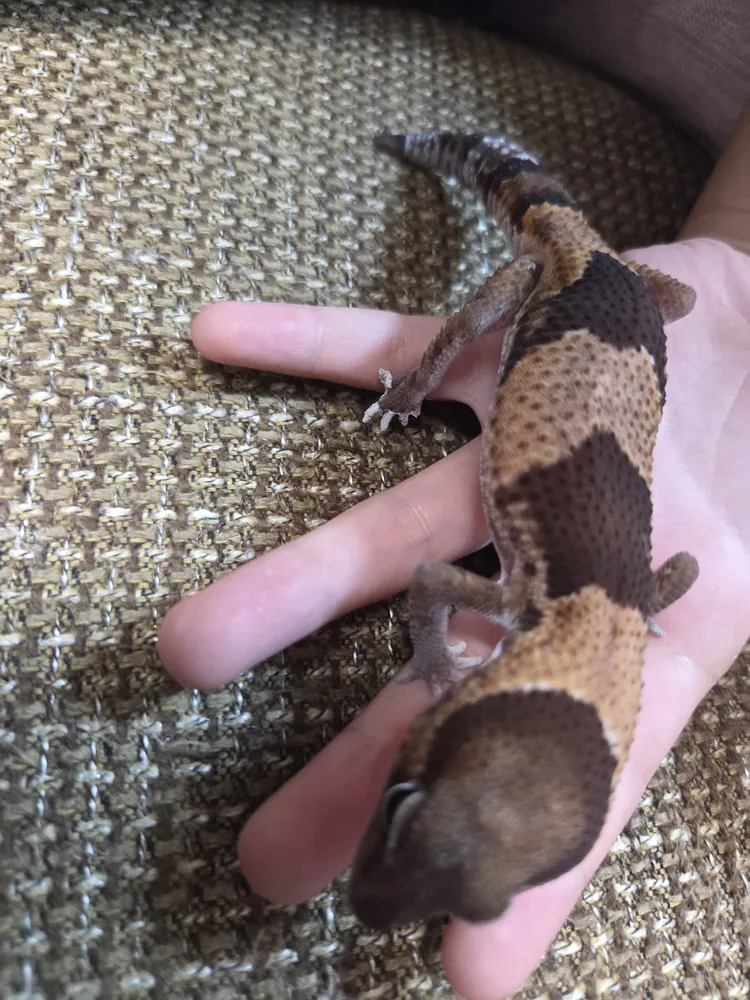
All done. Fresh skin after a shed — the bands come out extra crisp
5. Prevention: the only two things I do
Just two things: ① mist once a day, and ② keep a moist hide in the enclosure at all times. That's enough to hold my tank at 60–70% humidity. On the flip side, if you're already doing both and still seeing stuck shed, look at temperature next (skin dries out in a tank that's too cold, too), and then at overall nutrition.
FAQ
- Should I stop my gecko from eating its shed?
- Nope — it's healthy, normal behavior. In the wild it hides the evidence from predators and recycles the nutrients.
- What if my gecko hates the soak and won't sit still?
- Cut it short. That's fine. As in my story above, even a few minutes can soften the skin enough. If soaking is a total no-go, try a "sauna box" instead: 10 minutes in a ventilated container lined with damp paper towels.
- There's stuck shed on the eye. Can I take it off myself?
- No. Anything on the eyes is strictly a reptile-vet job.
- How often should my gecko shed?
- Every 2–4 weeks while they're young, slowing down as growth slows. The exact frequency matters less than checking for leftovers after each one.
・Primary source: my own husbandry records and photos of Ohagi (male African fat-tailed gecko), including his sheds and stuck-shed care in summer 2026
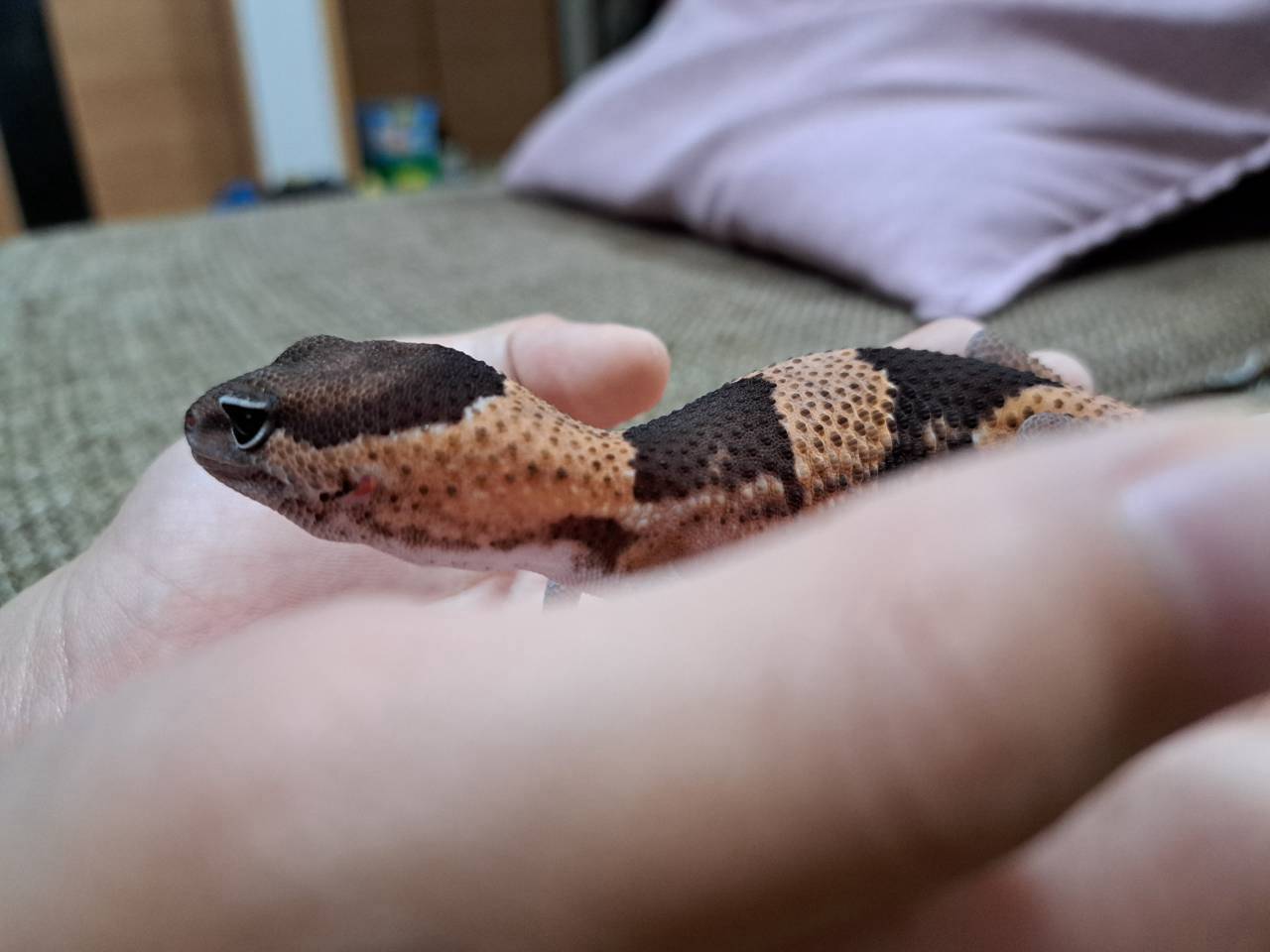
I keep Ohagi, an African fat-tailed gecko, at my home in Japan, along with Japanese grass lizards I've had for three years. Every photo on this page was taken in my home, and every story here actually happened — the smooth sheds and the messy one. Written from my own notes and photos, with AI helping me put it into English.