Your Fat-Tailed Gecko's Tail Is a Health Meter. Here's How to Read It
The species is literally named for it: African Fat-Tailed Gecko. That chunky tail is this animal's signature. And for a keeper, it's a lot more than a cute feature — it's a health gauge you can read every single day.
No calorie counting required. Get in the habit of looking at the tail and you can spot undernourishment, obesity, and how serious a hunger strike really is. This article shows you how, with real examples from my gecko, Ohagi.
- EssentialKitchen scale (1-gram resolution) — eyeballing the tail plus a weight log is the winning combo
- Nice to haveA notebook or an app — to jot down weights twice a month
1. Why the tail stores fat
In the wild, a fat-tailed gecko gets through lean times on the fat stored in its tail. Think of the tail as a natural savings account: extra nutrition gets deposited there, and during a fast it gets withdrawn.
That's why the tail shows you the "current balance." Deposits going in — the tail thickens. Withdrawals starting — the tail thins. Simple as that.
2. Healthy tail vs. worrying tail
| Status | What it looks like | What it means |
|---|---|---|
| ◎ Healthy | Plump at the base, no wrinkles on the surface. Springy to the touch | Balance is healthy. Keep doing what you're doing |
| ⚠️ Watch | Suddenly deflating, a "waist" forming at the base, wrinkling | Undernourished or unwell. Start weighing and logging |
| ⚠️ Watch (the other direction) | The base has gotten strikingly thick | Possible obesity. Take a look at how much you're feeding |
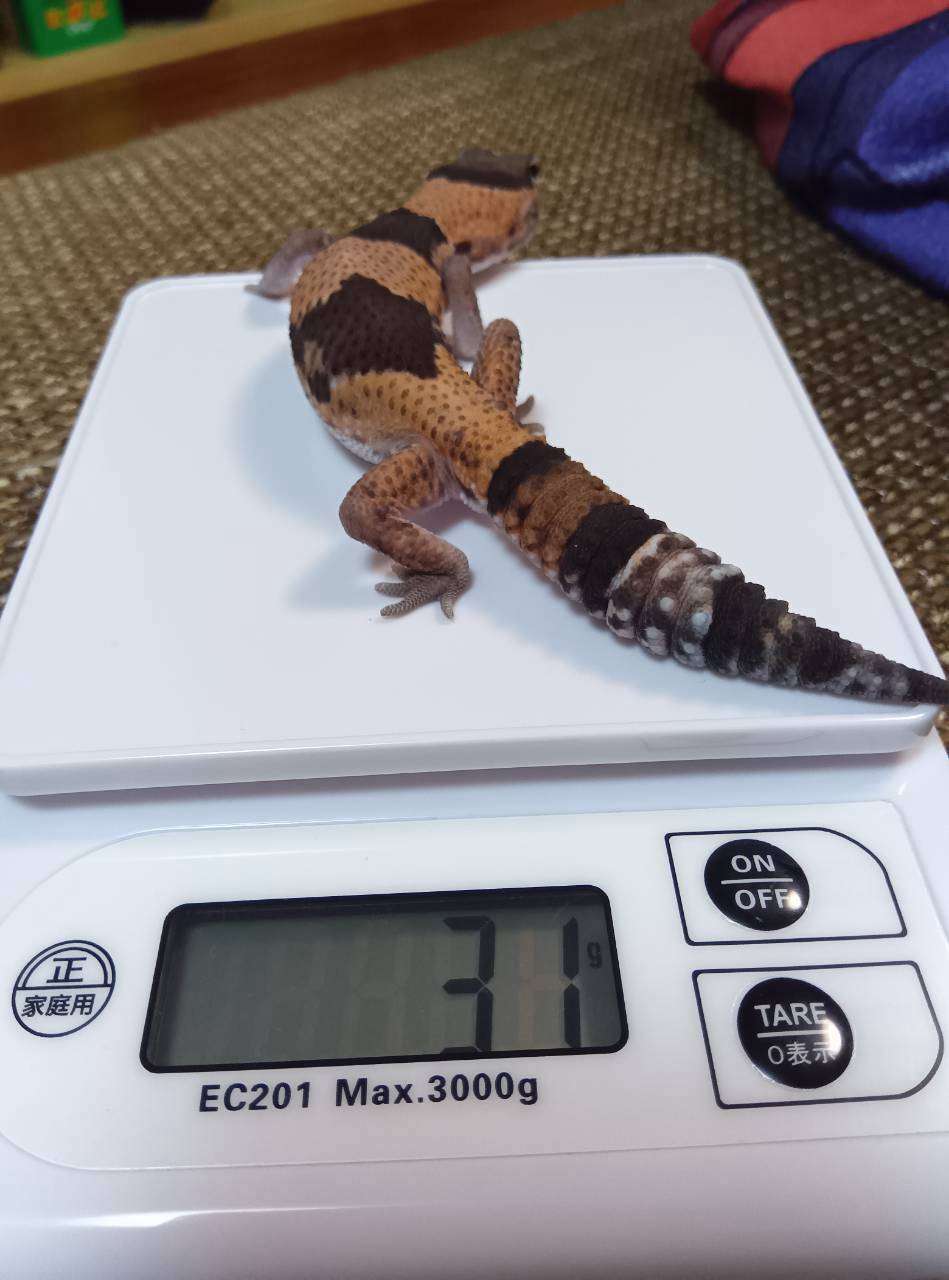
Ohagi's tail at his 31 g weigh-in. Plump base, not a wrinkle in sight — the textbook picture of "◎ Healthy"
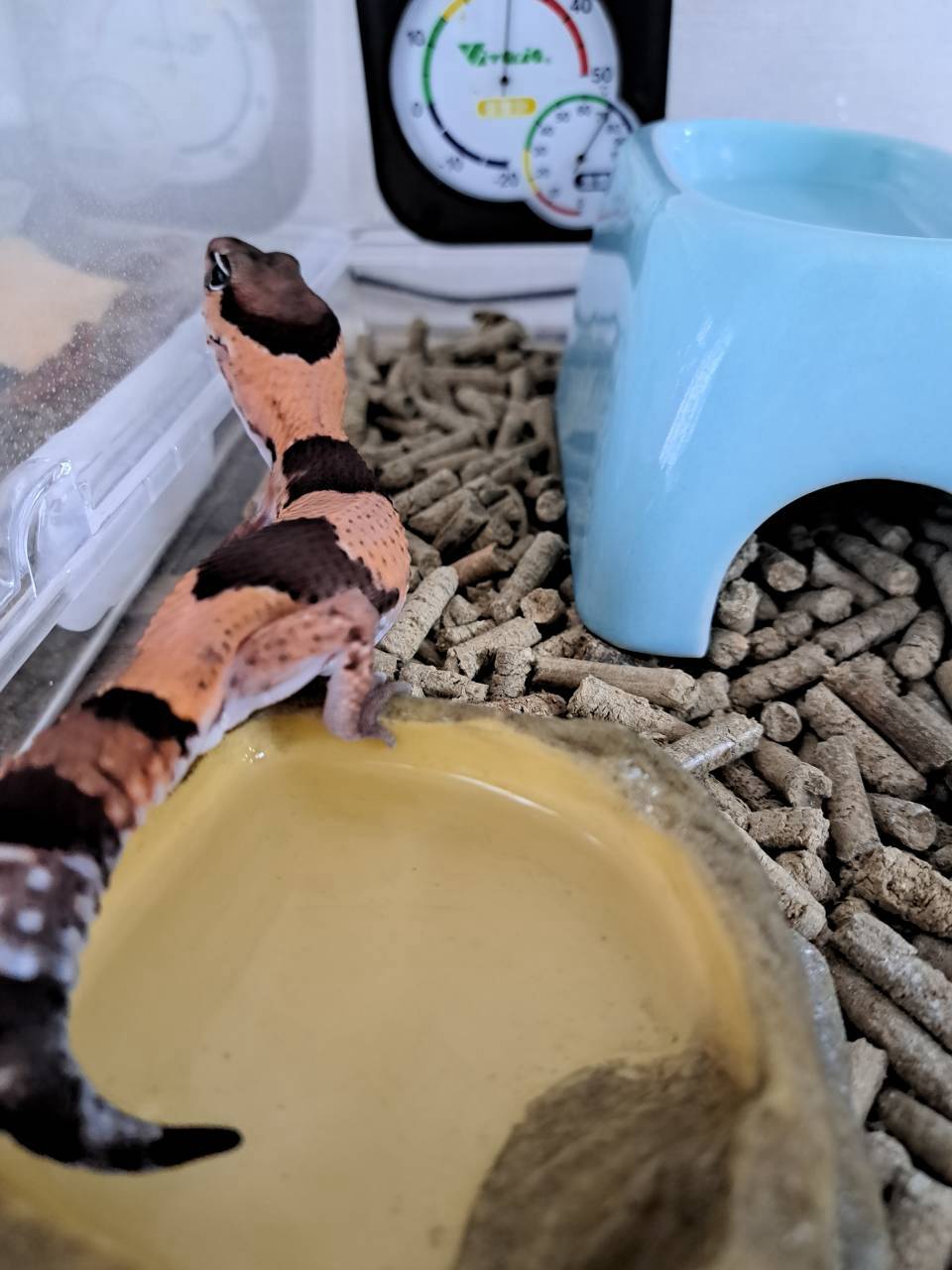
Ohagi's tail from behind. Full at the base and tapering smoothly to the tip — that's what a healthy tail looks like. The white speckles are a pattern unique to each individual
3. Pair it with the scale (Ohagi's real numbers)
The weak spot of eyeballing: when you see him every day, you miss slow changes. So I back it up with weigh-ins twice a month. Here's Ohagi's actual log:
| When | Weight | Notes |
|---|---|---|
| May 2026 (brought home) | 24.2 g | Juvenile |
| Early July | 26 g | Slow gain. Still settling in |
| Early August | 30 g | Eating steadily — the growth spurt kicks in |
| Mid August | 31 g | +28% in three months |
The takeaway: for the first two months he barely gained anything. Just about every keeper hits a stretch of "why isn't he growing?" If the tail is holding and he's eating even a little, don't panic. Once Ohagi settled in, he took off.
4. Tails can drop: the bare minimum you need to know
FAQ
- The tail feels really squishy. Is that okay?
- Springy and full is healthy. What you're watching out for is "limp and wrinkled."
- Is it okay to adopt a gecko with a regrown tail?
- Yes. There's no health issue — it just looks different, and the care is exactly the same.
- How often should I weigh him?
- Twice a month is plenty. Weigh daily and you'll fret over every gram of noise; a lighter schedule is the one you'll actually stick with.
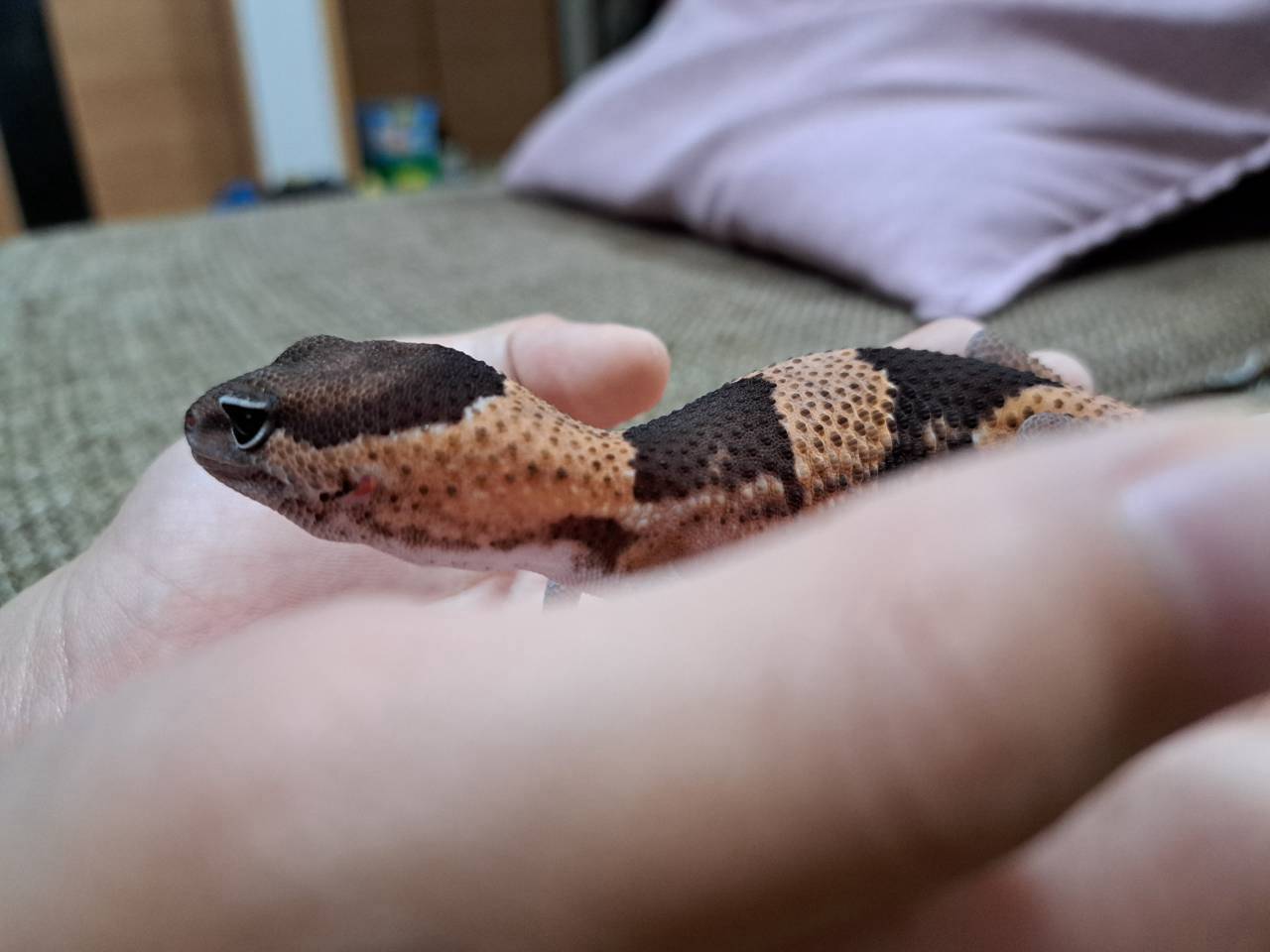
I keep Ohagi, an African fat-tailed gecko, at my home in Japan. Every photo here was taken in my home. Written from my own notes and photos, with AI helping me put it into English.