My African Fat-Tailed Gecko Isn't Eating: 7 Things to Check Before You Panic
He ate fine yesterday. Today he won't so much as glance at a cricket. If you keep fat-tailed geckos, that's about the most stomach-dropping moment there is. But here's the first thing to know: most of the time, food refusal is your gecko telling you something about the enclosure — not a sign that he's sick. And fat-tails come with a built-in savings account for exactly this situation.
Below is what to check, in order, before you rush off to the vet — and then a clear line for when you should go.
- EssentialKitchen scale — weight is your best evidence. Mine's an ordinary 1-gram kitchen scale
- EssentialThermometer/hygrometer combo — temperature is suspect number one
- Nice to haveA rehydratable gecko diet — my ace in the hole when appetite is just starting to come back
1. First, breathe: the tail is a savings account
That chunky fat-tailed gecko tail is a fat store — basically a savings account. A healthy gecko can go several days to a week without eating and just live off the reserve. A few days without food is not an emergency.
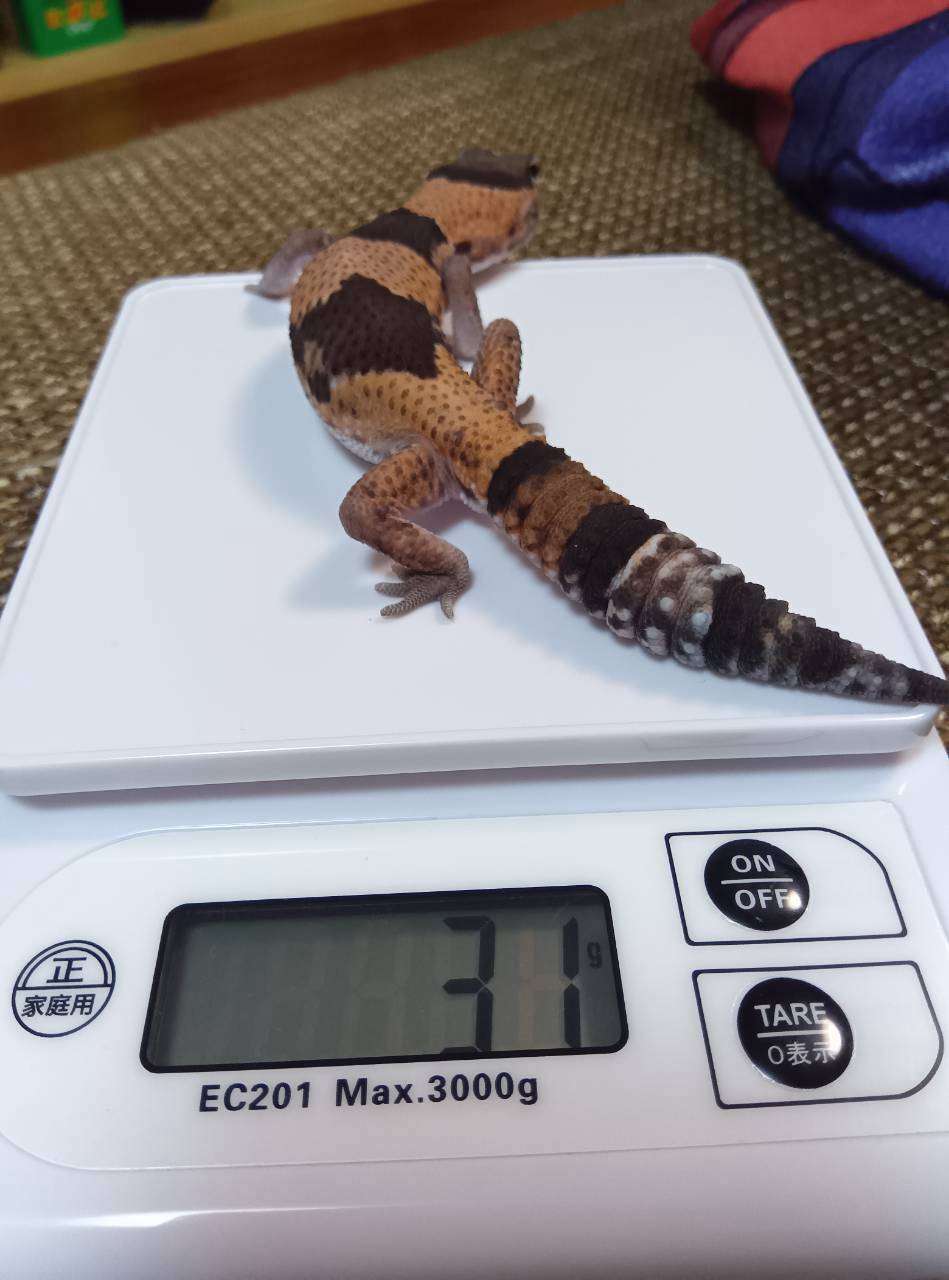
My gecko Ohagi. That tail thickness is his "account balance." When he goes on a hunger strike, I watch the tail and the scale
So the first move isn't to push food at him. It's to weigh him and write the number down. If his weight is holding steady, you've got time.
2. The 7-point checklist (in order)
Ranked from most likely to least:
| Check | What to look for |
|---|---|
| ① Too cold | Is the warm-side floor at 86–90°F (30–32°C)? And is the whole enclosure — cool side included — staying above 68°F (20°C)? Any colder and digestion grinds to a halt, so they stop eating. Suspect number one for food refusal |
| ② About to shed | Does he look dull and whitish? Eating less before a shed is normal |
| ③ Something changed | New home, new enclosure, décor moved around — a week or two of refusal afterward is par for the course |
| ④ Bored of the menu | Some geckos get sick of the same feeder. Rotate crickets ⇄ mealworms ⇄ gecko diet |
| ⑤ Too loud or too bright | They're nocturnal. Daytime commotion or bright lights stress them out |
| ⑥ Season | Plenty of geckos eat less in winter as their metabolism slows down |
| ⑦ Illness | Only suspect this once you've ruled out ①–⑥ |
3. My own case: the heat mat did it
When Ohagi's appetite tanked, the answer was ①. Back then I was switching the under-tank heat mat on and off by feel, and his appetite dropped during a stretch when it was off. I finally measured the temperature: lower than I'd assumed. I switched to running the mat 24/7 on a thermostat, and his appetite came right back.
The answer to "but he ate yesterday!" turned out to be "yesterday was warmer." Step one for a gecko that won't eat isn't messing with the food. It's reading the thermometer. I learned that one the hard way.
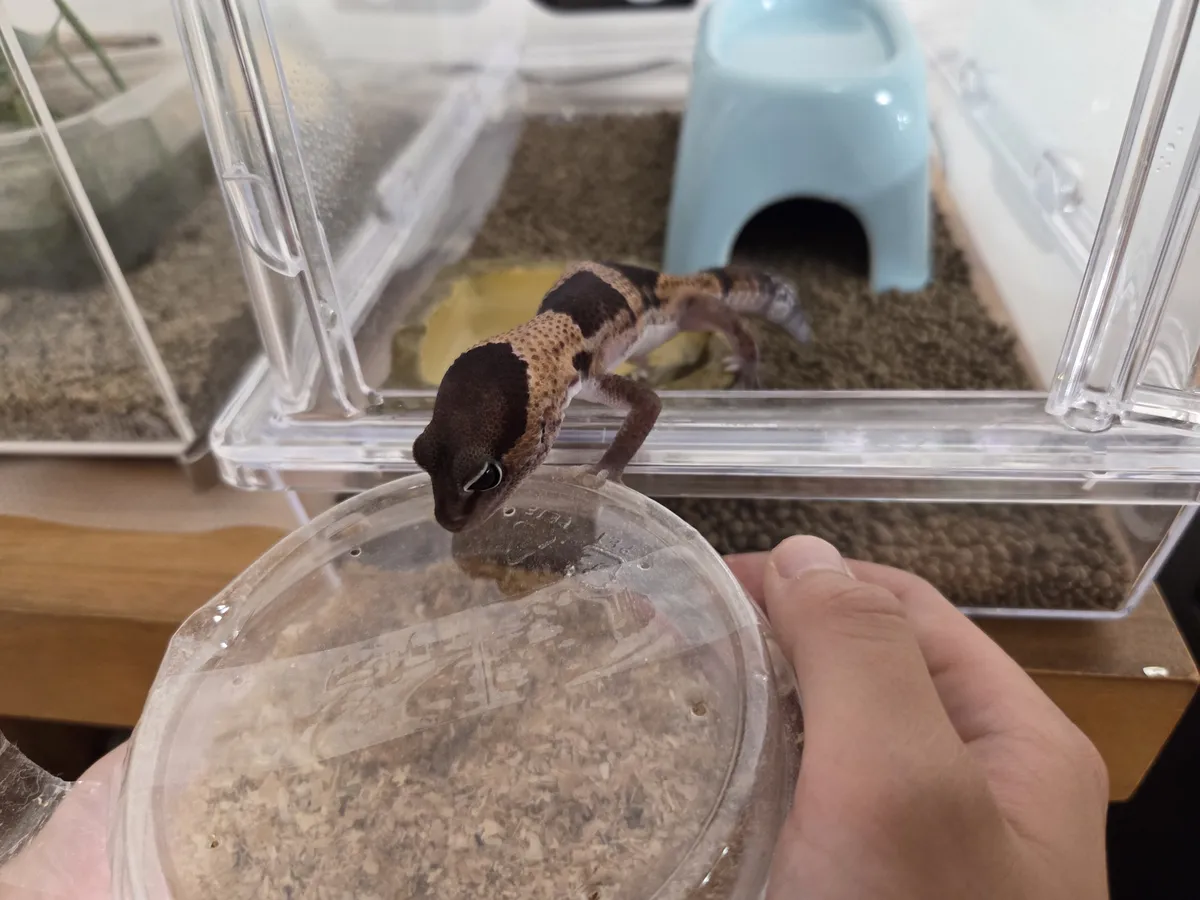
Ohagi with his appetite back. Once you see this locked-on stare, you're in the clear
4. When it's time to see a vet
- Nothing eaten at all for more than two weeks
- The tail is thinning fast (he's burning through the reserve)
- Weight is clearly dropping week after week
- Other symptoms on top — sunken eyes, no poop for a long stretch, odd movement
If any of those apply, stop fiddling with the enclosure and get to a reptile vet. "Not eating" plus "shrinking tail" is the combo to take seriously.
FAQ
- How long can I just wait and watch?
- If his weight is holding and nothing else looks off, about a week is fine. Juveniles have smaller reserves, so move faster with them.
- Can I force-feed him?
- Assist-feeding is a last resort, and best done with a vet guiding you. Doing it on your own risks aspiration and other problems.
- He doesn't seem to be drinking either.
- Dehydration is far more dangerous than skipping meals. Offer fresh water and mist the walls so droplets form (some geckos would rather lick droplets than drink from a dish). If he still won't drink, see a vet.
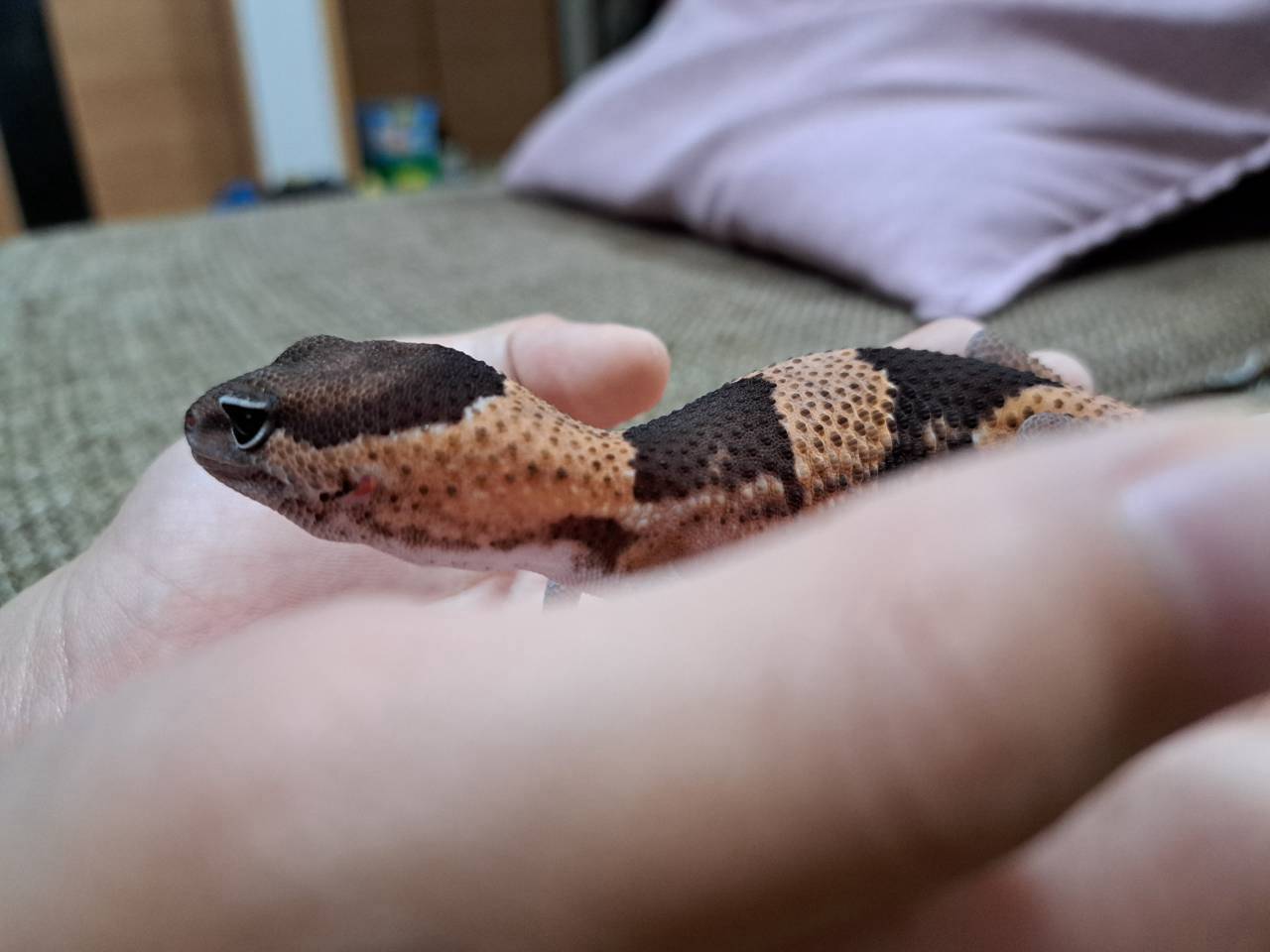
I keep Ohagi, an African fat-tailed gecko, at my home in Japan. Every photo here was taken in my home. Written from my own notes and photos, with AI helping me put it into English.