
Fat-Tailed Gecko Poop: What Healthy Looks Like, What Runny Means, and What to Do When He Isn't Going
A fat-tailed gecko spends the day out of sight. So the most reliable daily report on how he's doing doesn't come from him. It comes from his poop. Shape and color alone tell you whether digestion, hydration, and temperature are where they should be.
This article covers what normal looks like, where and how often my gecko Ohagi actually goes, and what to suspect when it's runny, missing, or the wrong color. Not the most glamorous topic, but you'll be looking at it every day, so it's worth knowing what you're looking at.
- EssentialTweezers for cleanup (mine are from a 100-yen shop, Japan's version of the dollar store; keep a separate pair for feeding)
- Nice to haveA small bag or a trash can with a lid for disposal
- For the vetA small sealed container, if you ever need to bring a sample in
1. What healthy poop looks like
A fat-tail's poop comes in two parts.
| Part | Healthy | What it tells you |
|---|---|---|
| The dark part (the feces) | Dark brown to black. Holds its shape; firm enough to pick up | Whether digestion is working |
| The white part (urates) | White, slightly soft, attached to one end | Whether he's hydrated (reptiles don't pee liquid; this white lump is their pee) |
For a young gecko, it's about the size of a fingertip, and it barely smells. Firm dark part, clean white part: that's a healthy gecko.
2. Ohagi's habits: where and how often
Ohagi poops in one particular corner of his enclosure, nearly every time. That's a common habit in fat-tails and leopard geckos, and it's a gift for keepers: when you clean, you only have to check one spot.
Frequency: the day after a feeding, or the day after that. He eats three crickets every three days, so poop shows up roughly every two to three days. His substrate is a granular desert soil, and I've never found soil mixed into his poop. Part of why I serve his gecko diet on a dish instead of the floor is to keep it that way.
When I spot it, I pick it up with the cleanup tweezers and toss it. On soil, scooping a little of the substrate around it gets it all. Those tweezers never touch food; the feeding pair is separate.
3. When it's runny
Lost its shape, watery, soaking into the substrate: that's runny. Here's what to suspect, in order.
For a stretch one summer, I kept turning the under-tank heat mat off and on because it "seemed hot," and his poop went loose. Undigested, with the shape of the insects still in it. Once I put the mat back on and made sure the warm side was warm, it firmed up within days. As I wrote in the temperature article: if the poop goes runny, look at the thermometer first. Lesson learned.
4. When he isn't going
"I haven't seen poop lately" is a surprisingly common worry. Work through it in order.
| Situation | How to think about it |
|---|---|
| Just brought him home; nothing for a week or two | If he isn't eating yet, there's nothing to pass. Once he starts eating, the poop will follow. Don't panic |
| Around a shed | He eats less, so he passes less. Give it a few days |
| Eating, but nothing for over a week | Either the warm side is too cool and digestion has stalled, or he's swallowed some substrate and it's backing him up. Check the warm-side temperature and gently feel whether his belly is hard |
| Eating, but nothing for two weeks, belly swollen, appetite dropping | Possible impaction. Vet |
5. When it's a vet visit
- Runny for more than a week after you've fixed temperature and food
- Blood, a lot of mucus, or a strong smell
- The white part is yellow or greenish, or hard and dry (dehydration or organ trouble)
- Insects keep coming out whole (he isn't digesting)
- Eating, but nothing passed for two weeks
- Any of the above plus weight loss or a thinning tail
If you do go, bring that day's poop in a small sealed container. A vet can check it on the spot. Parasites usually show up in a fecal sample, so this is the fastest route to an answer. We haven't needed a vet visit yet, but if we do, that's what I'll bring.
FAQ
- It smells.
- Healthy fat-tail poop barely smells. If it suddenly starts to stink, think parasites or poor digestion and take a sample to the vet.
- The white part is yellow.
- Usually a sign he's short on water. Check that the water dish hasn't run low and humidity hasn't dropped. If it persists, vet.
- Does he always go in the same place?
- It depends on the gecko, but a lot of them pick one corner. Ohagi does. Rearrange the enclosure and the spot may move.
- What if I leave poop in the substrate?
- Left in place, it fouls the substrate and becomes a breeding ground for mold and bacteria. Pick it up the day you find it. With a gecko who uses one corner, finding it takes seconds.
• Primary source: my own daily observations of Ohagi, 2026. The health thresholds are general husbandry guidance, not veterinary advice
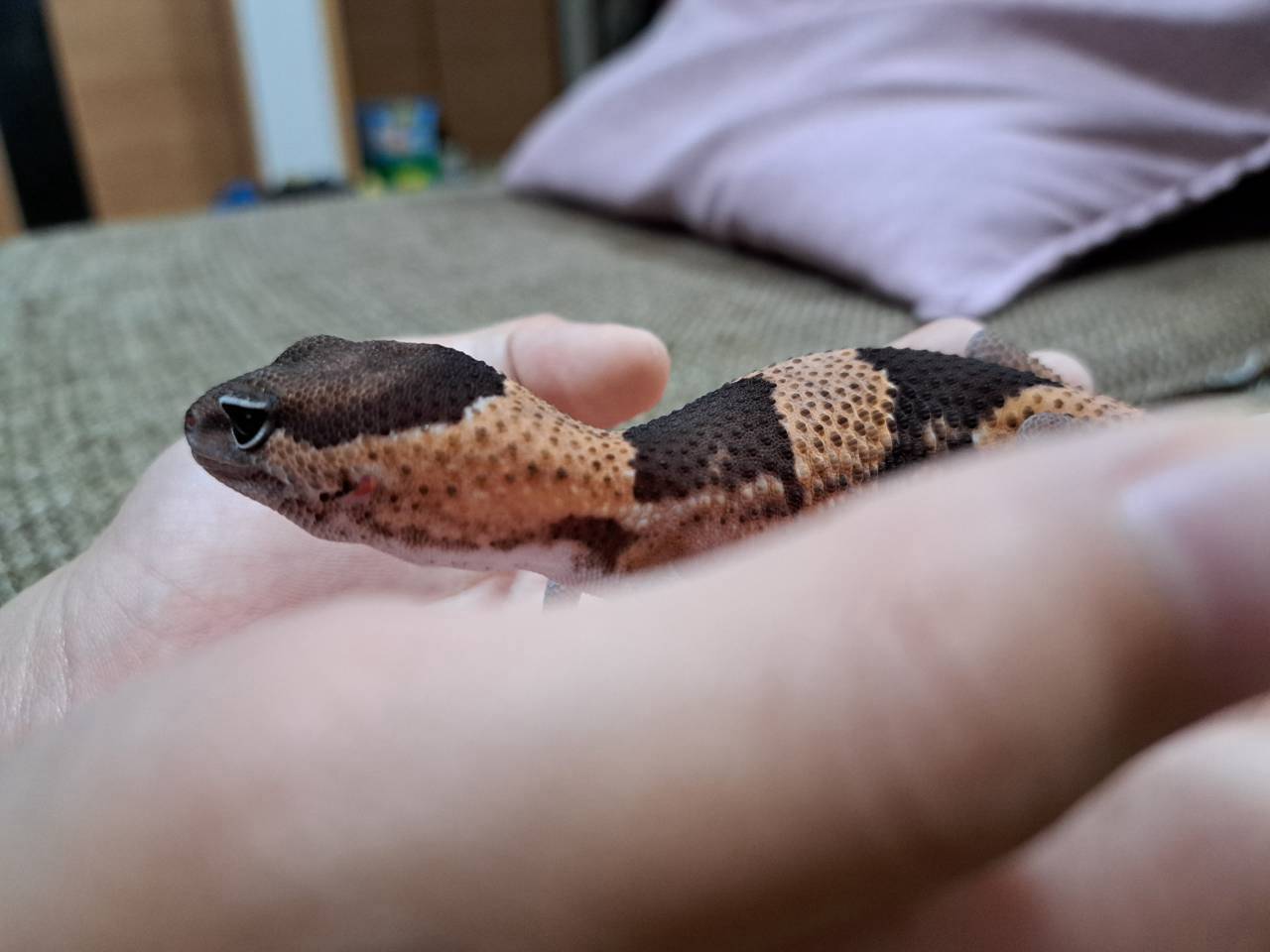
I keep Ohagi, an African fat-tailed gecko, at my home in Japan. Every photo here was taken in my home. Written from my own notes and photos, with AI helping me put it into English.