What Do African Fat-Tailed Geckos Eat? Feeders, Schedule, and Technique From My Own Routine
Fat-tailed geckos eat bugs. There's no getting around that. But you don't have to feed every day, and with a little effort, a commercial gecko diet can be part of the menu. There's a realistic path even for the "I hate bugs but I really want one" crowd.
This article runs through feeders → schedule → technique → supplements, exactly the way I do it at home.
- StapleHouse crickets (live)
- SupplementLeopa Dry — a rehydratable gecko diet made in Japan, calcium-fortified
- EssentialCalcium + vitamin D3 powder — I use GEX Exo Terra
- ToolsFeeding tongs plus a food dish (mine's a dollar-store dish)
1. Feeders: insects are the staple
| Feeder | Role | Notes |
|---|---|---|
| Crickets (house / banded) | Staple | Strongest feeding response by far. Movement flips on the hunting instinct |
| Dubia roaches | Alternative staple | Big in the US. Nutritious and easy to keep |
| Mealworms | Treat | On the fatty side. Not a staple |
| Rehydratable gecko diet | Supplement / backup | Can work its way up to staple status once accepted. More below |
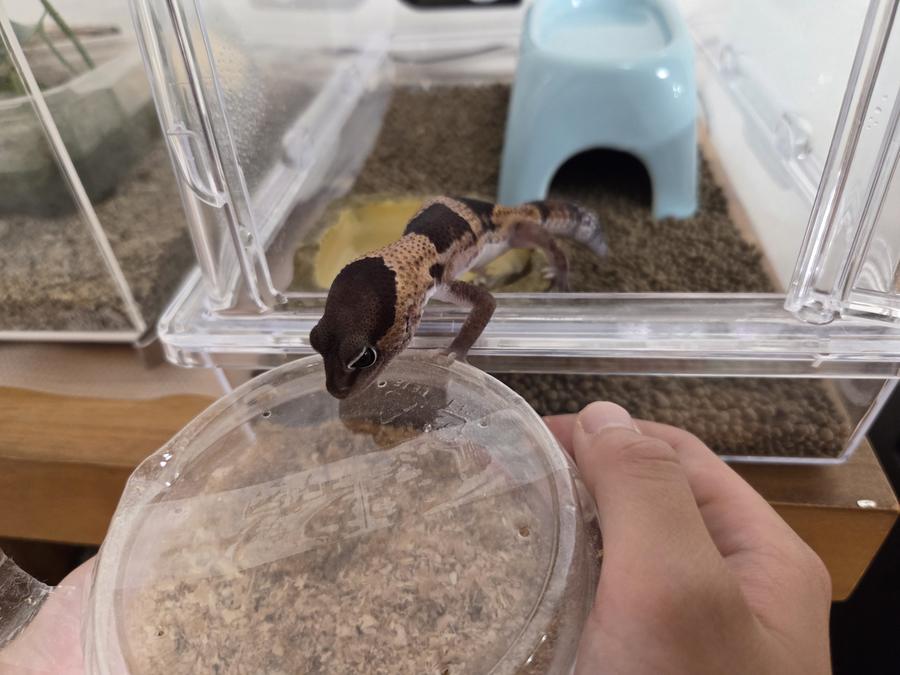
The second I show him the mealworm cup, he's leaning right out the door. They're supposed to be "just a treat," but look at that enthusiasm
2. Schedule and amounts (my real numbers)
My routine is every three days, about three crickets, with gecko diet in the rotation. On that, Ohagi went from 24.2 g to 31 g right on schedule. Daily feeding isn't necessary — in fact, feeding an adult every day is the fast track to an overweight gecko.
- Juveniles / young adults: every 2–3 days, as much as they'll eat (they're growing — feed them well)
- Adults: drop down to about twice a week. Adjust based on tail thickness (see the tail article)
- Feeder size: no wider than the space between the gecko's eyes
3. Two techniques: the tong wiggle and dish feeding
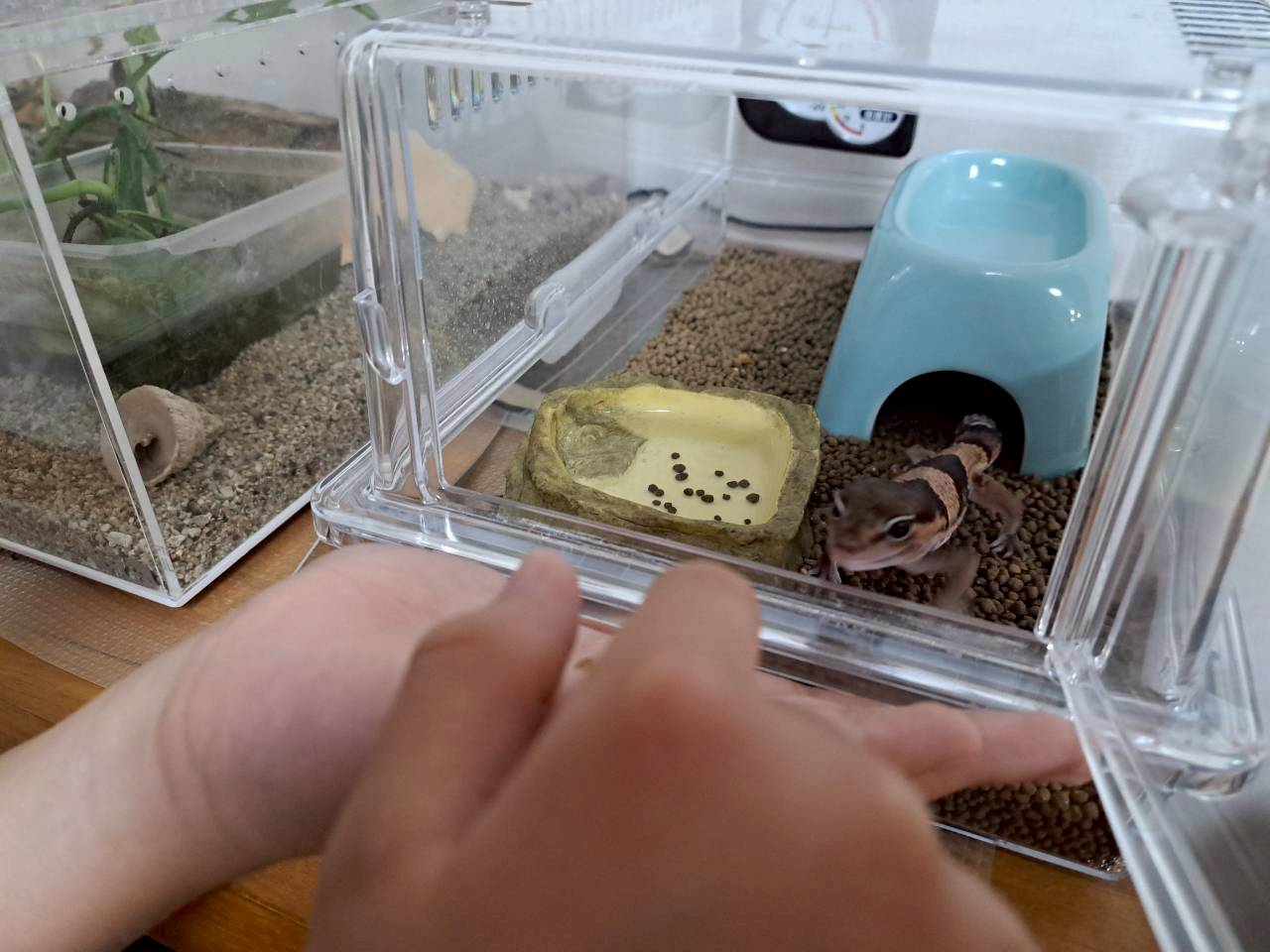
Offering rehydrated Leopa Dry on my palm. Once he's this comfortable with you, feeding time is basically bonding time
4. Supplements (dusting)
Insects on their own don't provide enough calcium. About once a week, dust the feeders with calcium + vitamin D3 powder. If you're not running UVB lighting, go with a D3-fortified powder — that's what keeps metabolic bone disease away.
Since my gecko diet is already calcium-fortified, I skip the dusting on diet days and dust the crickets once a week.
FAQ
- I hate bugs. Can I feed nothing but commercial diet?
- Doable with a gecko that's fully converted to it, but individuals vary a lot, and some never take to it. Honestly, bringing home a gecko on the assumption of "zero bugs" is a gamble.
- Do I have to keep crickets in my house?
- Keeping a small batch in a container is the usual way. If that's a hassle, plenty of keepers find dubia roaches easier and a lot less smelly.
- Can I feed wild-caught bugs?
- Not recommended — pesticides and parasites. Stick with commercially raised feeders.
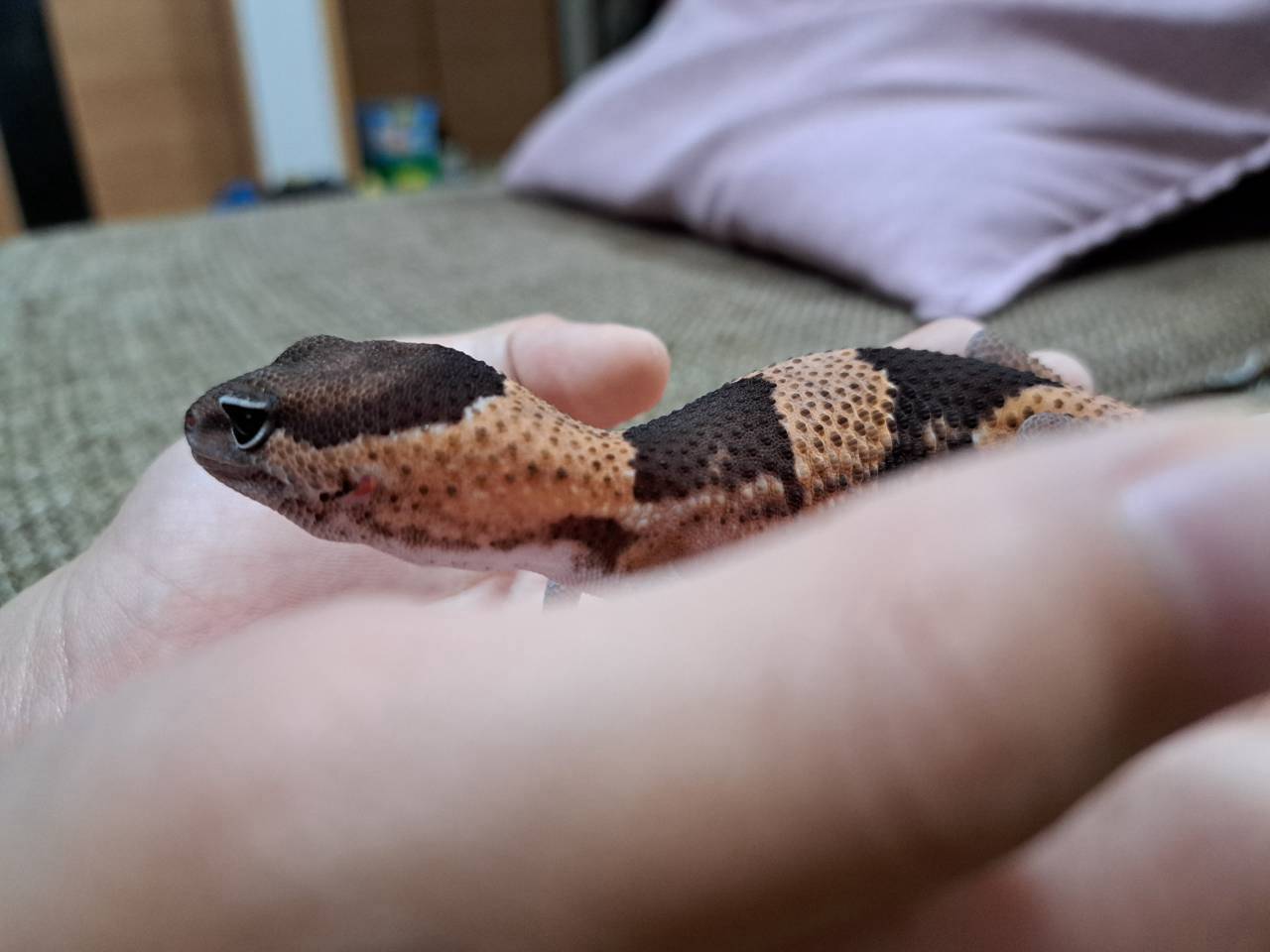
I keep Ohagi, an African fat-tailed gecko, at my home in Japan. Every photo here was taken in my home. Written from my own notes and photos, with AI helping me put it into English.