
Calcium and Supplements for African Fat-Tailed Geckos: What, When, and How Much (My Once-a-Week Routine)
"Dust with calcium." Every care guide says it. But when you're new, this is the vaguest part of the whole hobby. There are half a dozen powders, some say "with D3" and some don't, and nobody tells you whether it's every feeding or once a week, or how much counts as enough.
This article is simply what I do with my own gecko, Ohagi. Minimal theory, and a clear answer to "what do I buy, when do I use it, and how."
- EssentialCalcium with vitamin D3 powder, made for reptiles (mine is a 40 g tub from GEX Exo Terra, a Japanese brand)
- Nice to haveA small cup for dusting (a plastic cup is fine)
- NoteA calcium-fortified gecko diet (mine is a rehydratable gecko diet made in Japan; no dusting on those days)
1. Why calcium matters (the one-minute version)
Crickets and mealworms on their own don't have enough calcium to build bone. In the wild a gecko makes up the difference from soil and from eating prey whole, bones and all. In an enclosure he can't, so you add it.
Run short for a few months and you get metabolic bone disease: soft jaw, bent limbs, tremors. Once it sets in it's hard to reverse. Preventing it is far, far easier.
2. With D3 or without?
| Type | Best for | Me |
|---|---|---|
| Calcium with D3 | Setups with no UVB (the standard for fat-tails) | This one |
| Calcium only (no D3) | Setups with UVB, so you don't overdo the D3 | Not using |
| Multivitamin | Many keepers add it once or twice a month on top of the above | Not using |
If you're keeping your fat-tail like most people do, as a nocturnal gecko with no UVB, then "with D3" is the safe pick. I asked the staff at the reptile shop before I brought Ohagi home, and went with a D3 formula made for nocturnal species.
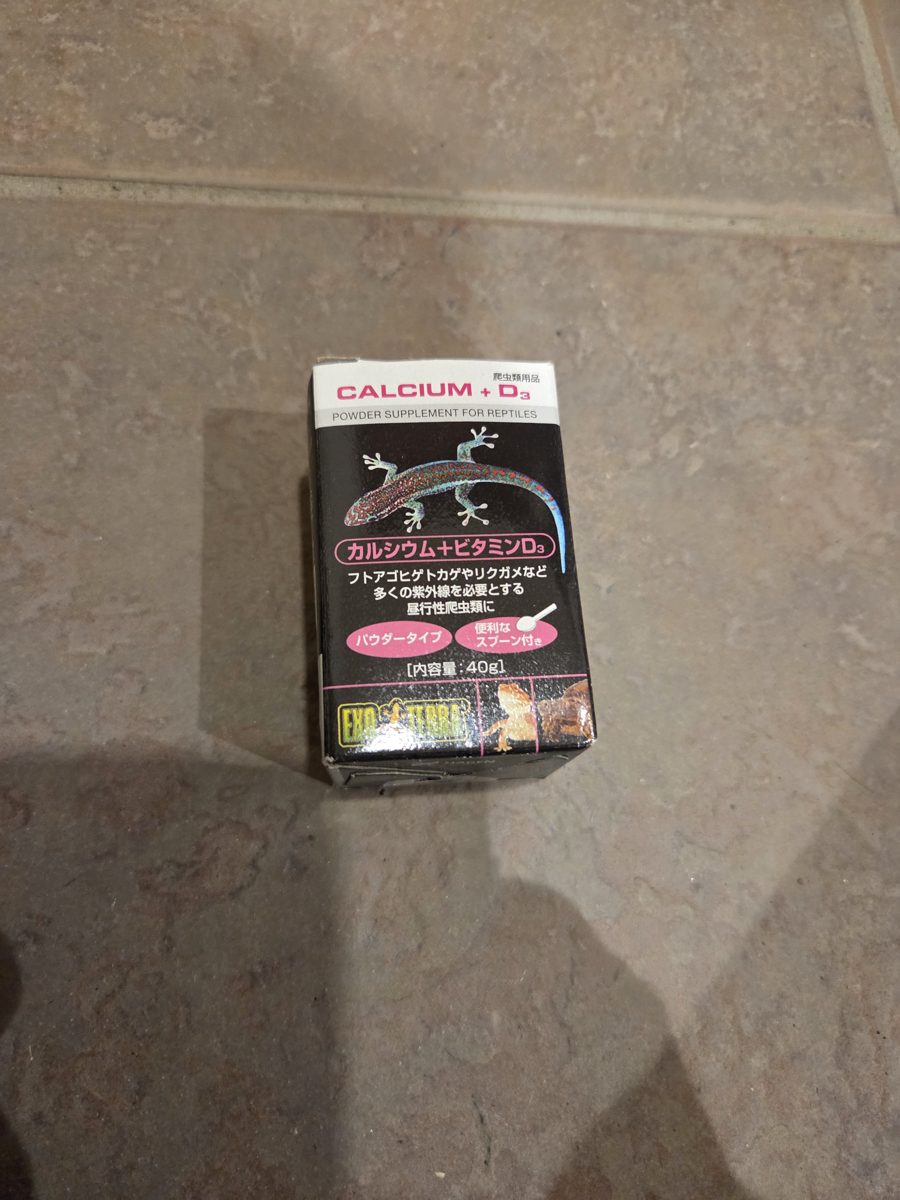
The calcium with D3 I bought in April, before pickup day. It's made for reptiles, and one tub has lasted more than four months
3. My routine: once a week, on cricket days
Ohagi eats three large crickets every three days. On that schedule, I dust about once a week, on a cricket day. Not every feeding. That's because some days he gets the rehydratable gecko diet instead, and that already has calcium in it.
Four months on this routine: he's gone from 24 g to 35 g, sheds every two to three weeks, and there's nothing wrong with his jaw or legs. Some people don't feel comfortable unless they dust every feeding. For us, once a week has worked without a hitch.
| What he's eating that day | Calcium? |
|---|---|
| Crickets (about twice a week) | Dust one of those feedings |
| Gecko diet (rehydrated) | No dusting (already fortified) |
| Mealworms (a treat) | No dusting |
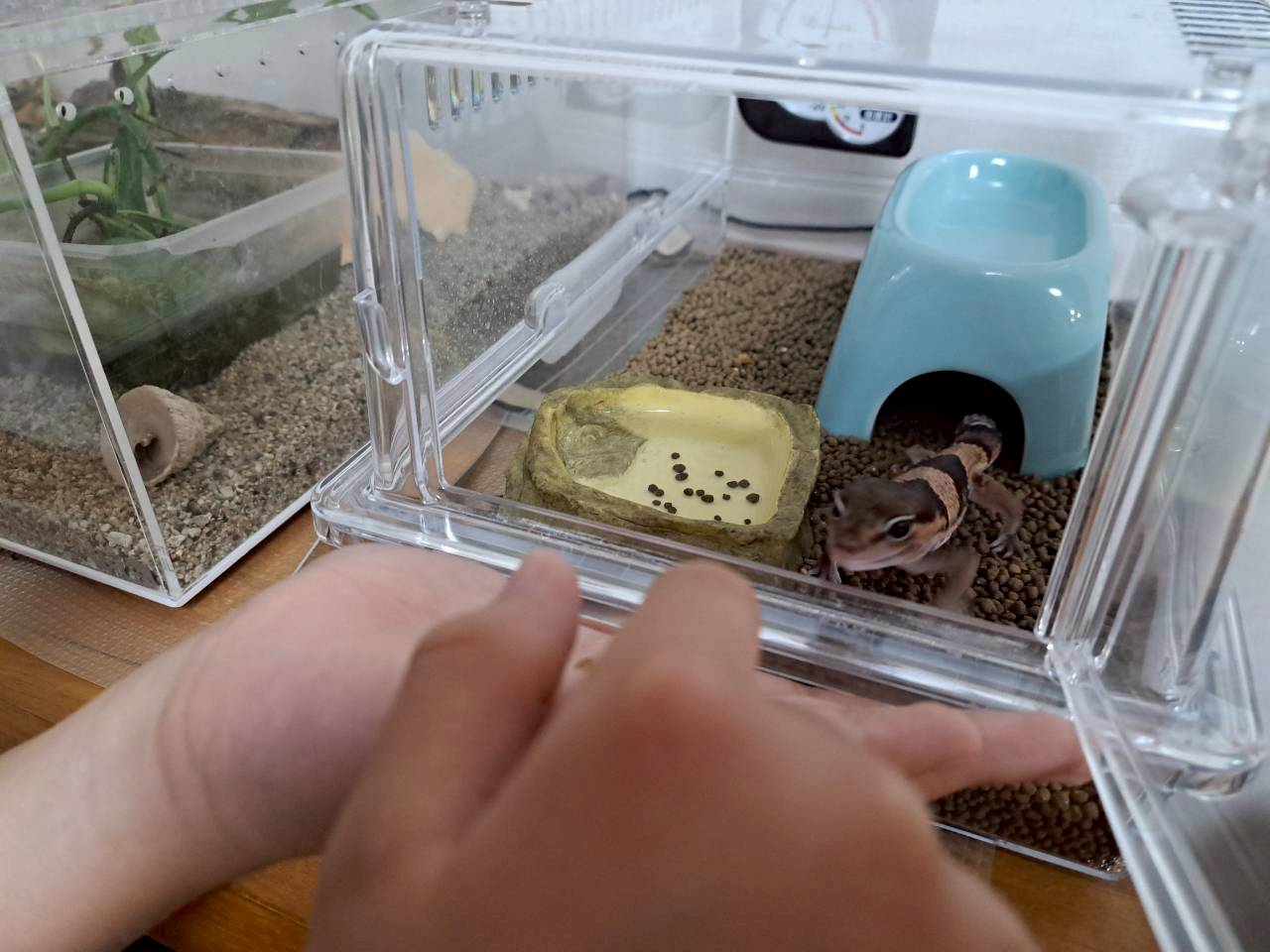
A mealworm treat from my palm. Treat days get no powder. Neither do gecko-diet days, since that's already fortified
4. How to dust
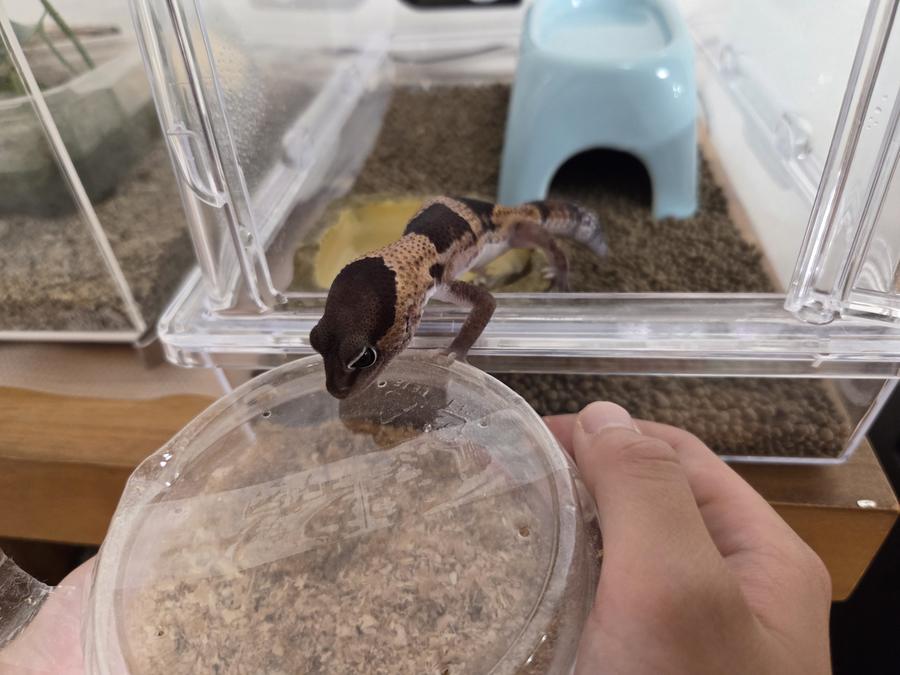
Insects go in a cup and get offered at the door. Dust in that same cup first and it's one step, not two
5. Signs he's not getting enough
- Soft jaw, or trouble closing the mouth
- Bent limbs, or an odd walk
- Fine tremors in the body or toes
- A thinning tail (this one is about overall nutrition, not just calcium)
If you see even one of these, get to a reptile vet. "I'll just dust more and wait and see" doesn't fix it. Caught early, a vet can turn it around; caught late, the damage stays. Skipping the visit to save money is the expensive option. And the flip side: a once-a-week dusting almost always keeps you from ever getting to this point.
FAQ
- What about leaving a dish of calcium in the enclosure?
- Some keepers leave a small dish of plain calcium (no D3) in the tank so the gecko can lick it when he wants. I don't. My substrate is a granular soil that would end up mixed into the dish, and the weekly dusting covers it. If you're on a dry substrate, it's an easier option.
- What happens if I dust with D3 at every feeding?
- Nothing immediate, but D3 is one of the vitamins you can overdo. If you want to dust every time, the usual approach is plain calcium as the default and the D3 version once a week.
- If he only eats gecko diet, do I need powder at all?
- If a calcium-fortified diet is the staple, basically no. But if insects are the staple and the diet is the side dish, like in my setup, dust on insect days.
- When do I start?
- From the very first feeding after you bring him home. Young geckos are growing bone, so make it a habit from day one.
- Is it true too much calcium causes soft bumps in the armpits?
- You're thinking of "armpit bubbles," the soft little swellings at the base of the front legs. They're often blamed on excess calcium, but that has never been proven. What we do know: they seem to be stores of fat or surplus nutrients, they show up mostly on well-fed, slightly chubby geckos, and they're basically harmless. If they appear, the right response isn't "stop dusting" but "look at how much he's eating and what he weighs." Ohagi doesn't have any so far.
• Primary source: my own supplement routine and records for Ohagi, 2026
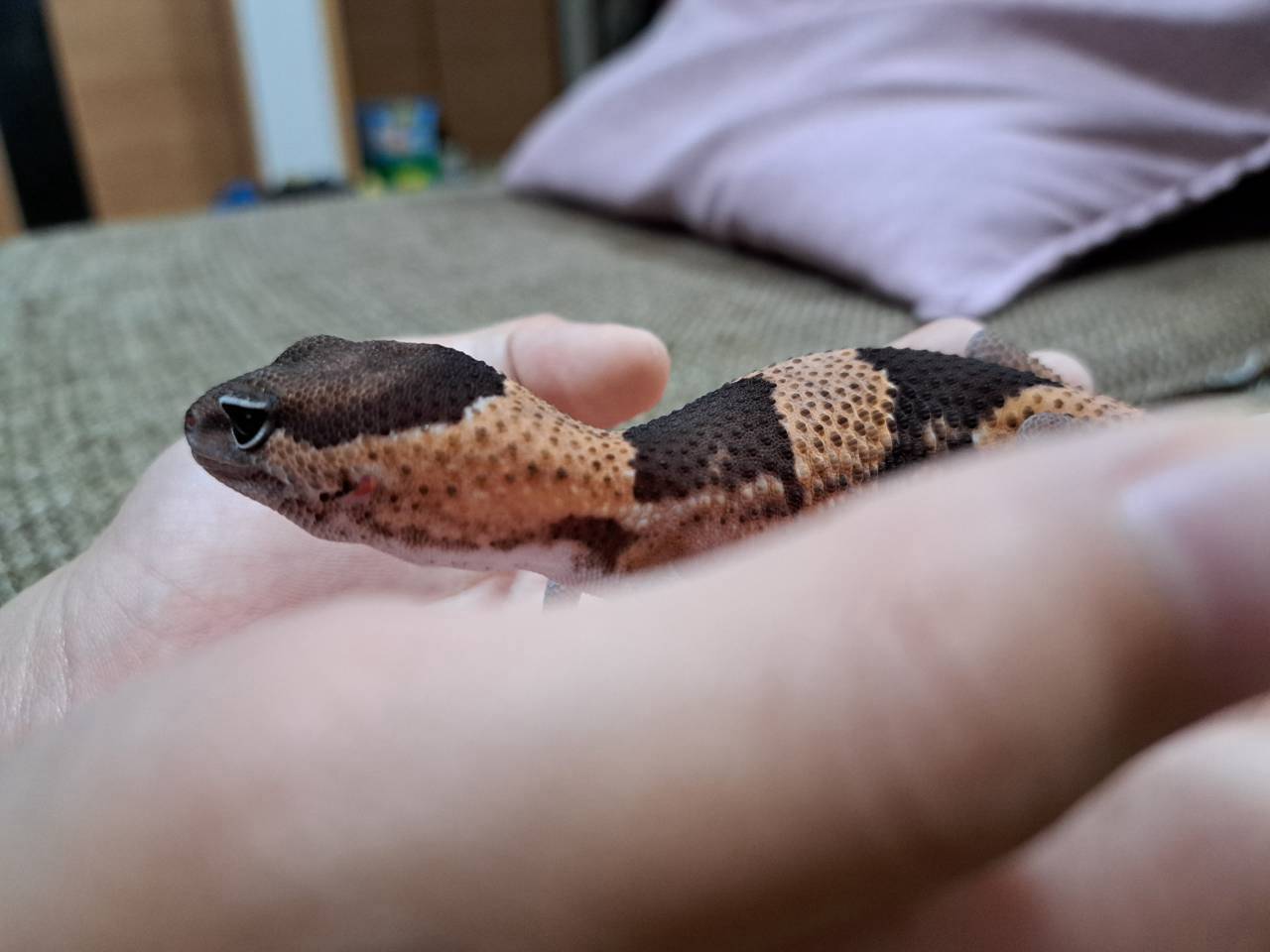
I keep Ohagi, an African fat-tailed gecko, at my home in Japan. Every photo here was taken in my home. Written from my own notes and photos, with AI helping me put it into English.