
Do African Fat-Tailed Geckos Need UVB? Mine Has Gone Four Months Without It. Here's Why, and Why Some Keepers Add It Anyway
The first thing you run into when you start keeping reptiles is the UVB question. Bearded dragons and chameleons: absolutely required. But a nocturnal fat-tailed gecko? That's where even experienced keepers disagree.
My answer up front: I don't use UVB. The only heat source is an under-tank heat mat, and there are no lights of any kind. Four months in, growth and shedding have been fine. This article explains why that works, and what the keepers who add UVB anyway are thinking. Both sides.
1. The short answer: not required, with one condition
UVB's job is to let the body make its own vitamin D3. Without D3, calcium can't get into the bones. So you need one or the other: light so he can make it, or powder that supplies it. Fat-tails are normally kept the second way.
2. Why a nocturnal gecko can skip it
- He's hidden all day. In the wild, they spend the day under rocks or in burrows. Run a light at noon and the gecko is inside his hide during the brightest hours anyway.
- Bright light is stressful. Fat-tail eyes are built for the dark. Under strong light some geckos never settle and simply stay hidden.
- Powdered D3 does the job. Dust the crickets with calcium plus D3 and the D3 requirement is covered. Plenty of geckos have lived long, healthy lives this way.
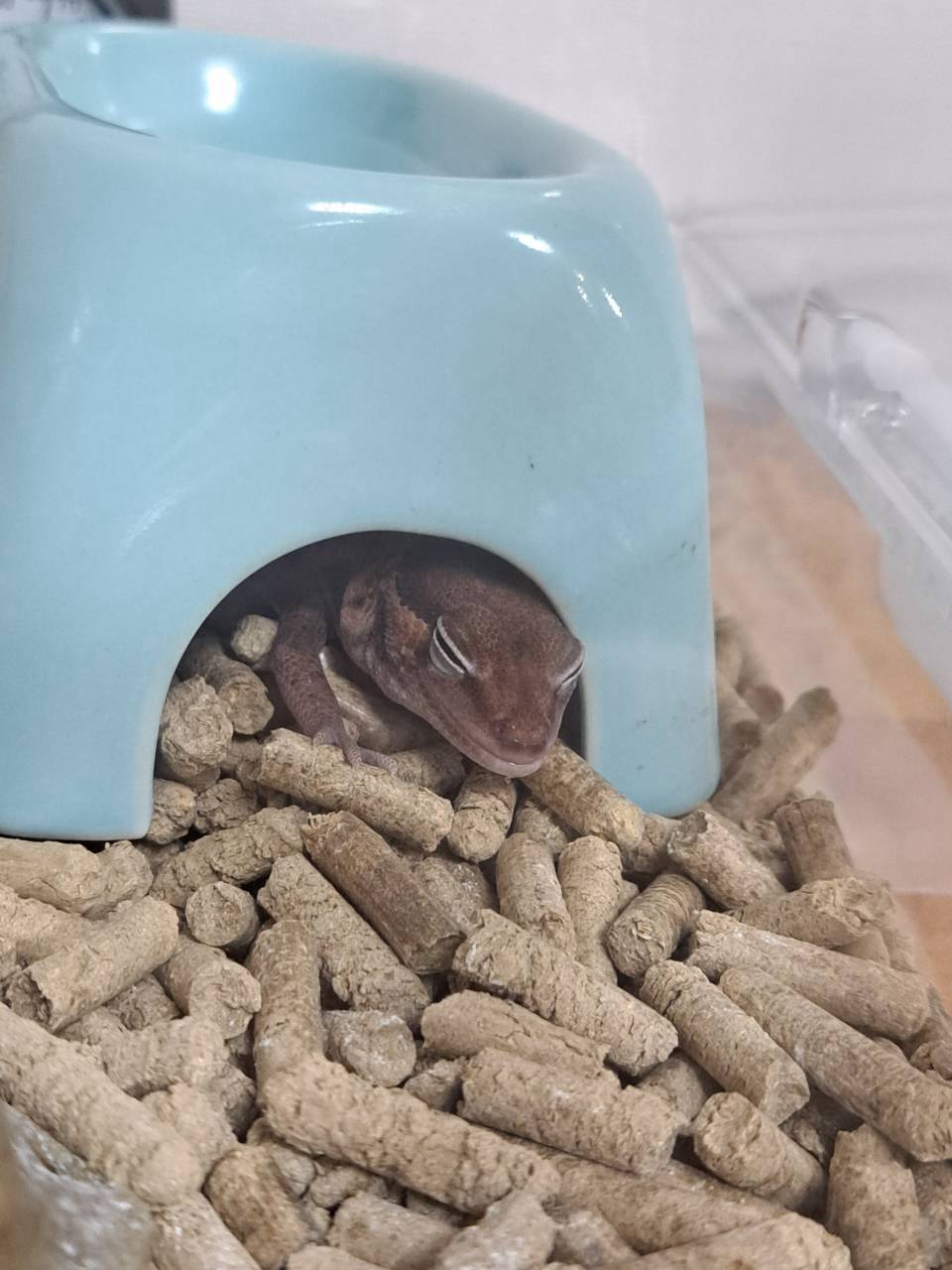
Ohagi in the daytime. Shine UVB down on this and none of it would reach him
3. My four months with zero lights
In: an under-tank heat mat (covering half the floor), a thermometer/hygrometer, a moist hide, a water dish. Not in: UVB, basking lamp, red night light. None of them. Room light reaches the enclosure, but I keep it out of any direct sun from the windows.
As for supplements, I dust the crickets with calcium plus D3 about once a week (details in the supplements article). Four months like this, and he's gone from 24 g to 35 g, sheds cleanly every two to three weeks, and his jaw and limbs look fine.
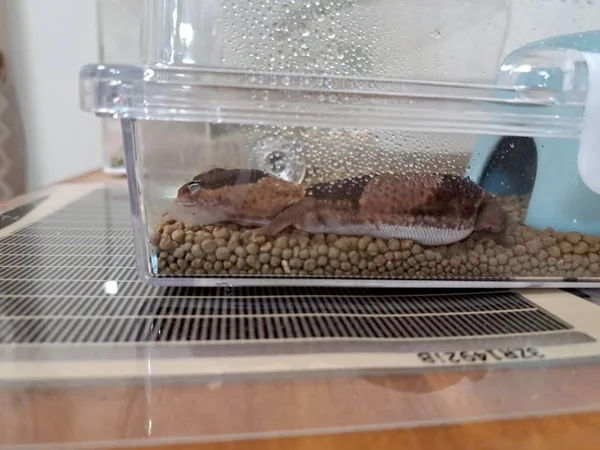
The entire heating setup: a heat mat slid under the enclosure. It gives off no light
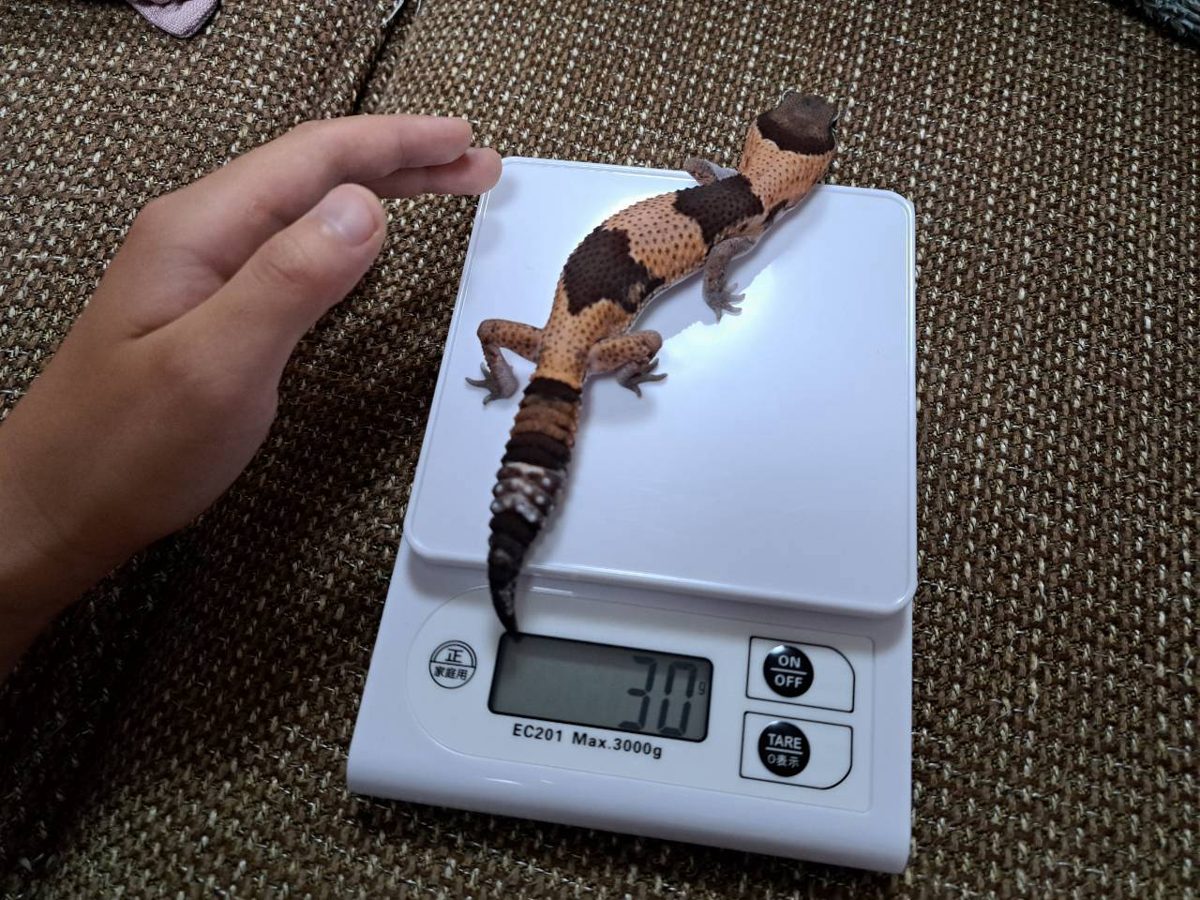
Three months in, 30 g. No lights, weekly dusting, steady gains
4. The case for low-level UVB
I'll be straight about this. In recent years, some keepers in the US and UK have taken the position that a few hours of low-level UVB does no harm to nocturnal species and may actually help. Their reasoning:
- In the wild, a gecko at the mouth of his burrow at dawn or dusk likely gets some indirect sunlight
- Powdered D3 is hard to dose precisely; the body can't overdose on D3 it makes itself
- A low-output bulb, combined with hides, lets the gecko escape the light whenever he wants
Both positions are reasonable. I'm in the camp that's stacking up real-world evidence that fat-tails thrive without it, but I'm not going to tell the other camp they're wrong. What matters, if you do add a light, is that you account for it when you dose the powdered D3. A full dose of both is how you overdo it.
5. If you do use a light, the rules
| Rule | Why |
|---|---|
| Pick a low-output bulb | The strong ones made for desert lizards that bask in the daytime are wrong here. Look for one labeled low-output or for nocturnal species |
| Two or more hides, always | With nowhere to escape the light, he's stressed all day |
| On for a few daytime hours only | He's nocturnal. Off at night. Don't scramble his day-night rhythm |
| Revisit your D3 supplement | Once UVB is covering part of his D3, many keepers switch to plain calcium |
| Never shine it straight into his eyes | Mount it above the enclosure, at a distance |
FAQ
- I want a red light to watch him at night.
- Reptiles can very likely see red light, too. The most natural way to watch at night is to dim the room lights and quietly watch from outside the enclosure. I run no lights at all, and the reward is the face that comes to the door when I open it after dark.
- What about a basking lamp?
- Also unnecessary. Fat-tails do well with belly heat from an under-tank mat. A bulb heats the air and dries it out, which is the opposite of what a humidity-loving gecko wants.
- Can I put the tank by a window for natural sunlight?
- Please don't. Glass blocks nearly all UVB, and the enclosure can hit dangerous temperatures within hours. As I wrote in the summer article, a sunny window is the single worst spot for the tank.
- Has anyone kept one for years without UVB?
- Yes. Plenty of fat-tails and leopard geckos have been kept for over a decade with no lights and a D3 supplement. I'm four months in, and I'm keeping records so I can join that list.
• Primary source: my own setup and records for Ohagi, 2026. The case for low-level UVB reflects positions taken by other keepers, not my own experience
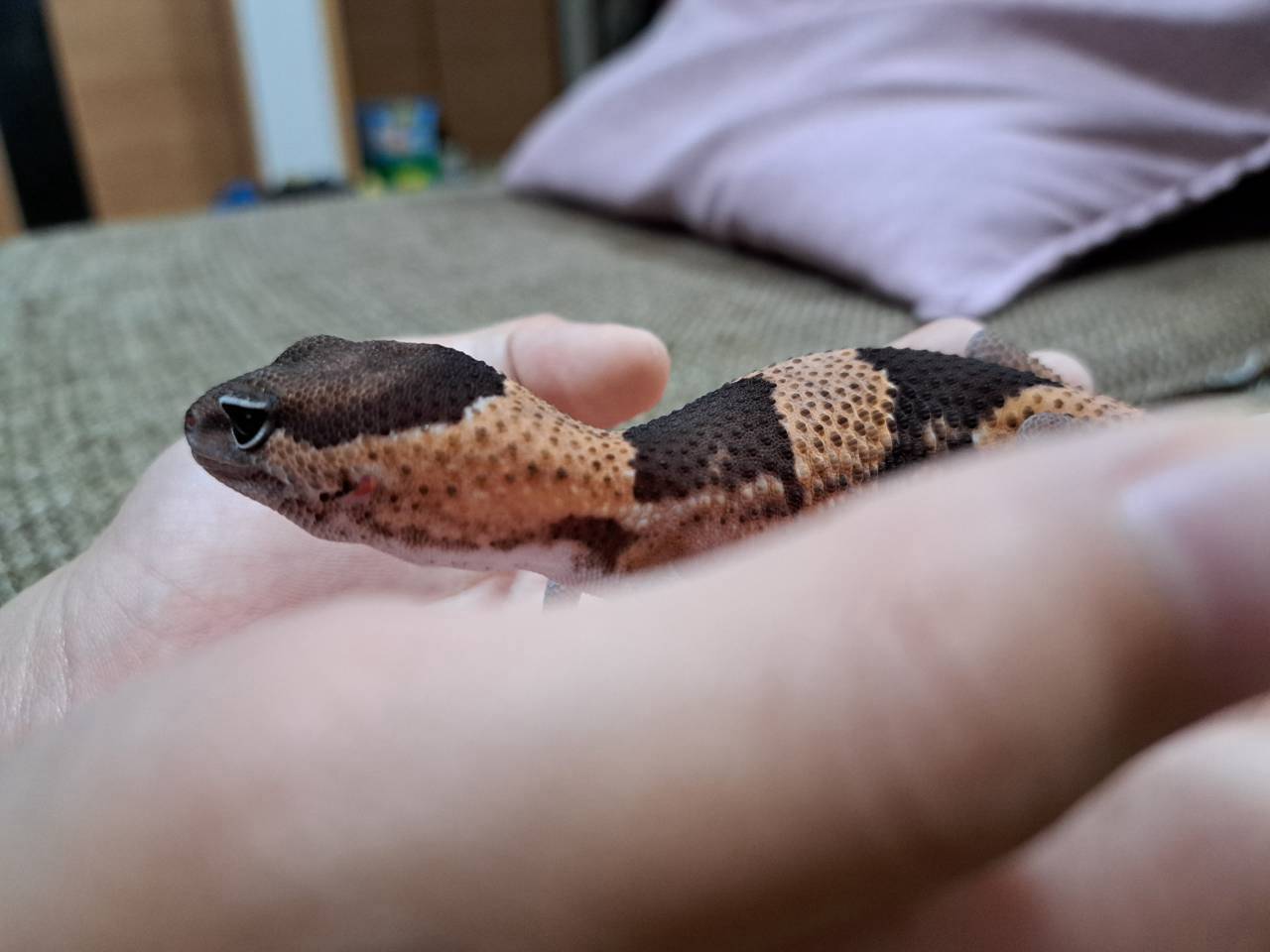
I keep Ohagi, an African fat-tailed gecko, at my home in Japan. Every photo here was taken in my home. Written from my own notes and photos, with AI helping me put it into English.