
How Long Do African Fat-Tailed Geckos Live? The Number, and the Fifteen-Year Question Behind It
Look up fat-tailed gecko lifespan and you'll get "10 to 15 years," and "some reach 20." That's accurate. But my first reaction to that number wasn't "great." It was, "can we actually keep this up for fifteen years?"
The first half of this article is the numbers. The second half is what we're doing, day to day, to give him the best shot at every one of those years.
1. Lifespan: the numbers
| Typical | |
|---|---|
| In the wild | Around 5–7 years. Predators, dry seasons, and lean times keep it short |
| In captivity | 10–15 years is common. With good care, 15-plus, and there are records close to 20 |
| My gecko's pet-store card | "Lifespan: 10 years" (the shop's conservative estimate) |
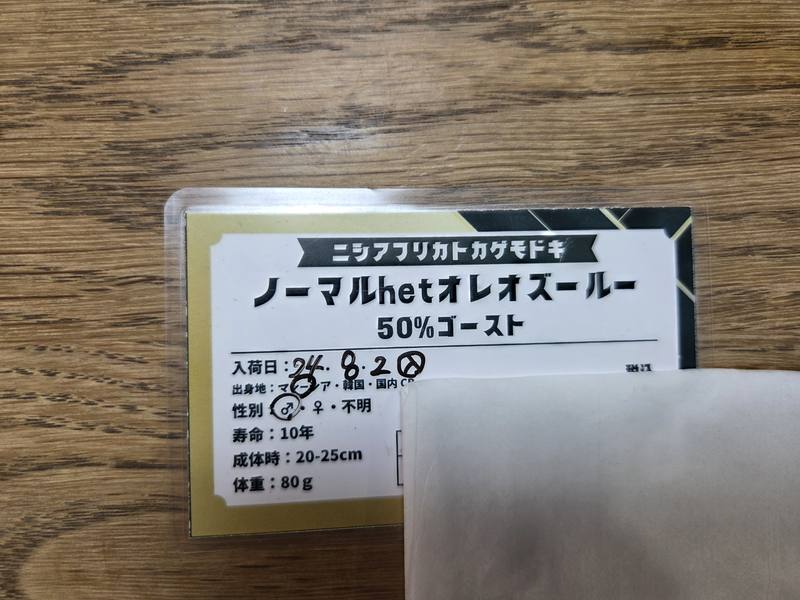
Ohagi's card. The bottom lines read "Lifespan: 10 years," "Adult length: 20–25 cm" (8–10 in), "Weight: 80 g." A cautious shop estimate, I think
That's on par with a leopard gecko, and as long as a dog or cat lives, or longer. "Small animal, short life" is the assumption to drop before you bring one home. It's the single most important thing to know going in.
2. What actually decides it
| Factor | Why it matters | Article on this site |
|---|---|---|
| Temperature | A warm side that isn't warm enough stalls digestion and wears him down slowly | Temperature |
| Humidity | Stuck sheds cost toes; dry air brings respiratory trouble | Humidity, Stuck shed |
| Calcium and D3 | Bone disease creeps up over years | Supplements |
| Weight management | Too heavy and too thin both shorten a life | Growth, Tail health |
| Stress | Too few hides, too much handling, a tankmate | Enclosure, Handling |
| A vet | Whether there's a reptile vet within reach | (Find one before you need one) |
Nothing on that list is dramatic. Glance at the thermometer daily, dust with calcium weekly, weigh him twice a month. The question is whether you can keep doing that for fifteen years.
3. You often won't know his age
His card had an arrival date, but that's the day he reached the shop, not the day he hatched. From his weight gain (24 g to 35 g in four months) and shed frequency (every two to three weeks), I read him as a young gecko still growing, but I don't know his actual age.
That's common with pet-store animals. So instead of counting his age, I count how many years he's been with us. For Ohagi, day zero is May 11, 2026.
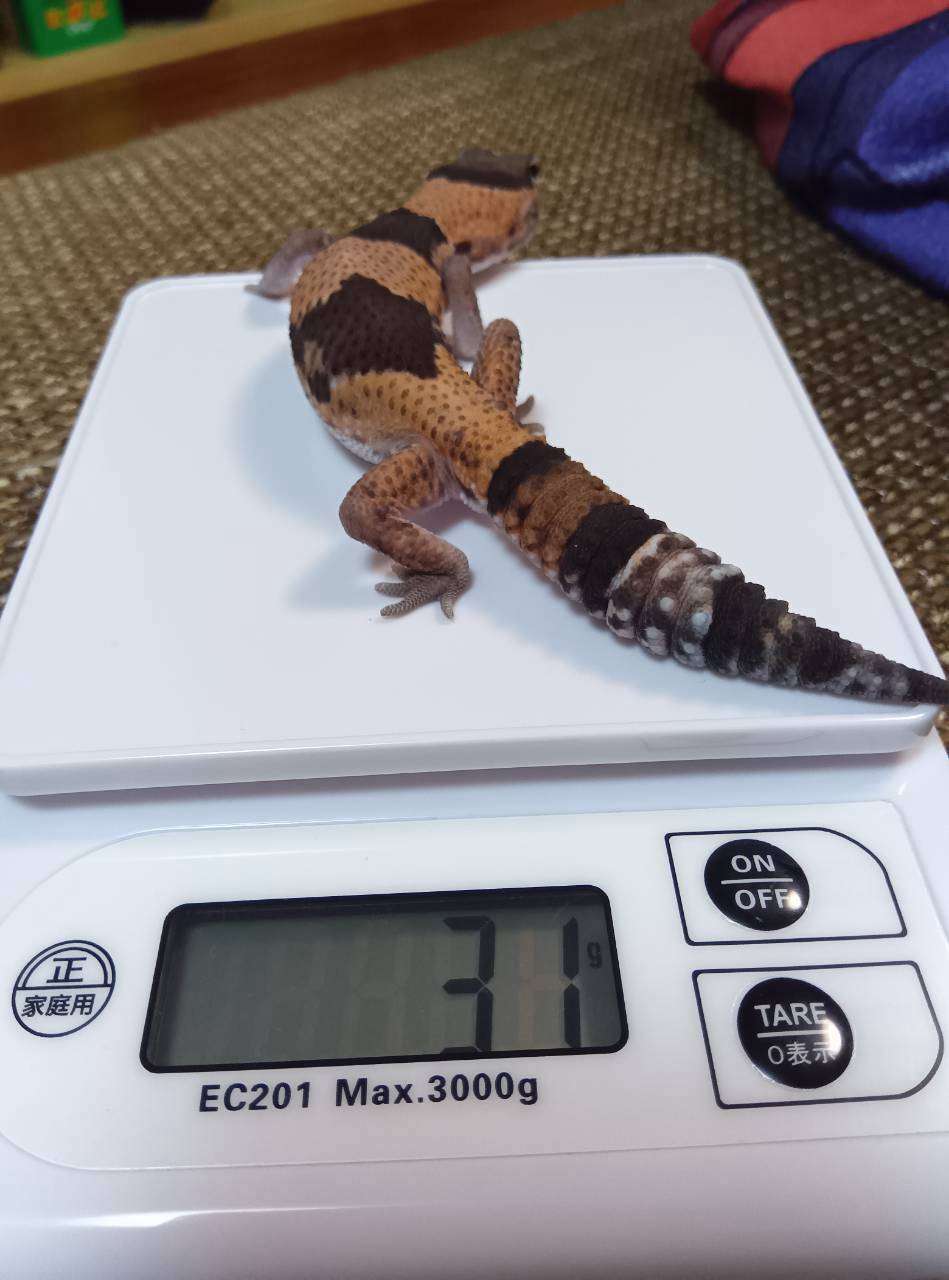
Tail thickness and weight gain stand in for a birth date. They tell me what stage he's at
4. How we think about the fifteen years
I'll be honest. If Ohagi is with us for fifteen years, he'll be here until my kid is all grown up. Somewhere in there, there'll probably be a move, and other changes we can't see yet. Can we keep giving him one shelf of space, a few minutes a day, and a feeding every three days through all of that? Before we got him, the family sat down and talked about exactly that.
There's one more thing I can't shake. Before the gecko, I'd been keeping Japanese grass lizards, and in their second year I lost one right after it came out of winter dormancy. I think I rushed the feeding before its digestion had woken back up. Even a long-lived animal can die at the turn of a season. That's what I learned that spring, and it's why I fuss over Ohagi's temperatures the way I do.
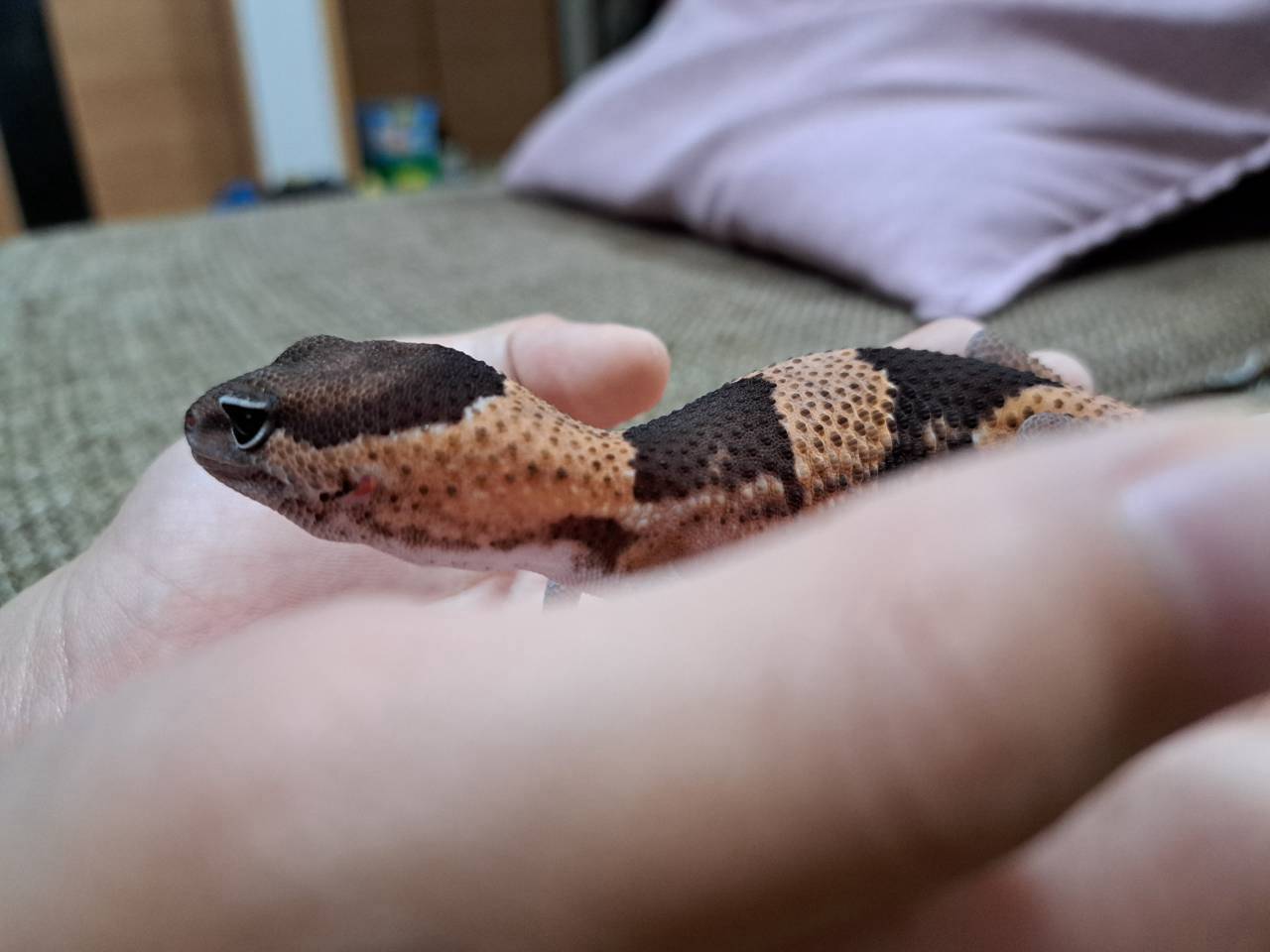
The plan is to still have him on this hand fifteen years from now
5. What I check every day, for the long haul
FAQ
- Which lives longer, a fat-tail or a leopard gecko?
- About the same. Both run 10–20 years in captivity. Husbandry matters far more than species.
- How does an older fat-tail change?
- He slows down even more, eats less (and less often), and sheds at longer intervals. Once growth has stopped, the thing to watch is sudden weight loss.
- What if I can't keep him anymore?
- That's the outcome to avoid most, which is why I'd ask anyone to picture themselves fifteen years from now before buying. If there's really no way around it, the realistic route is rehoming him through a reptile store or a local keepers' group. Never, ever release him outdoors.
- How long do you think Ohagi will live?
- No idea. But if this site gets to post "year one with us," "year two with us," and so on, every year, those will be the best articles on it.
• Primary source: Ohagi's shop card and my own records, 2026. Lifespan ranges are general husbandry knowledge
I keep Ohagi, an African fat-tailed gecko, at my home in Japan. Every photo here was taken in my home. Written from my own notes and photos, with AI helping me put it into English.