
How Big Do African Fat-Tailed Geckos Get? My Gecko's Weight, Four Months of It, With Photos
"Adult fat-tailed geckos weigh 50 to 80 grams." Every care sheet says so. But the gecko who came home with me weighed 24 g. What I couldn't find anywhere was how fast he'd get from there to adult size, or how many grams a month counts as "on track." Hardly anyone publishes actual numbers.
So here are Ohagi's, as they happened. Five weigh-ins, every one with a photo. General size ranges first, then the real data and how I've learned to read it.
- EssentialA kitchen scale. It doesn't need to read tenths of a gram; mine reads whole grams
- Nice to haveA small box or tray to set him in, so you can zero out the container
1. Adult size and weight: the general guide
| Stage | Typical range | Notes |
|---|---|---|
| Hatchling (0–3 months) | A few grams to the low teens, 2–4 in (5–10 cm) | Tiny and needs daily feeding. Shop staff often steer first-timers away from babies, and mine did |
| Juvenile (3–12 months) | 15–40 g, 4–7 in (10–18 cm) | The big growth window. Frequent sheds |
| Adult (from 12–18 months) | Around 50–80 g, about 8 in (20 cm) | Big males can get close to 100 g. Growth stops; from here it's about keeping condition |
They end up about the same size as a leopard gecko, but the build is rounder and heavier, with a much thicker tail. That's where the fat goes, so weight and tail thickness track each other closely (the tail-health article covers this).
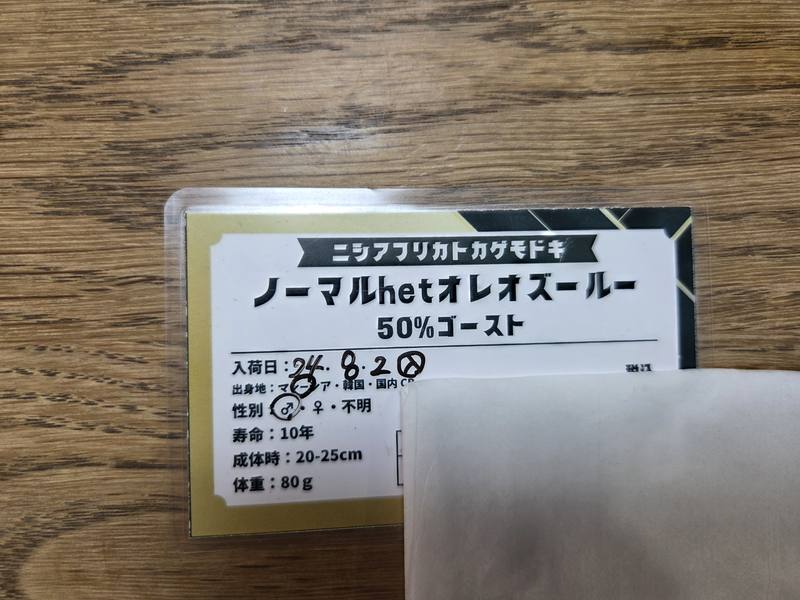
The card that came with Ohagi. The "80 g" on it is an expected adult weight, not a measurement. Weighed on the spot on pickup day, he was 24.2 g
2. Ohagi's real numbers, four months' worth
| Date | Weight | Days home | Notes |
|---|---|---|---|
| May 11 | 24.2 g | 0 | Pickup day, weighed at the shop |
| Jul 4 | 26 g | 54 | Nearly flat for the first two months. Settling-in period |
| Aug 6 | 30 g | 87 | Here's where it takes off |
| Aug 11 (approx.) | 31 g | 92 | Tail visibly thicker |
| Sep 13 (approx.) | 35 g | 125 | 1.45× his arrival weight. Shedding every 2–3 weeks |
I don't know how old he is. The shop card listed an arrival date, but that doesn't tell you when he hatched, so I don't use it to guess his age. What I know is this: he arrived at 24 g, hit 35 g in four months, and he's still growing.
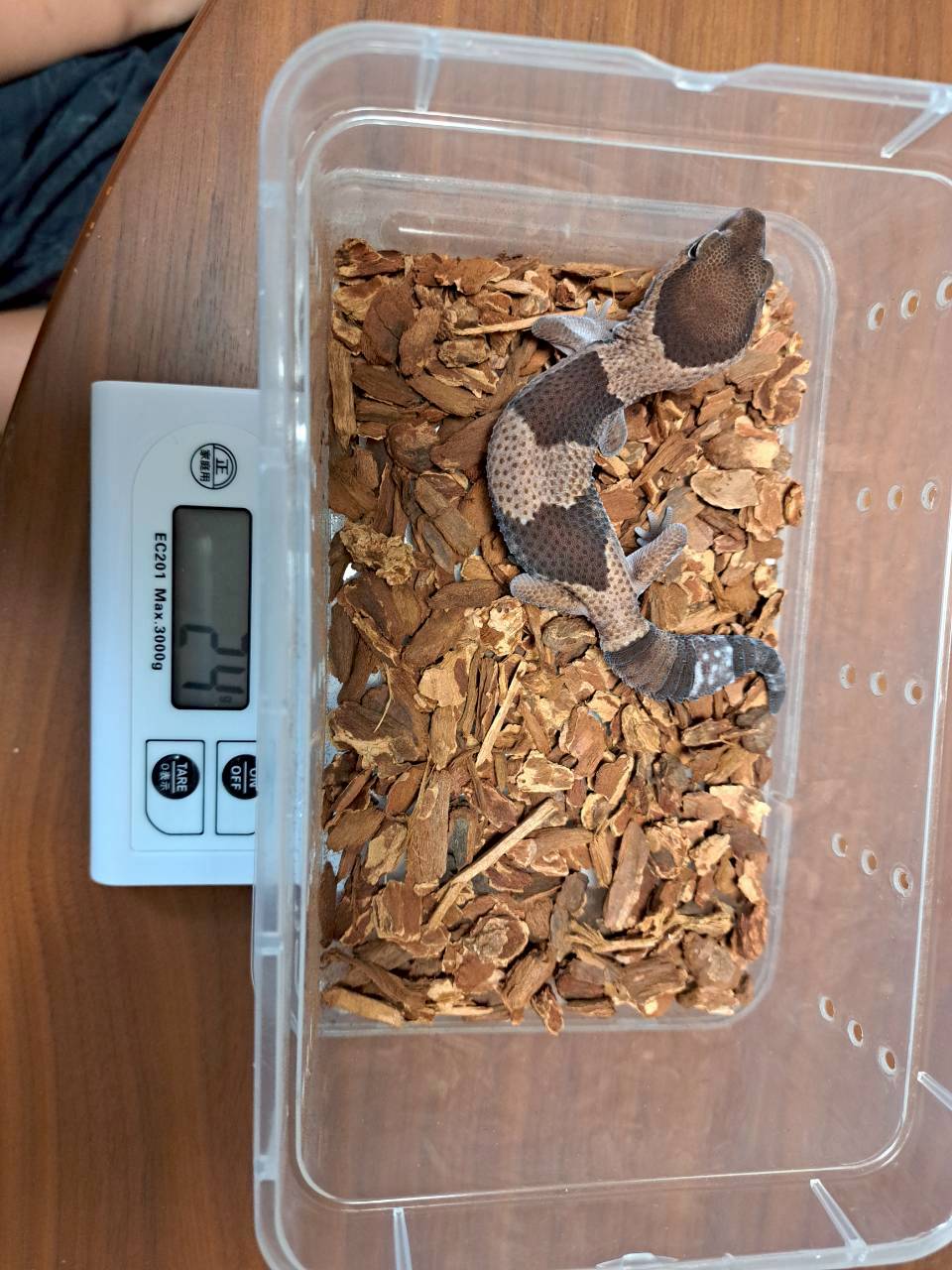
Early days. Onto the scale, bark-chip box and all, then subtract the box. Reading: 24 g
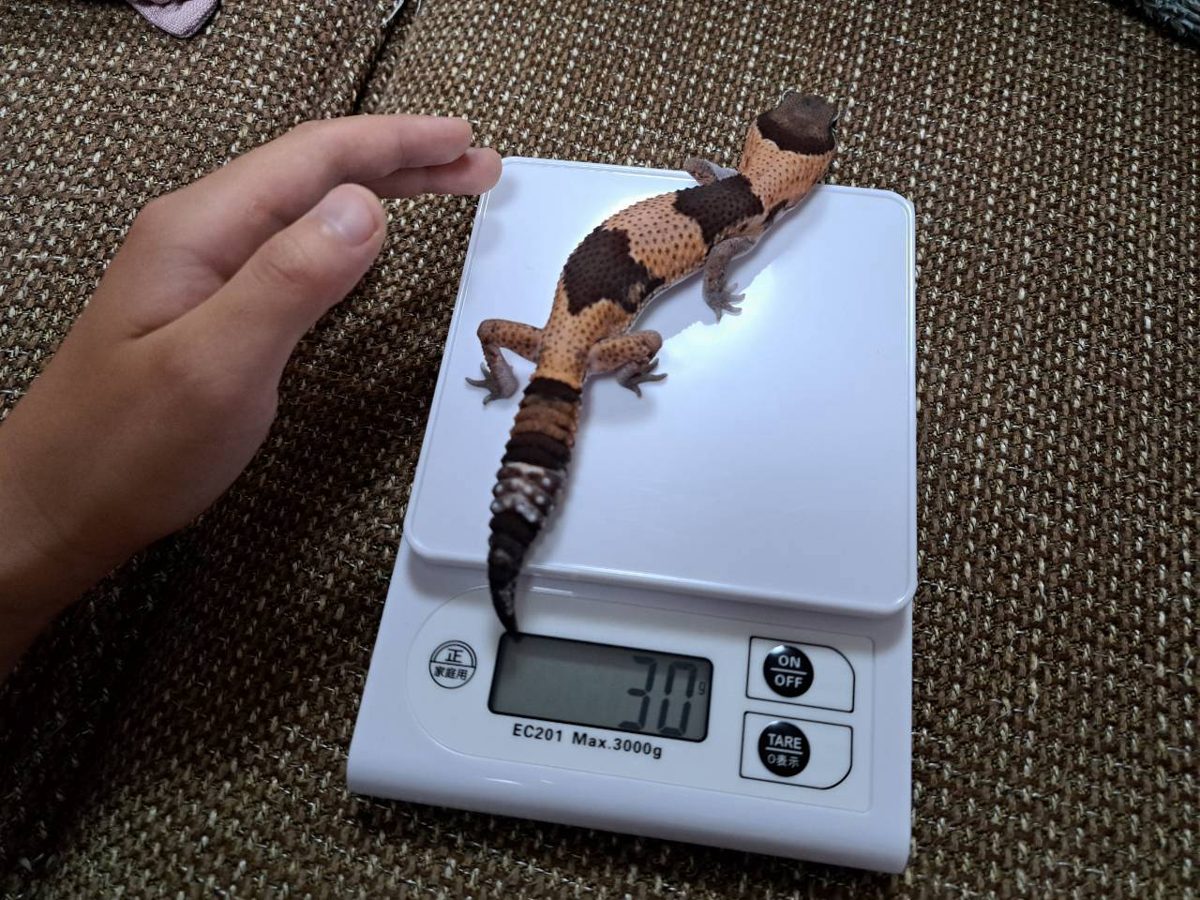
August 6, 30 g. By now he'd sit on the scale directly. The hand next to him belongs to my kid
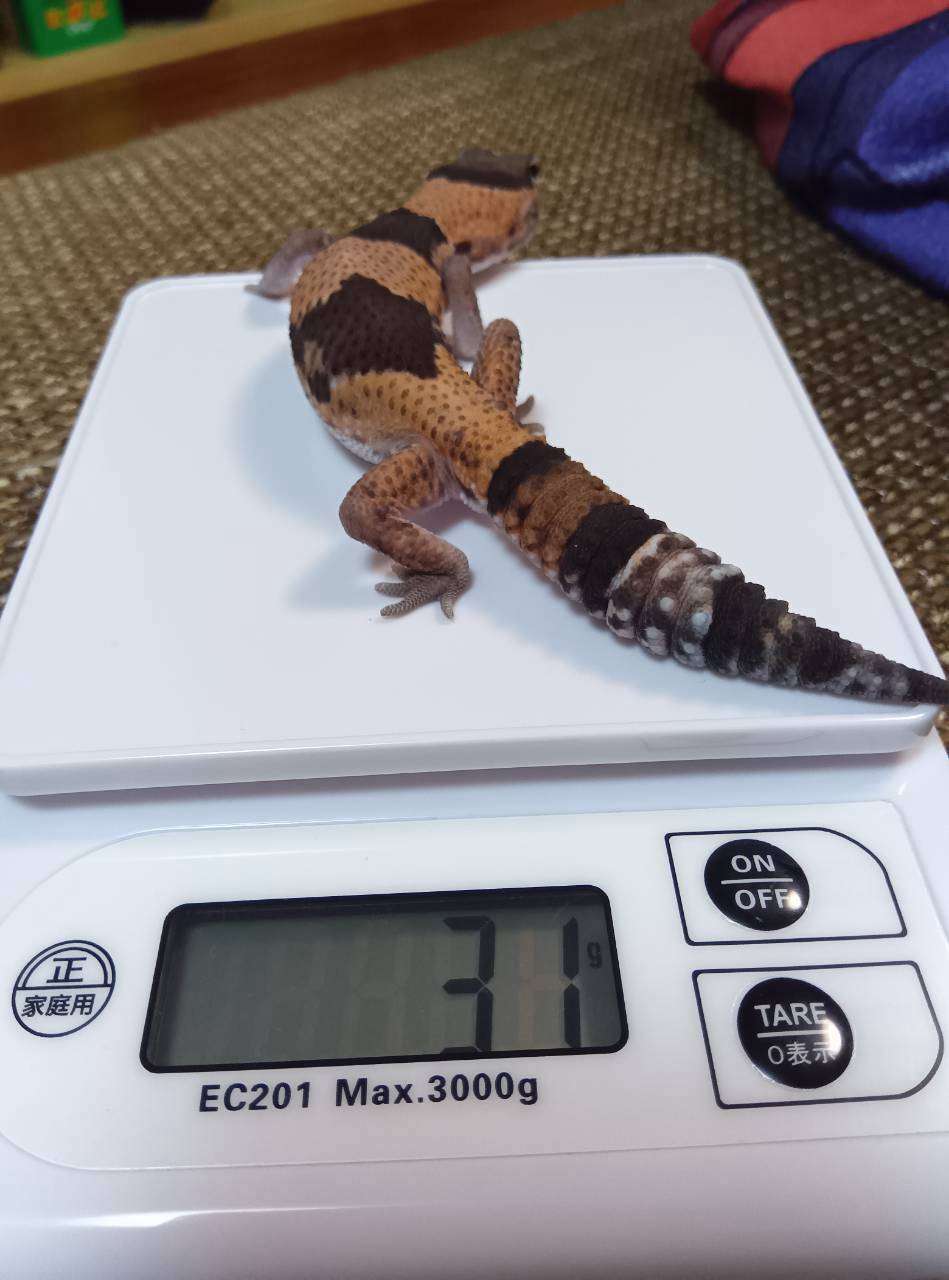
Around August 11, 31 g. From behind, the tail thickness is obvious. When weight goes up, the tail is where it shows first
3. How to read the numbers
Three things this log taught me.
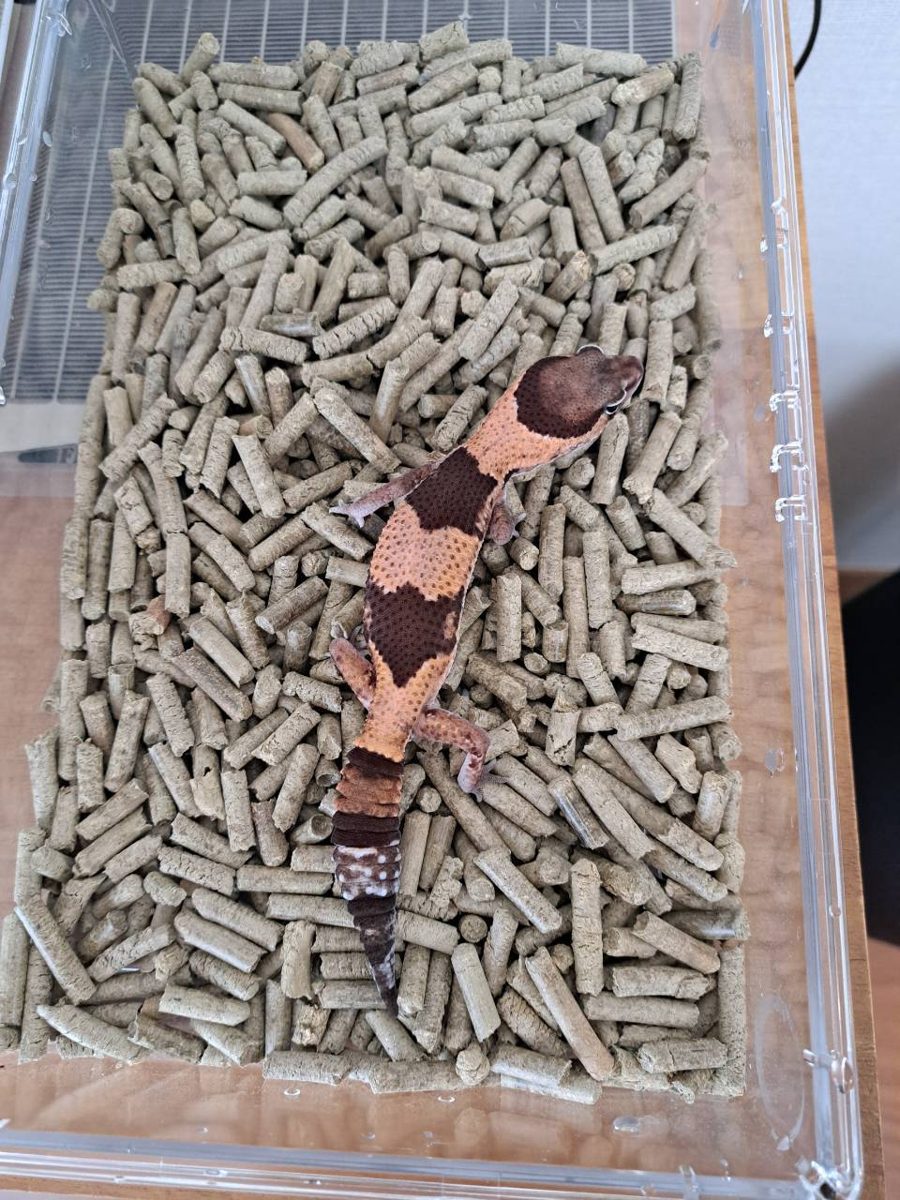
Somewhere in the first month or two (the wood-pellet era). From above, still slim, tail narrower than the body
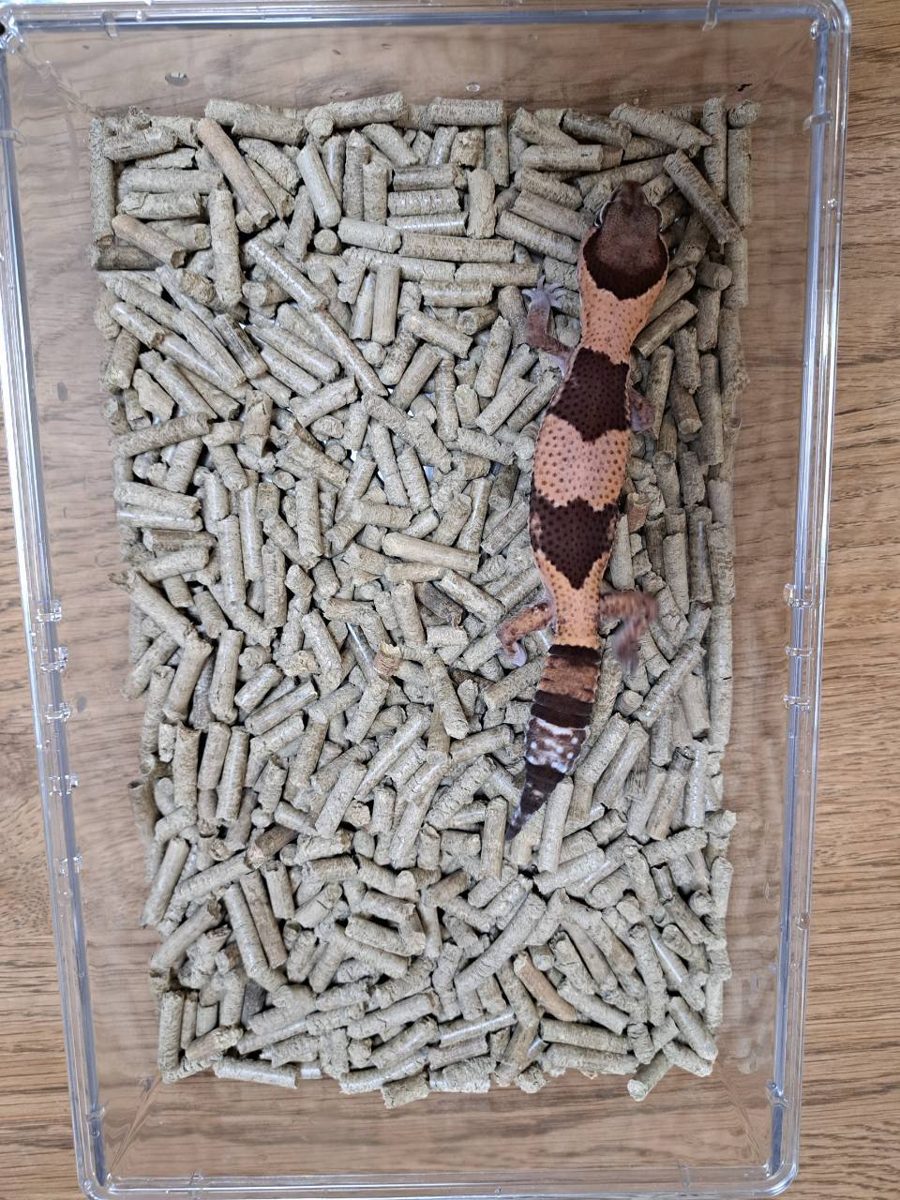
Same top-down angle later on. Thicker through the body, bands crisper. Shooting from the same angle each time makes growth easy to compare
4. How I weigh him at home
5. When he's not gaining, or losing
- Flat for the first two months after pickup: within the normal range. Ohagi did exactly this. If he's eating and the tail isn't thinning, just keep watching.
- Flat for three months or more, or the tail is getting thinner: check temperature first. A warm side that isn't warm enough kills digestion and appetite (the temperature article has my own mistake on this).
- Down 10% or more in two weeks: see a reptile vet. That can mean parasites or illness.
- Right before or after a shed: appetite drops for a bit. Ignore that week's number.
FAQ
- How long until he's fully grown?
- Twelve to eighteen months is the usual figure. Since I don't know Ohagi's age I can't say how many months it took him, but at 35 g after four months he's not quite halfway to a typical adult weight.
- Are males bigger than females?
- Males tend to run a little bigger, but individual variation is larger than the sex difference. You can't sex a gecko by weight.
- Should I measure length too?
- I don't. Stretching a gecko out to measure him is stressful for both of you, and weight is far easier and more accurate. For tracking growth, weight is all you need.
- Can he get overweight?
- An adult whose tail is thicker than his body, with fat pads along his sides, is overweight. During the juvenile growth phase it isn't something to worry about.
・Primary source: my own weigh-in records and photos of Ohagi (male African fat-tailed gecko), May–September 2026
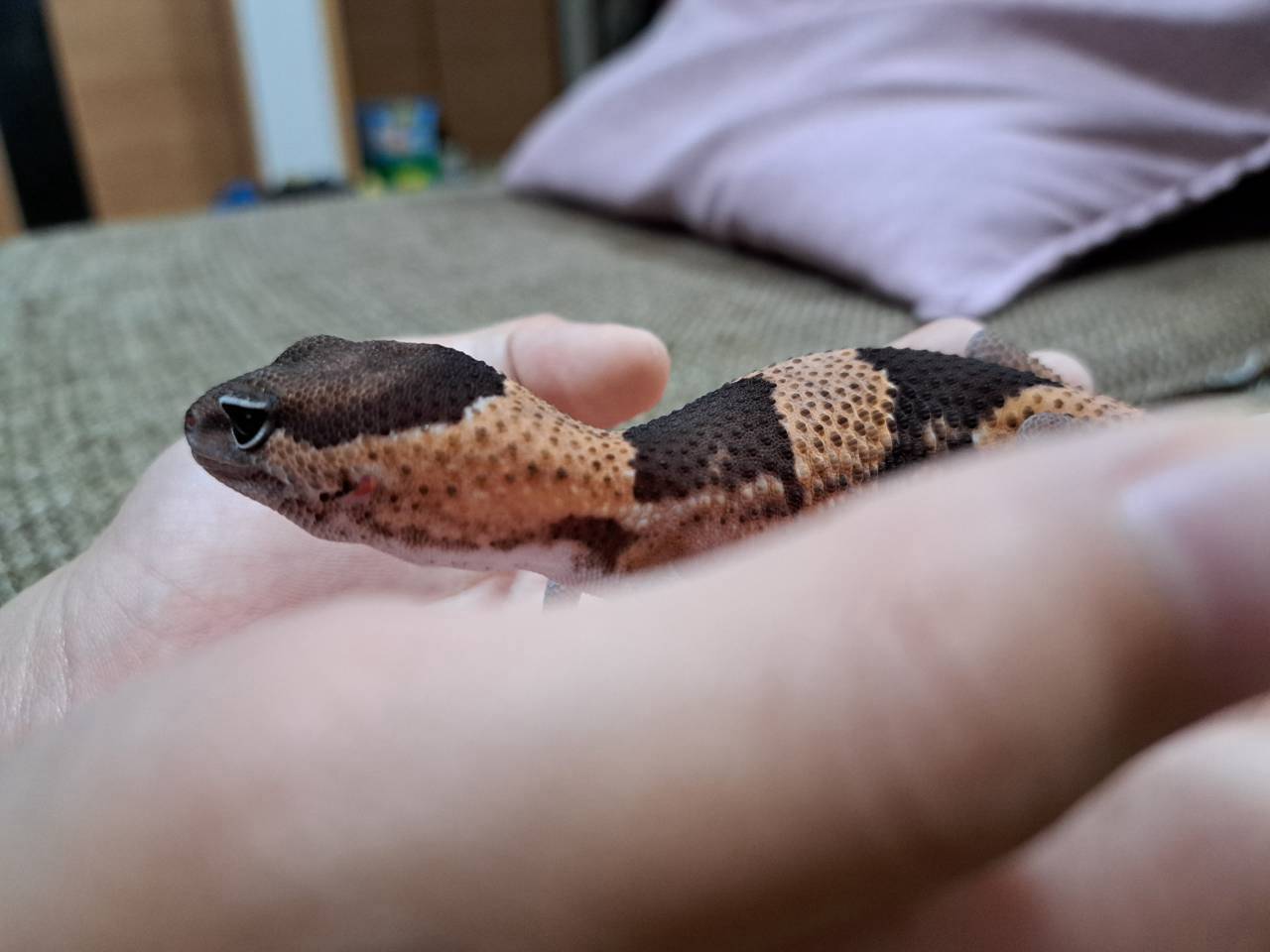
I keep Ohagi, an African fat-tailed gecko, at my home in Japan. Every photo here was taken in my home. Written from my own notes and photos, with AI helping me put it into English.