
What I Changed (and Didn't) in My First Four Months With a Fat-Tailed Gecko
Published Oct 12, 2026
Before I got my first gecko, what I most wanted to know was: what does everyone mess up at the start? Care guides tell you the right answer. They don't tell you about the detours people take on the way there.
This post is a record of what I changed and what I didn't in the four months since Ohagi came home. Three of the changes came from real mistakes. The rest are things I tried and settled on, and things a Japanese reptile store took care of for me. And the things I've never changed matter just as much, so they're here too.
1. The table: what changed in four months
| What | At first | Now | What prompted it |
|---|---|---|---|
| Heat mat | On and off by feel | On by default. I only turn it off based on the thermometer and the forecast | Loose poop and a drop in appetite |
| Thermometer/hygrometer | A small digital one near the floor | An analog one on the enclosure wall | Mist from the spray bottle killed the digital one |
| Putting down new soil | Straight from the bag | I know fresh soil can be damp. After putting it down, I check the hygrometer before misting | The hygrometer hit 100% |
| Substrate | Bark chips | Desert soil (since June) | Tried wood pellets too; soil won on humidity and digging |
| Hot days | React when he sits on the water dish | Check the thermometer and forecast first; turn the mat off ahead of time | Realized reacting to his behavior was too late |
2. Three real mistakes, and what I changed
1. I was running the heat mat by feel
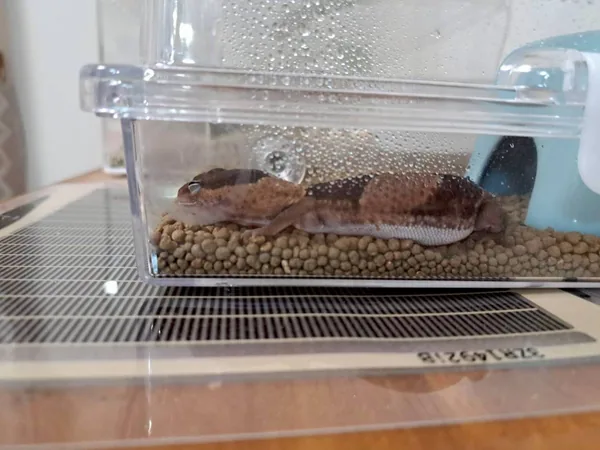
This one mat is the only heat source. That's exactly why running it by feel shows up so fast
Not long after Ohagi came home, I was switching the under-tank heat mat on and off based on how the room felt to me: "It's warm today, I'll turn it off." During a stretch when I had it off, his appetite dropped and his poop went loose. When I finally looked at the thermometer, the floor was cooler than I'd assumed. How warm a room feels to a person and how warm the floor feels to a gecko's belly are two different things.
I turned the mat back on and his appetite and poop went back to normal almost right away. Now the mat stays on by default. I only turn it off on days when the thermometer and the forecast have already told me it's going to be hot.
2. I killed my digital hygrometer while misting
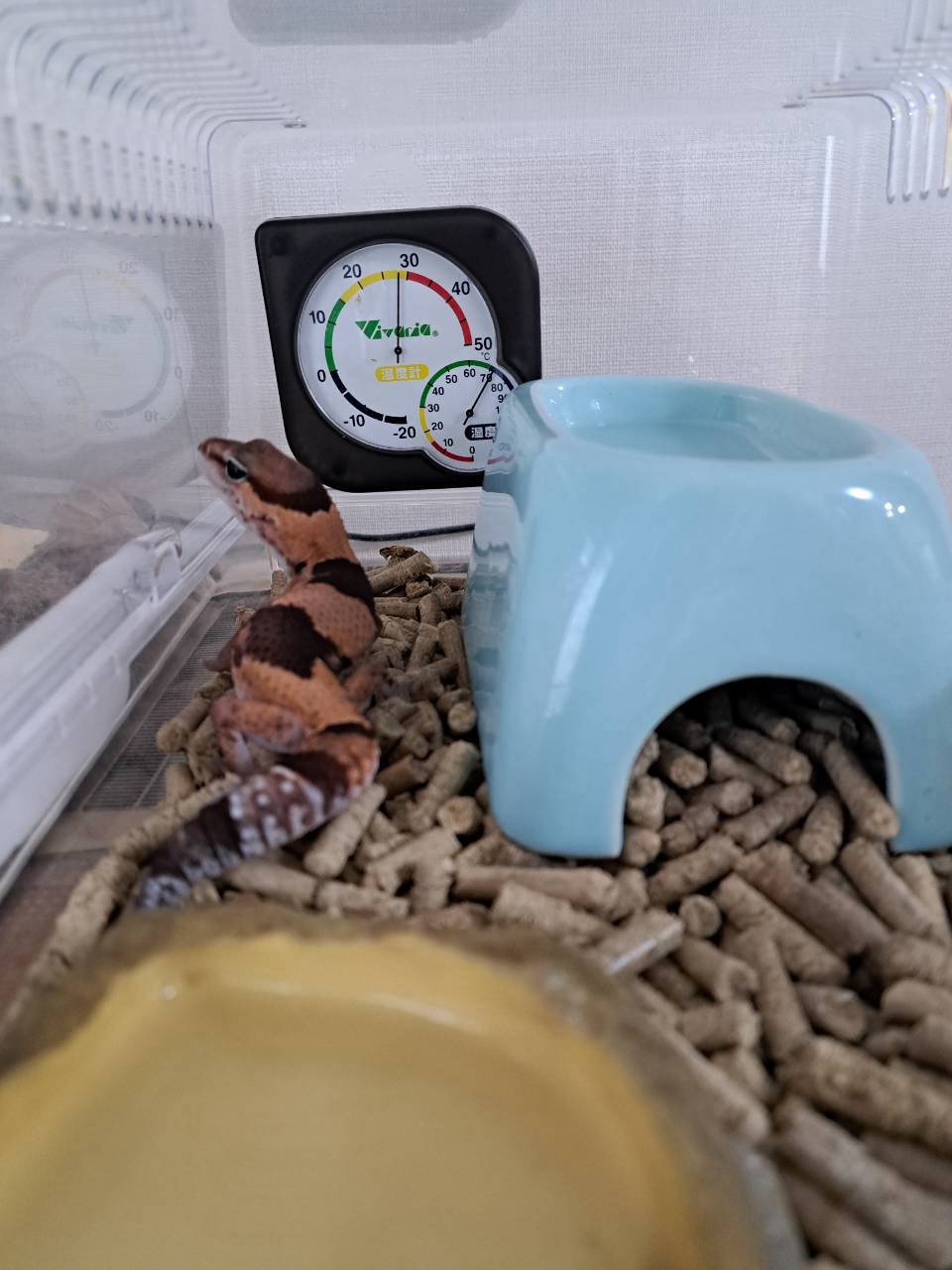
The analog thermometer/hygrometer I use now. It's stuck to the wall, and I read it at a glance every time I open the door
At first I had a small digital thermometer/hygrometer, the kind with a little tilting stand, sitting near the substrate. Some misting water must have gotten in, because after a while it died. Since then I've used an analog one stuck to the enclosure wall, and it's done the job fine.
To be fair, digital units are usually more precise and can log highs and lows. If you use one, keep it where the mist can't reach it. Rather than finding a spot that stays dry, I went with something that doesn't care if it gets wet.
3. I put down fresh soil straight from the bag
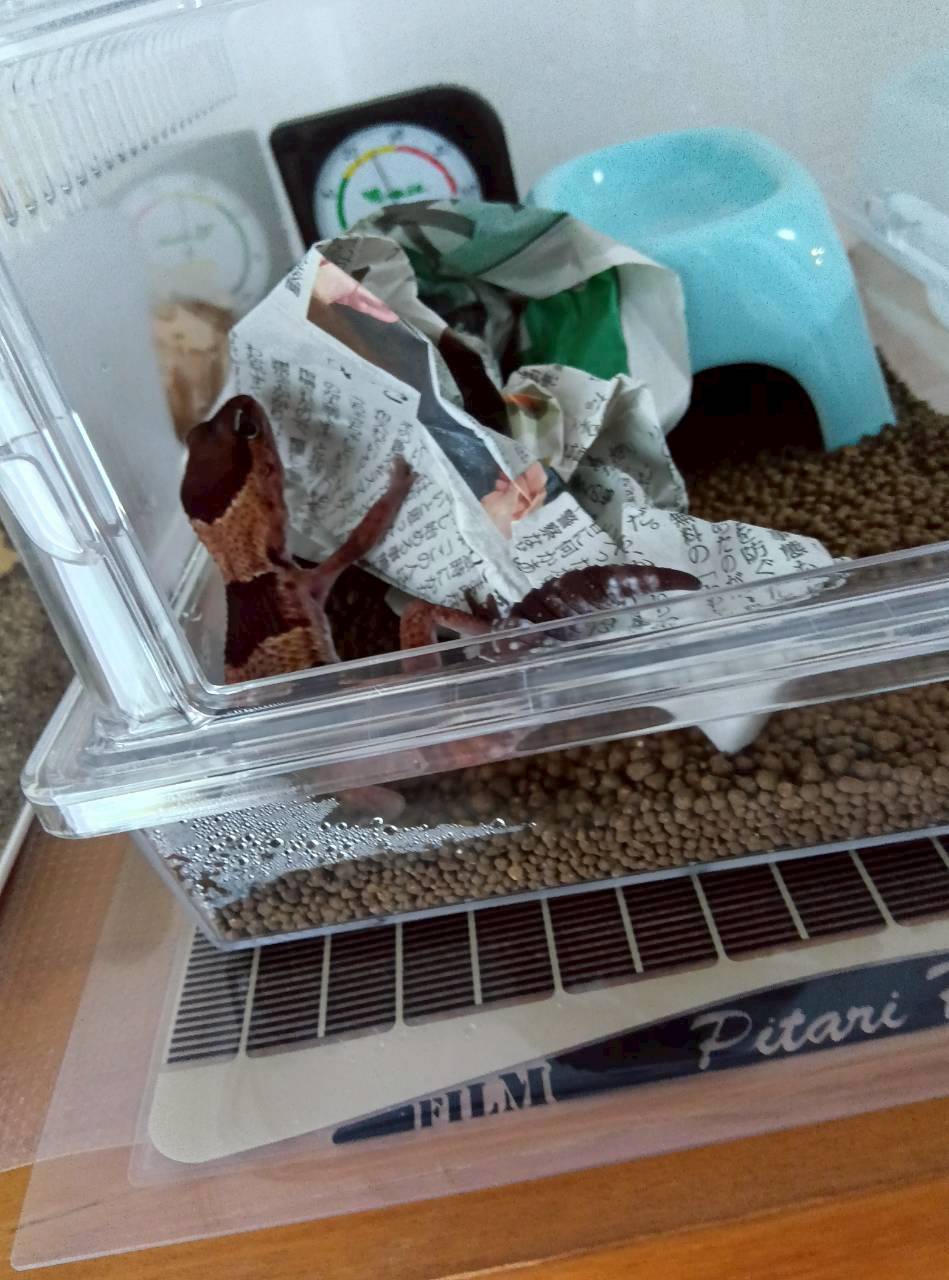
The day I put down the soil and the hygrometer hit 100%. I put in crumpled newspaper to see if it would pull the humidity down. Honestly, I don't know if that's the right fix. Ohagi decided the newspaper was a toy
I'd been watching humidity since day one. I'd read that fat-tails like it humid, so the hygrometer went in right at the start. Even so, there was one day it shot way too high: the first day I put down desert soil.
I opened the bag and spread it straight into the enclosure. My best guess is that the soil in the bag was holding a fair amount of moisture. Once it was in, the hygrometer read 100%. In a bit of a panic, I put in some crumpled newspaper to soak up the excess.
What I didn't know: soil fresh out of the bag isn't necessarily dry. Now, for the first few days after putting down new soil, I check the hygrometer before I reach for the spray bottle. On the day you change the substrate, find out how much moisture the soil itself is bringing in before you add any water. That alone would have prevented it.
3. Things I tried and settled on
Substrate: bark chips → wood pellets → desert soil
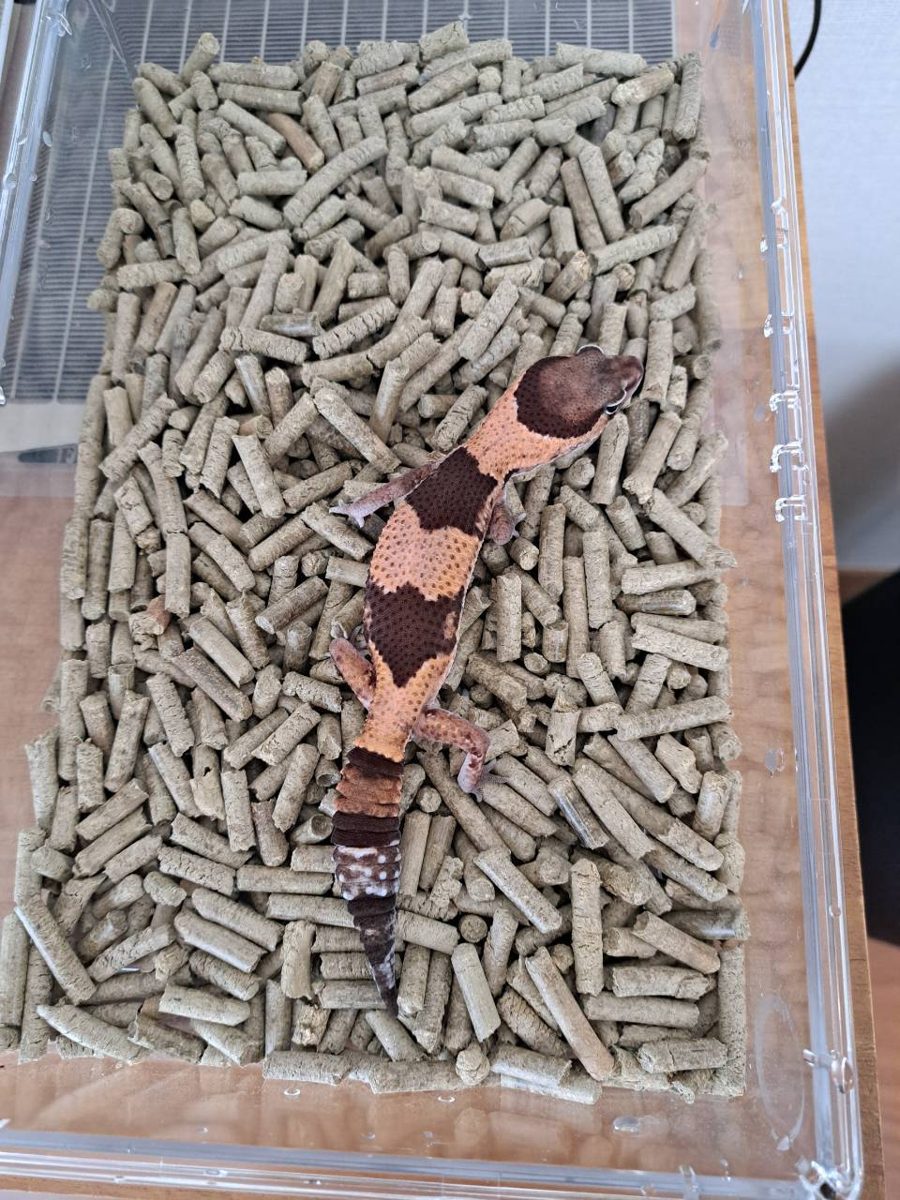
Ohagi during his wood-pellet phase. Not bad, but the pellets kept breaking down every time I misted
This one wasn't a mistake; it was shopping around. He started on bark chips, I tried wood pellets next, and since June he's been on desert soil (a granular soil substrate). Two things decided it:
- Humidity. Pellets soak up misting water and then crumble into dust. Soil grains hold the moisture and release it slowly, so the whole floor becomes a gentle humidifier.
- I wanted to see him dig. On soil, he started peeking out from behind mounds he'd dug up. That never happened on pellets.
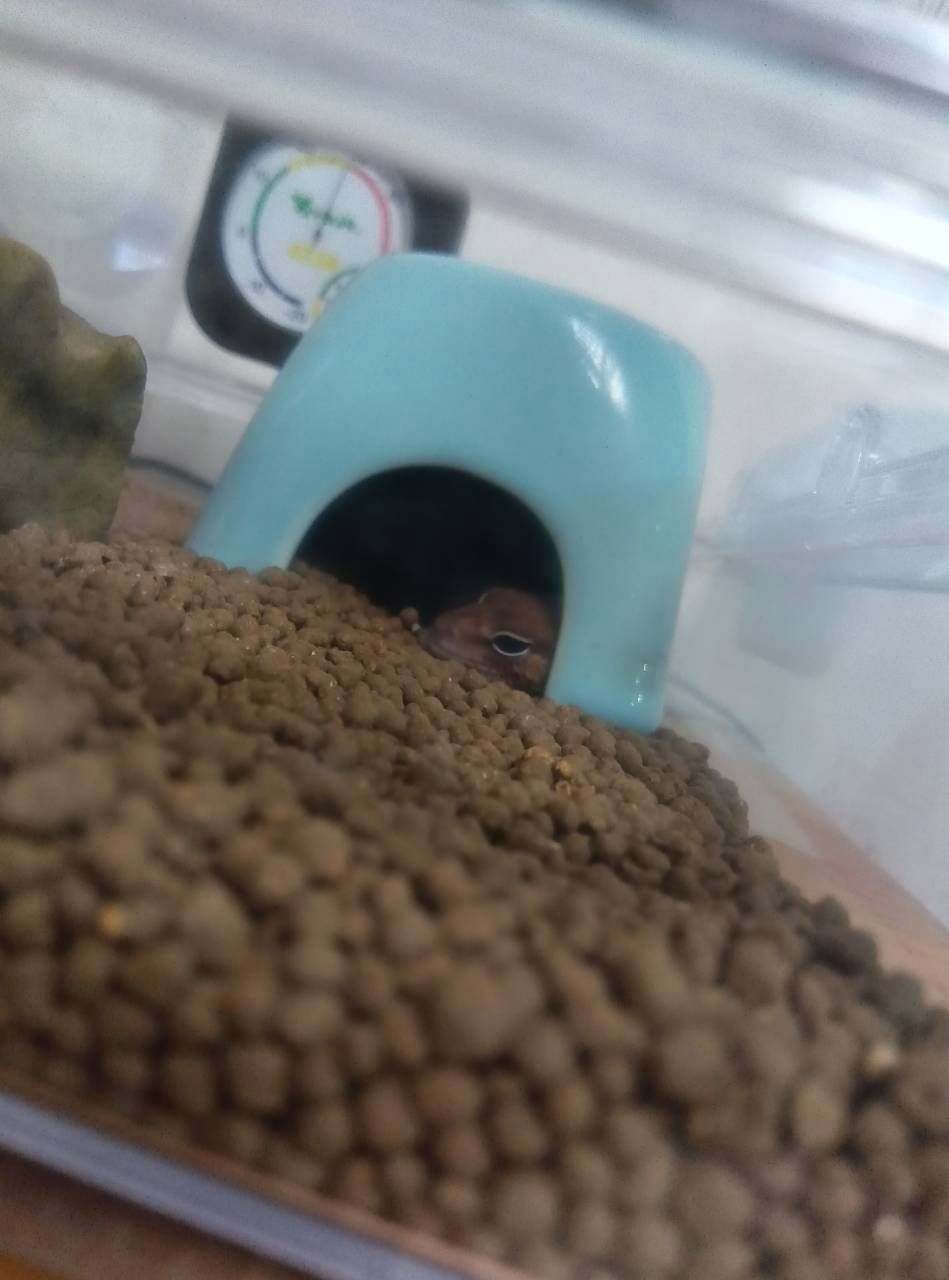
The first time I saw this was on soil: a little face peeking out from behind his own dirt pile
Hot days: from reacting to his behavior to checking numbers first
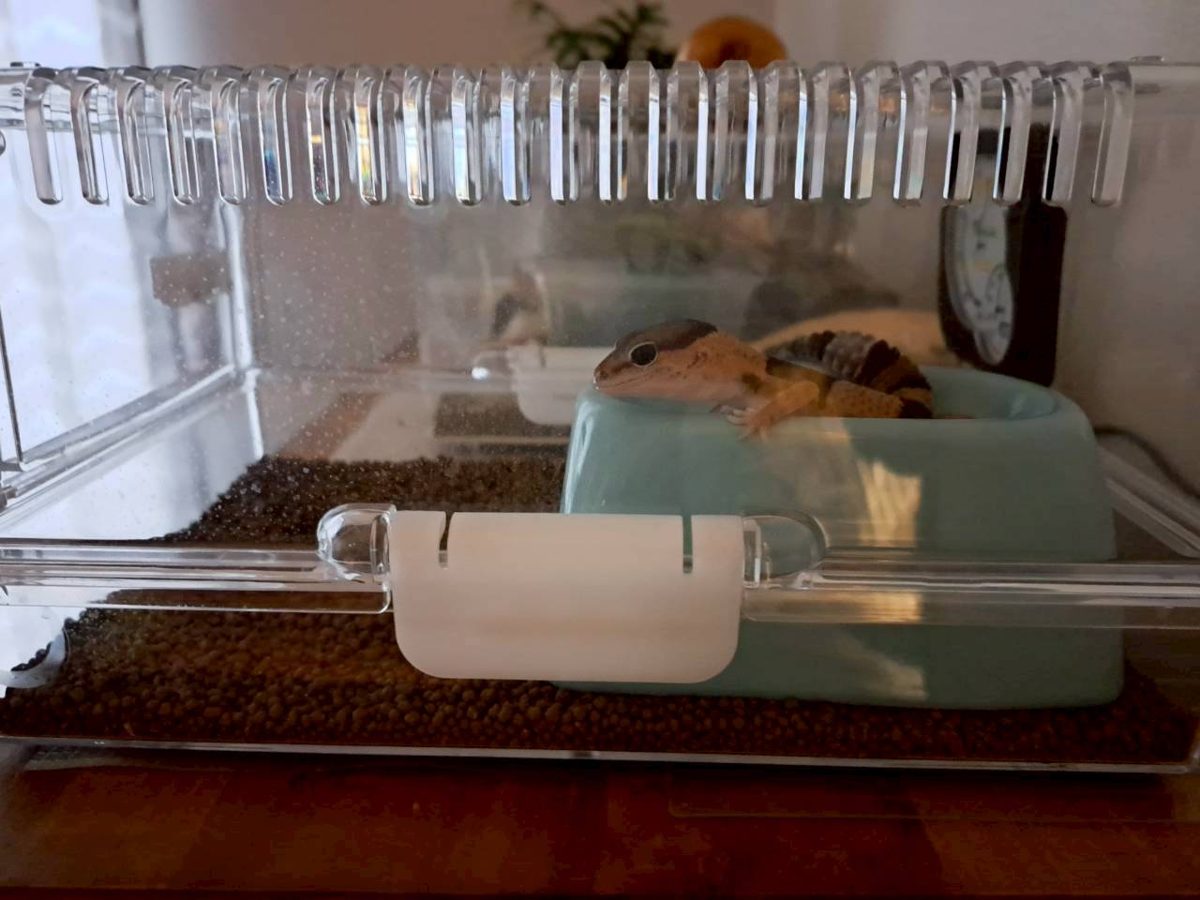
He only sits on the water dish on hot days. At first, this was my cue to act
That first summer, when Ohagi climbed onto the water dish that sits on top of his hide, I'd think "he's hot, turn off the mat." But that's a signal that it's already hot, which is too late to act on. Now I check the thermometer and the forecast first and turn the mat off ahead of time on days that look hot. Now his behavior is just my double-check.
4. Where a Japanese reptile store helped (if you buy elsewhere, do this yourself)
These weren't mistakes. They're things the store handled because it was a dedicated reptile store in Japan.
- They told me a juvenile would be easier than a baby for a first-timer. Babies need feeding every day. We narrowed it down to two larger juveniles, and in the end my kid pointed and said, "This one."
- The store had already checked his health. Back then, I didn't know how to check the eyes, mouth, and toes myself. At specialty reptile stores in Japan, staff typically take the animal out and walk you through it, and I left it to them.
5. What I've never changed
What I didn't change matters as much as what I did. These are the things that, four months in, turned out to be right from the start.
| Never changed | Details |
|---|---|
| Feeding with tongs and a dish, from day one | Crickets on tongs or in a dish, mealworms by hand or on tongs, gecko diet in a dish. Nothing eaten straight off the floor |
| Feeding every three days | Currently three large crickets per feeding. Weight went from 24.2 g to 35 g |
| One gecko | No cohabbing. If a second ever comes home, she gets her own enclosure |
| No lights | One under-tank heat mat is the only heat source. No UVB either |
| Minimal handling | Quick daily water changes; handling maybe once a week. My view: the less you handle them, the faster they get used to you |
6. If you're about to start: just one thing
Side by side, all three mistakes come down to the same thing: I acted on an assumption before checking. The room feels warm, so the floor must be warm too, so I turned off the mat. It's near the floor but it won't get wet, so I put the digital unit there. Soil straight out of the bag must be dry, so in it went.
So if I could tell you just one thing: whenever you change something, check the thermometer and hygrometer before and after. Your gecko can't tell you "I'm cold" or "it's too damp in here." Only the numbers will.
FAQ
- What's the most common beginner mistake?
- For me, it was managing temperature by feel. Don't just put a thermometer in; get in the habit of actually reading it from day one. That's the quickest way to avoid most problems.
- Should I start on soil right away?
- You don't have to. Any of the common substrates works. I tried bark chips and pellets before settling on soil. If you go with soil, feed insects and gecko diet from tongs or a dish, never straight off the floor.
- Can I put new soil substrate in straight from the bag?
- I did, and the humidity shot up to 100%. Fresh soil can come out of the bag holding moisture. For the first few days after putting it in, check the hygrometer before you mist.
- Digital or analog thermometer/hygrometer?
- Digital for precision and logging, analog for durability and simplicity. I switched to analog after misting water killed my digital one. If you go digital, keep it out of the spray.
- Do you feed dubia roaches?
- No. Honestly, I can't stand the look of them. Crickets and mealworms have done the job just fine for four months.
• Primary source: my own records for Ohagi, May–September 2026. The note about how reptiles are commonly bought in the US is general knowledge from English-language keeper communities, not something I've seen firsthand.
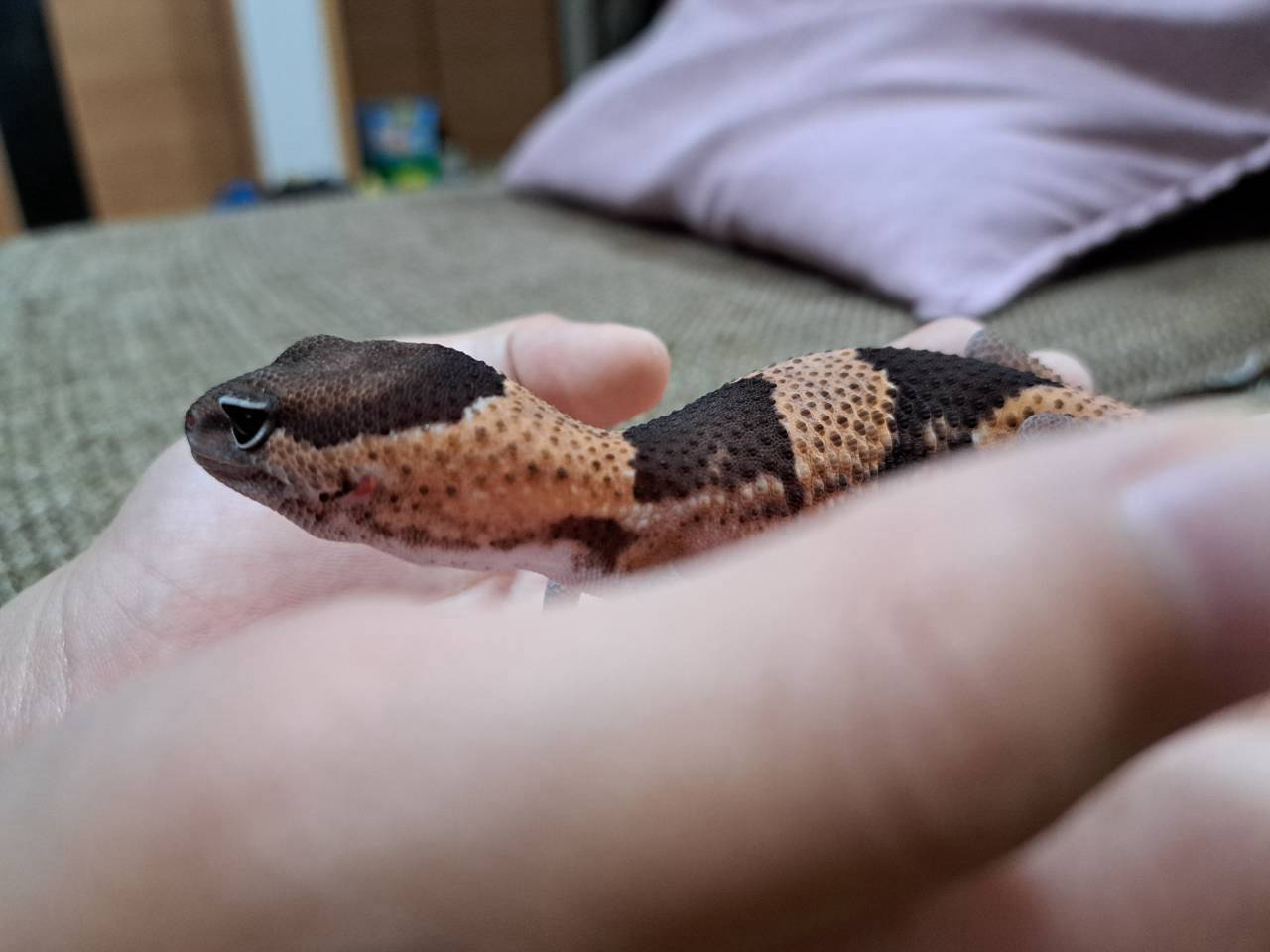
I keep Ohagi, an African fat-tailed gecko, at home in Japan. Every photo here was taken at our house. Written from my own notes and photos, with AI helping me put it into English.