Fat-Tailed Gecko Body Language: Tongue Flicking, Glass Surfing, Standing Up, and What I Think They Mean
Once you have a gecko, you see something almost every day that makes you go, "What was that?" Tongue flicking. Climbing the glass. Suddenly standing up on his back legs. Sitting on top of the water dish. Look it up and you mostly get "yeah, they do that sometimes," and in the end you're left watching your own gecko and figuring it out.
This post collects the things my gecko Ohagi has done regularly over four months, laid out as: when he does it, what keepers generally say it means, and how I read it. Fair warning up front: half of these interpretations are my own guesses. Geckos don't explain themselves. But it should still be useful for a "mine does that too!" comparison.
1. The table: eight behaviors
| Behavior | When Ohagi does it | What keepers say | My read |
|---|---|---|---|
| Tongue flicking | At night, when I open the door and he walks over. In front of the feeder cup | He's "tasting" the air to smell it (there's an organ in the roof of the mouth for this) | "What's this? Food?" Also a sign he's comfortable around people |
| Just his head out of the hide | Daytime, when someone's nearby or he hears the spray bottle. Not every time | Checking things out. If nothing's going on he stays in; if something catches his interest, head only | "I'm awake, you know." The most you'll see of him by day |
| Trying to climb the glass ("glass surfing") | No set time | Wants out / something's up there / climbs because he can | I suspect it's "I want out," but I can't prove it |
| Standing up on his back legs | Along the enclosure wall. In front of the thermometer | Looking at what's above / trying to climb | "Is there something up there?" Fat-tails aren't climbers, so he usually gives up partway |
| Sitting on top of the water dish | Daytime on hot days | Cooling off | Almost certainly "it's hot." That's a day I recheck the room temperature |
| Hunting stance (head down, frozen) | When I show him insects | Right before a strike. The tail tip may twitch | My appetite gauge. If this shows up, he's fine |
| Body goes cloudy white, rubs against the walls | Every two to three weeks | Pre-shed. The old skin is lifting | "Shed's coming." Over in a few days |
| Tail waving, body going stiff (while being held) | On my hand, when he's had enough | Discomfort, wariness | "Put me down." I do, right away. I've never been bitten |
2. One at a time, with photos and my read
Tongue flicking
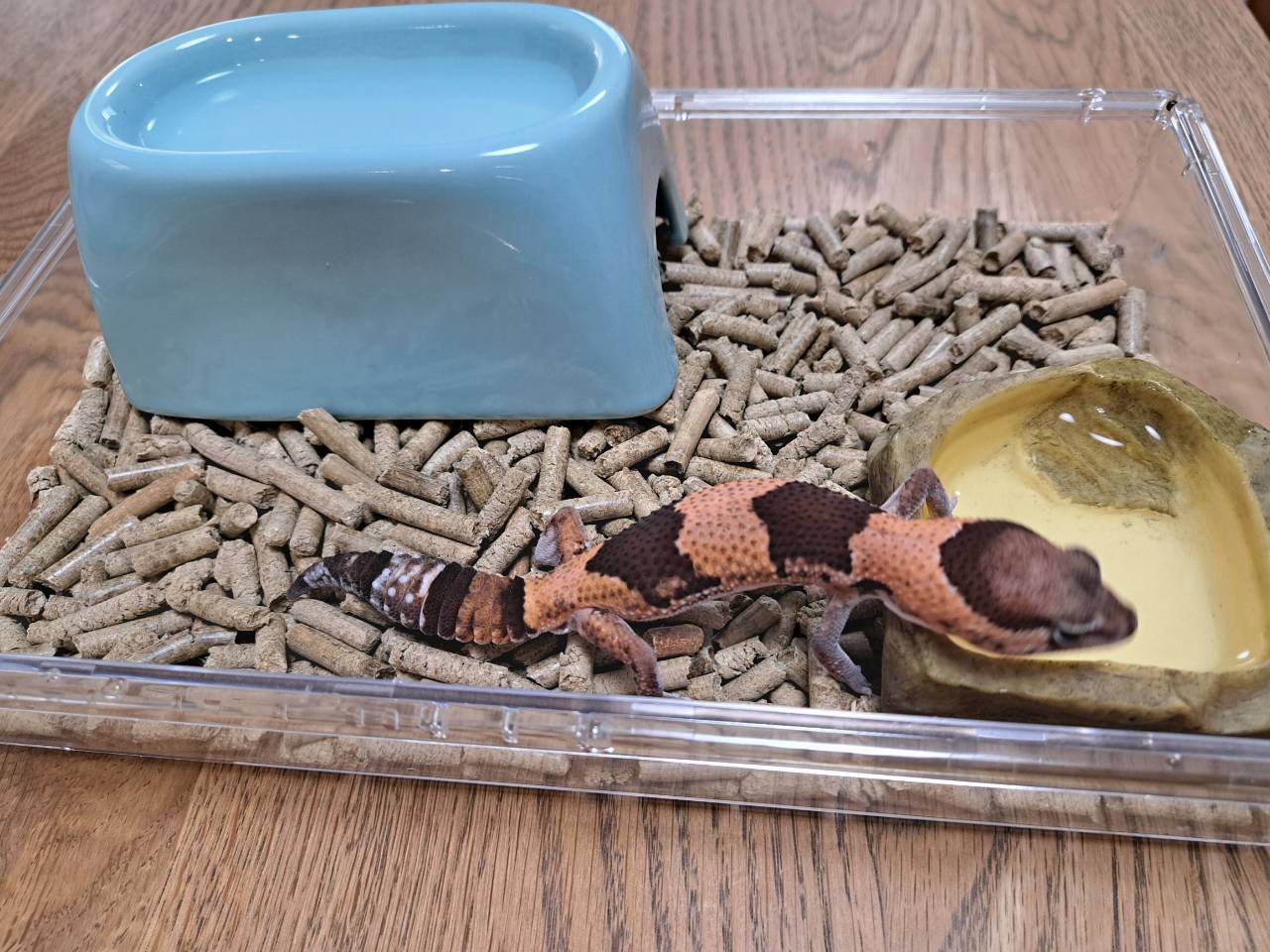
Lapping water from the dish. The tongue is for drinking, and for smelling
At night, when I open the door, Ohagi walks over flicking his tongue. He does it near my hand too, and I've been licked a few times. A gecko's tongue is a smelling tool: it carries scent to an organ in the roof of the mouth. Same idea as a dog sniffing you. I read it as "What's this? Food?" He didn't come this close when he first arrived, so it doubles as a measure of how comfortable he's gotten.
Just his head out of the hide
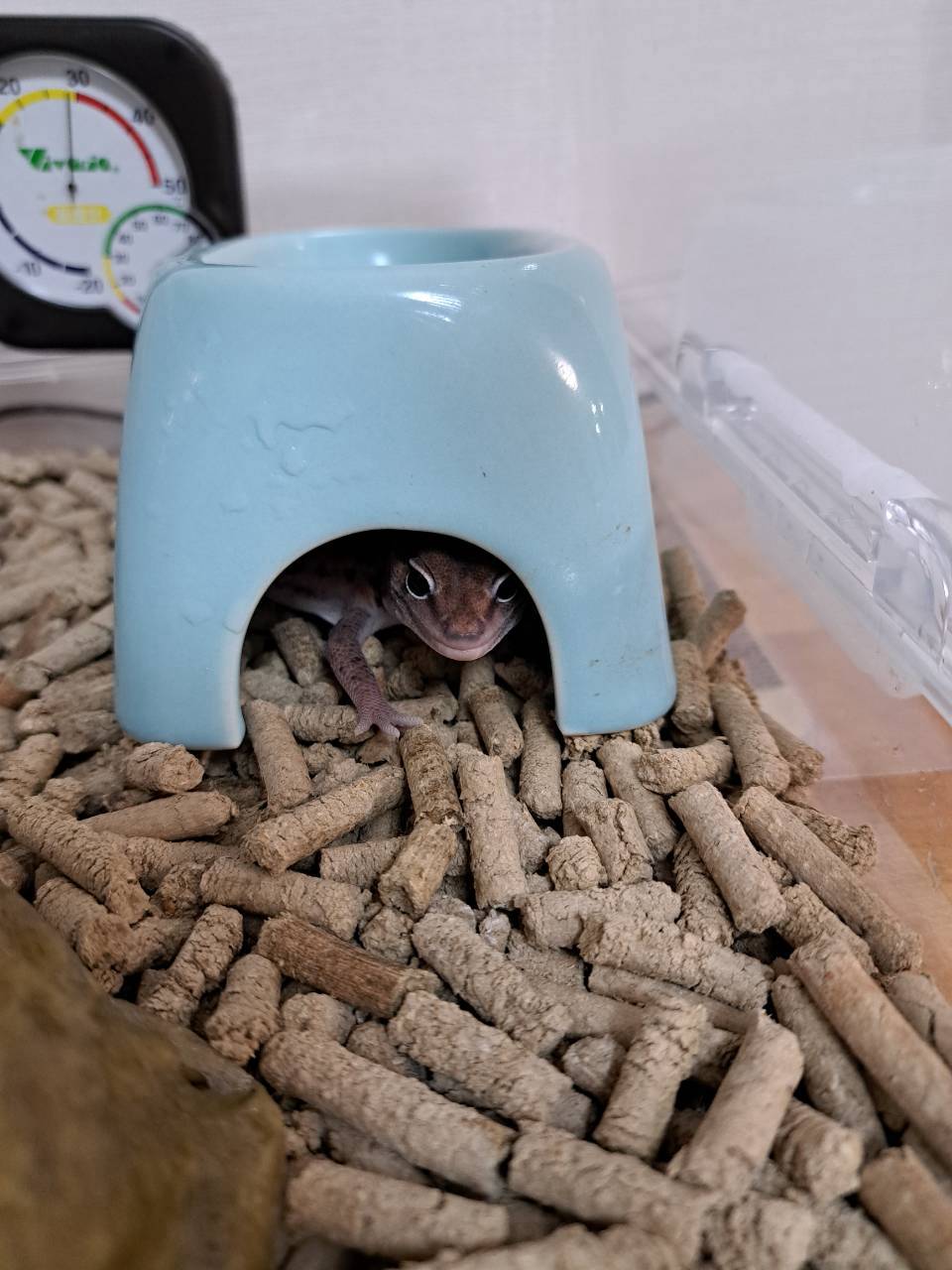
Daytime, on one of the days his head was out. Usually a reaction to someone nearby or the sound of misting
This is the most you'll see of him during the day, and not every day. If nothing's going on, he stays in; if something catches his interest, the head comes out and nothing else. I take it as "I'm awake, you know." If he were coming all the way out over and over in the daytime, that's when I'd start questioning the temperature or the hide (section 3).
Trying to climb the glass ("glass surfing")
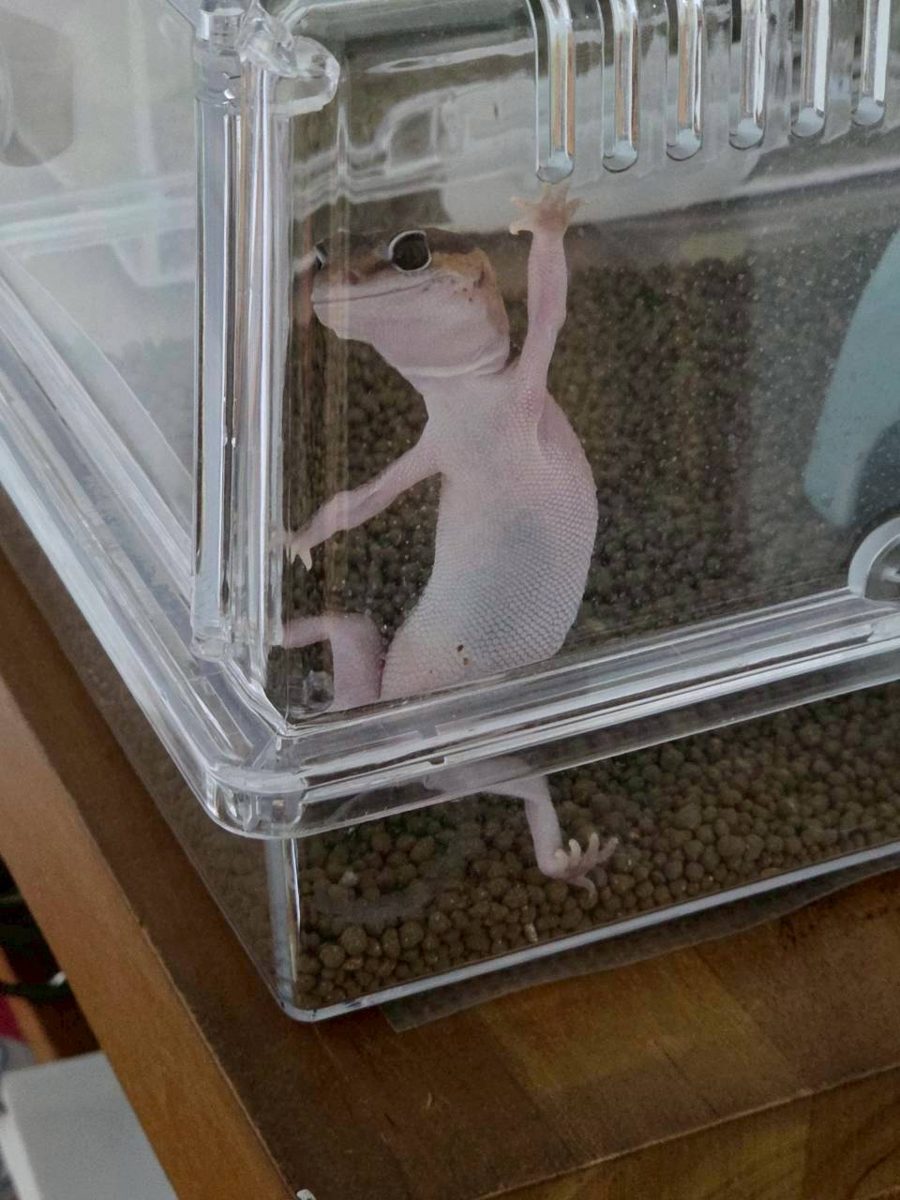
Front feet up on the corner glass, trying to climb. The white you can see is his belly
Sometimes he puts his front feet on the corner glass and tries to climb. There's no pattern to when he does it. Some days it's right after misting; some days it's for no reason I can see. My guess is he wants out, but I have no proof. Fat-tail feet can't stick to glass the way a house gecko's can, so he never gets anywhere and comes back down after a bit. It's not a problem behavior, so I leave him to it.
Standing up on his back legs
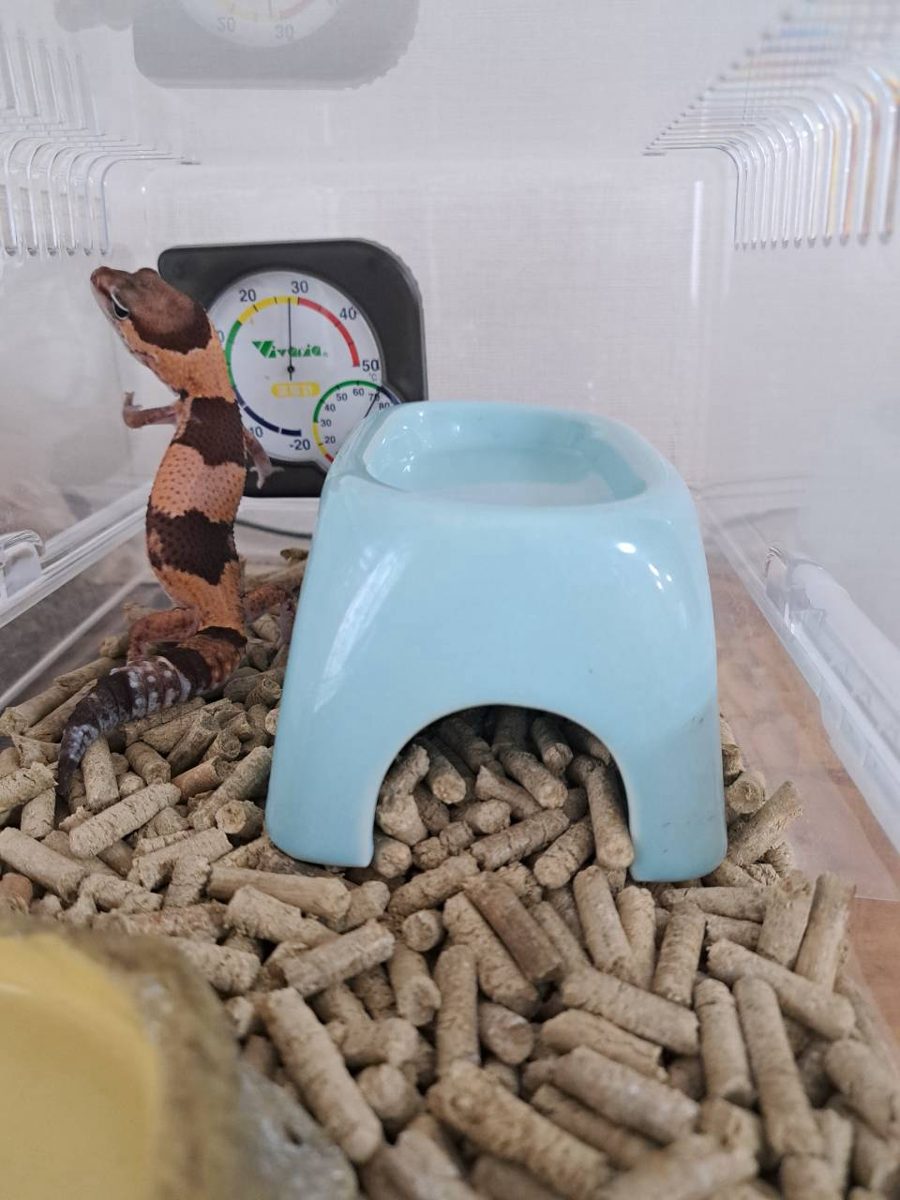
Up on his back legs in front of the thermometer. Maybe he thought there was something up there; he's looking past the wall
Every so often, along the enclosure wall, he'll suddenly rear up on just his back legs. In this photo he's in front of the thermometer. It looks like "Is there something up there?" to me. It's in the same family as glass surfing, and since fat-tails aren't climbers, he usually quits partway and drops back down onto all fours. Of everything he does, this is the most fun to watch.
Sitting on top of the water dish
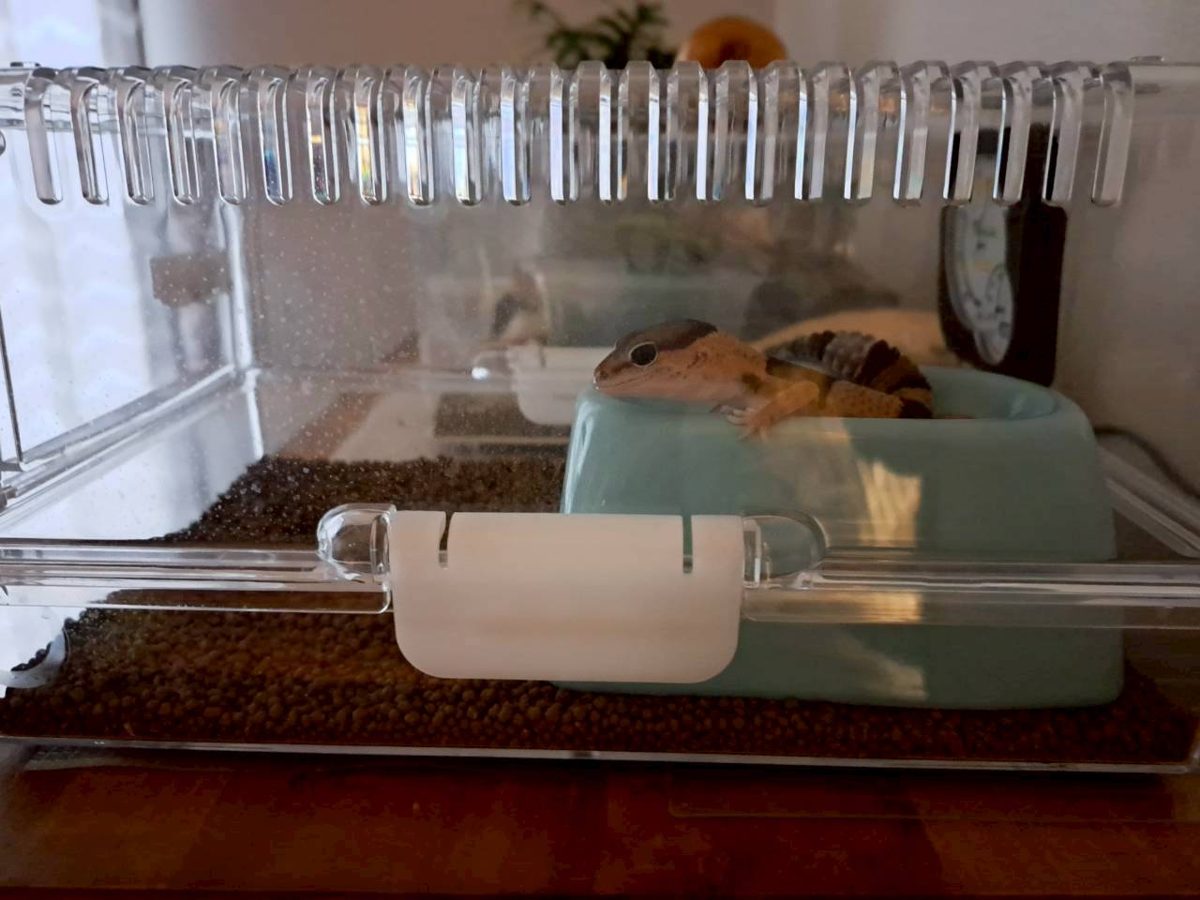
Daytime on a hot day, sitting on the water dish on top of the hide. Cooling off
This one leaves no room for interpretation. He only does it on hot days. His hide sits on the warm side, so if it's too warm inside he comes out, and if it's still too warm he climbs onto the water dish on top: three steps of self-regulation. When I see this, I check the room temperature. But by then I'm already behind, so instead I check the thermometer and the forecast, and on days that look hot I turn the heat mat off ahead of time.
Hunting stance
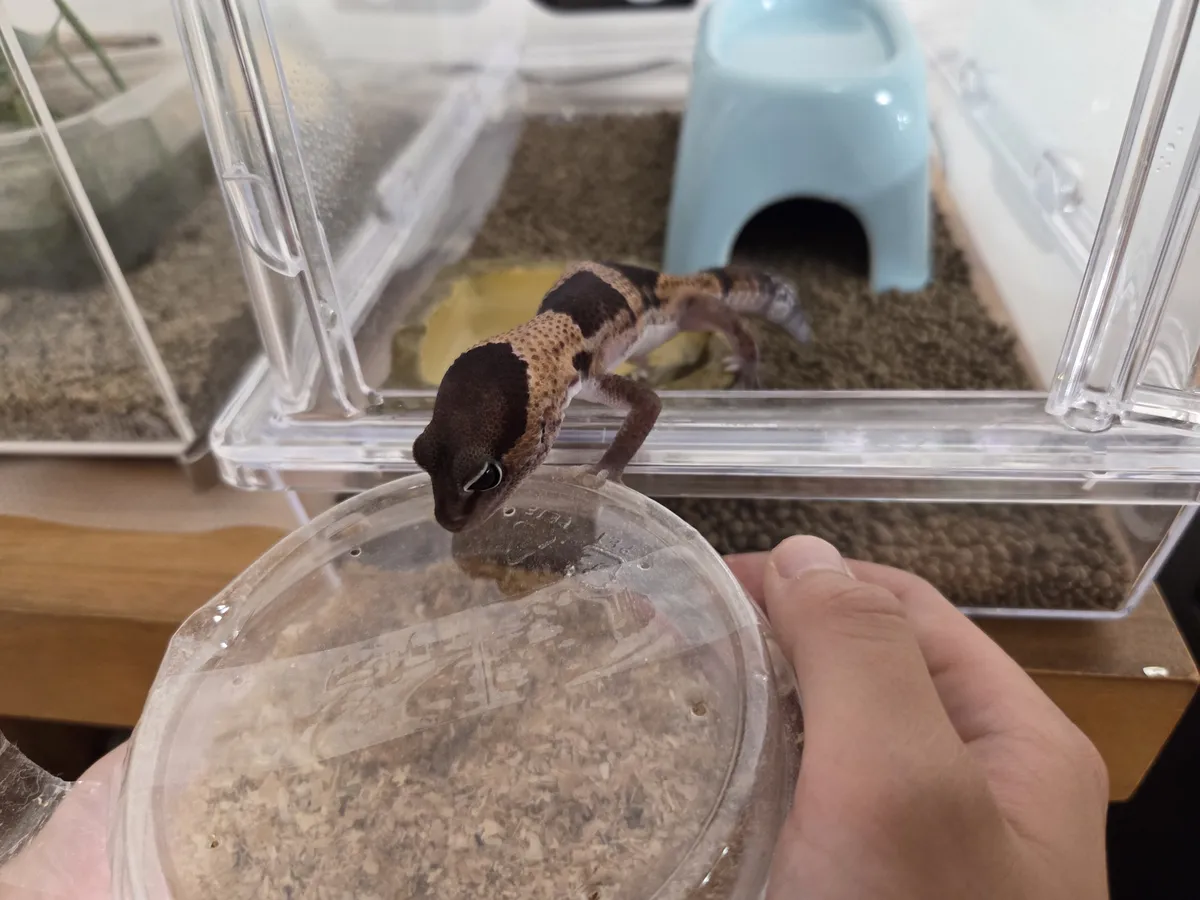
The moment he sees the insect cup. Head down, frozen, locked on. If this shows up, I don't worry about his appetite
Show him an insect and his head dips slightly and he goes completely still. Sometimes the tip of his tail twitches. It's the posture right before a strike, and it's my appetite gauge. When he wasn't eating, this never appeared. And the day it first showed up after he came home was the day I felt he'd settled in.
Body goes cloudy white, rubs against the walls
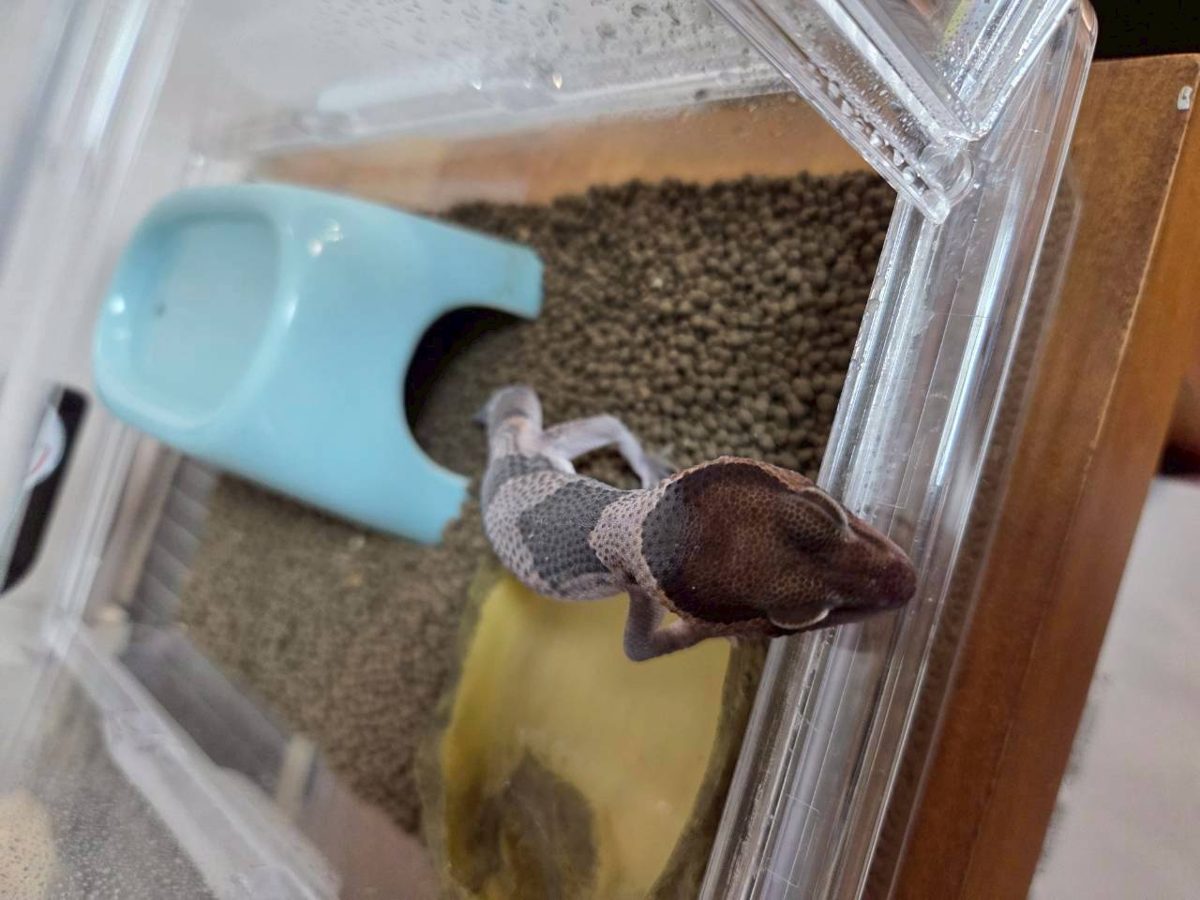
Pre-shed. His whole body looks cloudy white. Every two to three weeks, over in a few days
Every two to three weeks, his whole body goes a cloudy, whitish color. That's the old skin lifting, and it means "shed's coming." He'll sometimes rub against the walls or the hide. Most of the time he finishes on his own; if skin gets stuck on his toes, I help (there's a separate post on that).
Tail waving, body going stiff (while being held)
If he's on my hand and starts waving his tail slowly, going stiff, or trying to get away, that's "put me down." He goes straight back into the enclosure. Maybe that's why I've never been bitten in four months. Fat-tails are gentle by nature; the word is they only bite if they mistake you for food or you push them way too far. No photo of this one. That's not the moment to reach for a camera.
3. Behaviors to ignore vs. behaviors to pay attention to
| Ignore (normal life) | Pay attention (question the setup or his health) |
|---|---|
| Hidden all day | Coming all the way out repeatedly in the daytime and lying still on the floor |
| Walking over at night, tongue flicking | Breathing with his mouth open |
| Occasionally trying to climb the glass or standing up | Limp and slow to respond |
| Sitting on the water dish on a hot day | Sitting on the water dish almost every day (the enclosure is running hot all the time) |
| Going cloudy white every two to three weeks | Staying cloudy for more than a week, or skin left on the toes |
| Locking onto an insect | No reaction to insects for days in a row (check his weight and tail) |
4. The one thing four months of watching taught me
After four months of watching every night, here's what I've landed on: a behavior only means something compared to that gecko's own normal. Some geckos flick their tongue constantly; some hardly ever. For Ohagi, "walks over at night, tongue flicking" is normal, so a night when that doesn't happen is a night I take notice.
So rather than applying my interpretations to your gecko as-is, learn your own gecko's usual behaviors first. Once you have those, "that's not normal" jumps out at you right away. Geckos don't explain themselves, but they're very clear about showing you when something's different.
FAQ
- He licked me. Is he about to bite?
- No. He's smelling you. Before a bite, the mouth opens and he holds still; as long as it's just the tongue, you're fine.
- Do they make sounds?
- They're said to give a short squeak when startled. In four months I've never heard Ohagi make a sound.
- Is tail waving good or bad?
- Depends on the situation. A quick twitch of the tail tip while he's locked onto an insect means "I'm going to eat that." A slow wave on your hand means "put me down." Same tail, different speed and setting.
- Is he climbing the glass because the enclosure is too small?
- Not necessarily. I sometimes wonder if Ohagi wants out, but he only does it now and then. If a gecko is trying to climb the glass all day long, that's when I'd look at the hides, the temperature, and the space.
• Primary source: my own observations of Ohagi, May–September 2026. The "what keepers say" column is general husbandry knowledge; the "my read" column is my interpretation and is labeled as such
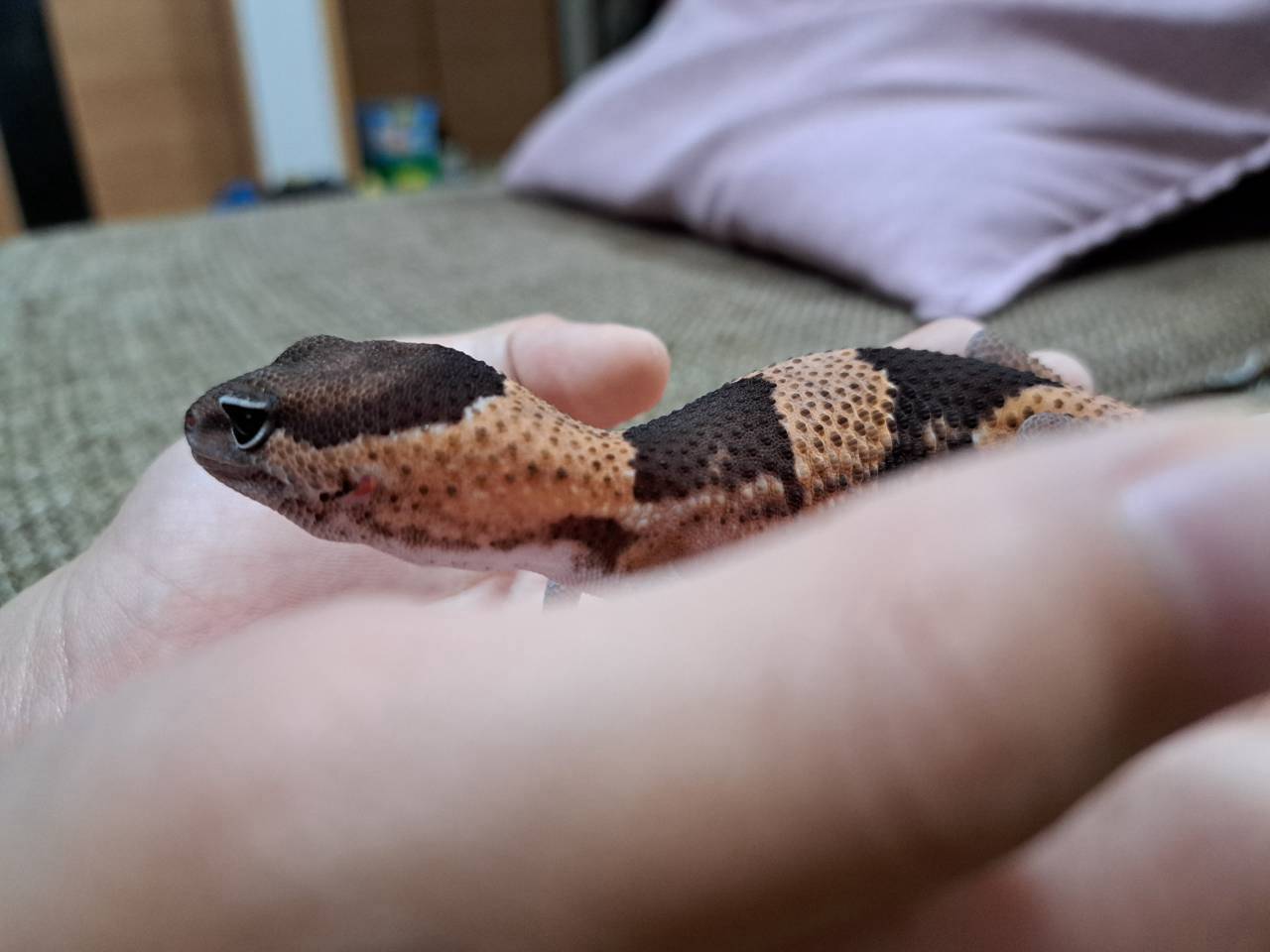
I keep Ohagi, an African fat-tailed gecko, at home in Japan. Every photo here was taken at our house. Written from my own notes and photos, with AI helping me put it into English.