
Bringing Home an African Fat-Tailed Gecko: The First Week, and the Courage to Do Nothing
Day-one wish list: hold him, feed him, take a hundred photos, call his name. I get every single one of those urges. But what you should actually do in the first week is pretty much the opposite. Leave him alone. That's the whole secret.
This article kicks off with the true story of the day Ohagi came home, then lays out a first-week schedule and what's fine versus what to hold off on.
- HousingEnclosure, substrate, moist hide, water dish
- HeatUnder-tank heat mat, thermostat, thermometer/hygrometer
- FoodA few crickets plus calcium powder (the first feeding is a few days in)
Don't be the person racing to the store after pickup. The home is finished before the gecko walks in.
1. The day Ohagi came home (a true story)
Honestly, we only went in to "have a look." The shop staff brought out three geckos — two bigger ones and a baby. My first thought was "I want to raise a tiny baby." Then the staff member said something that changed my mind: "Babies need feeding every day and a lot of attention — it can be rough on a first-timer." Fair enough. That narrowed it down to the two bigger ones, and my kid pointed and said, "that one." That's Ohagi.
One more lesson from that day: the shop's card said "weight: 80 g," but when they weighed him for us right there, he came in at 24.2 g. The 80 g was a typical adult weight. If a number matters to you, have it checked on the spot — a good rule of thumb for any pickup.
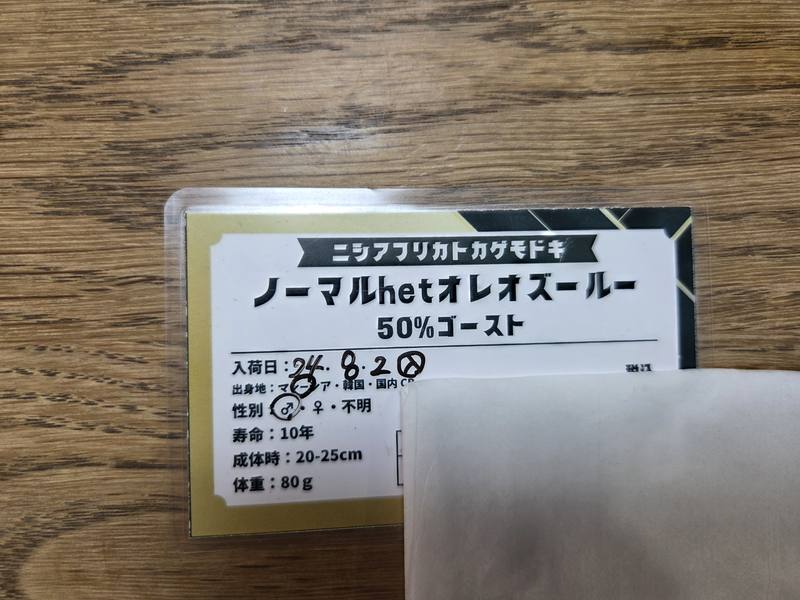
Ohagi's card from the shop. The shop I got him from attached one of these — morph, sex, arrival date — to every animal. I can't speak for other shops, but it means you'll never forget your gecko's hets once he's home
2. The first-week schedule
| Day | What to do |
|---|---|
| Pickup day | Put him in the enclosure and leave him be for the rest of the day. A quick look from a distance is all |
| Days 1–2 | Change the water, nothing else. No food yet. Settling in comes first |
| Days 3–4 | Try a first feeding (1–2 crickets). If he passes, no big deal — try again tomorrow |
| Days 5–7 | Once he's eating, move to a normal schedule. Check his poop (shape, color) when it shows up. Still no handling |
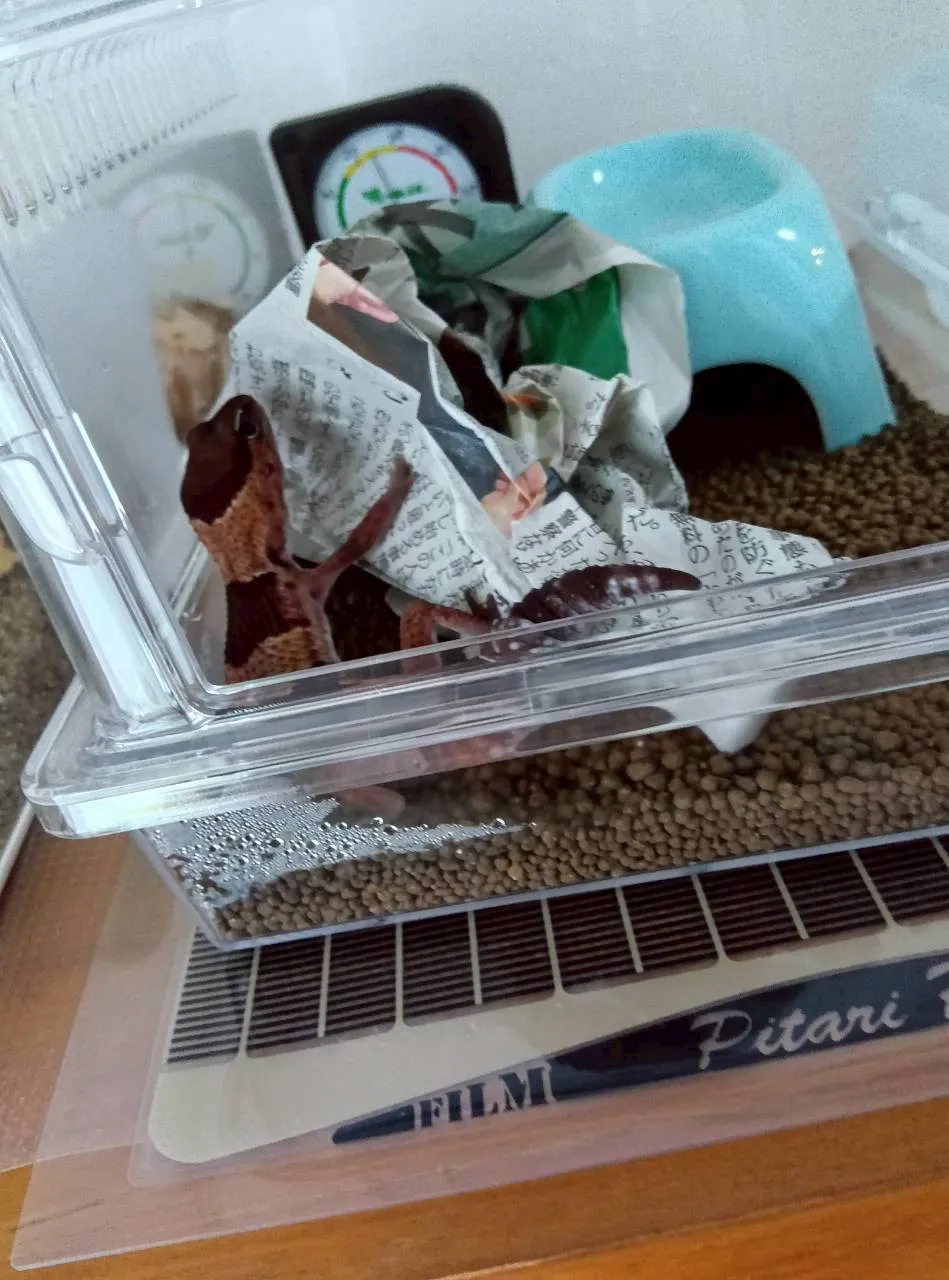
Ohagi on day one. Hiding like this at first is exactly right. Don't go dragging him out
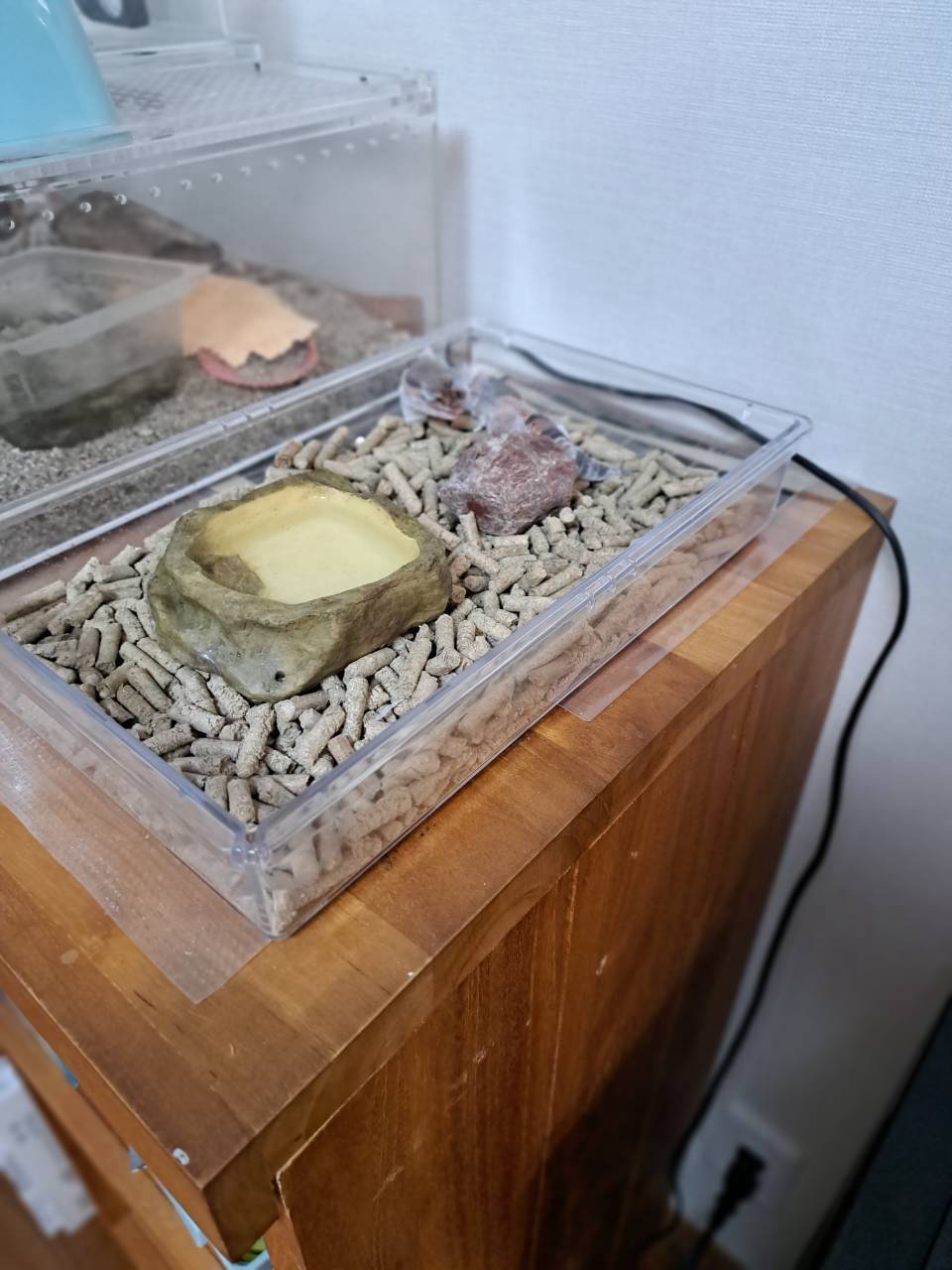
His first home. Simple is plenty — a bare-bones layout makes him easier to keep an eye on until he settles
3. What's fine, what to hold off on
| ✅ Fine | 🚫 Hold off for a week |
|---|---|
| Water changes, temperature and humidity checks | Handling (wait until he's settled) |
| Watching and taking photos from a distance | Rearranging the enclosure over and over |
| Quietly checking on him at night | Show-and-tell for visitors |
| Weighing him (container and all) | Pushing food on him day after day |
FAQ
- When can I start handling him?
- The benchmark is "once he's eating reliably." Week two at the earliest; a month in if you're playing it safe. There's no reason to rush.
- He's scratching at the enclosure walls at night.
- He's exploring the new place — really common at first. It usually settles down within a few days to a few weeks.
- I already have other reptiles.
- Quarantine the newcomer in a separate enclosure for a few weeks so nothing spreads. Hold off on sharing equipment at first, too.
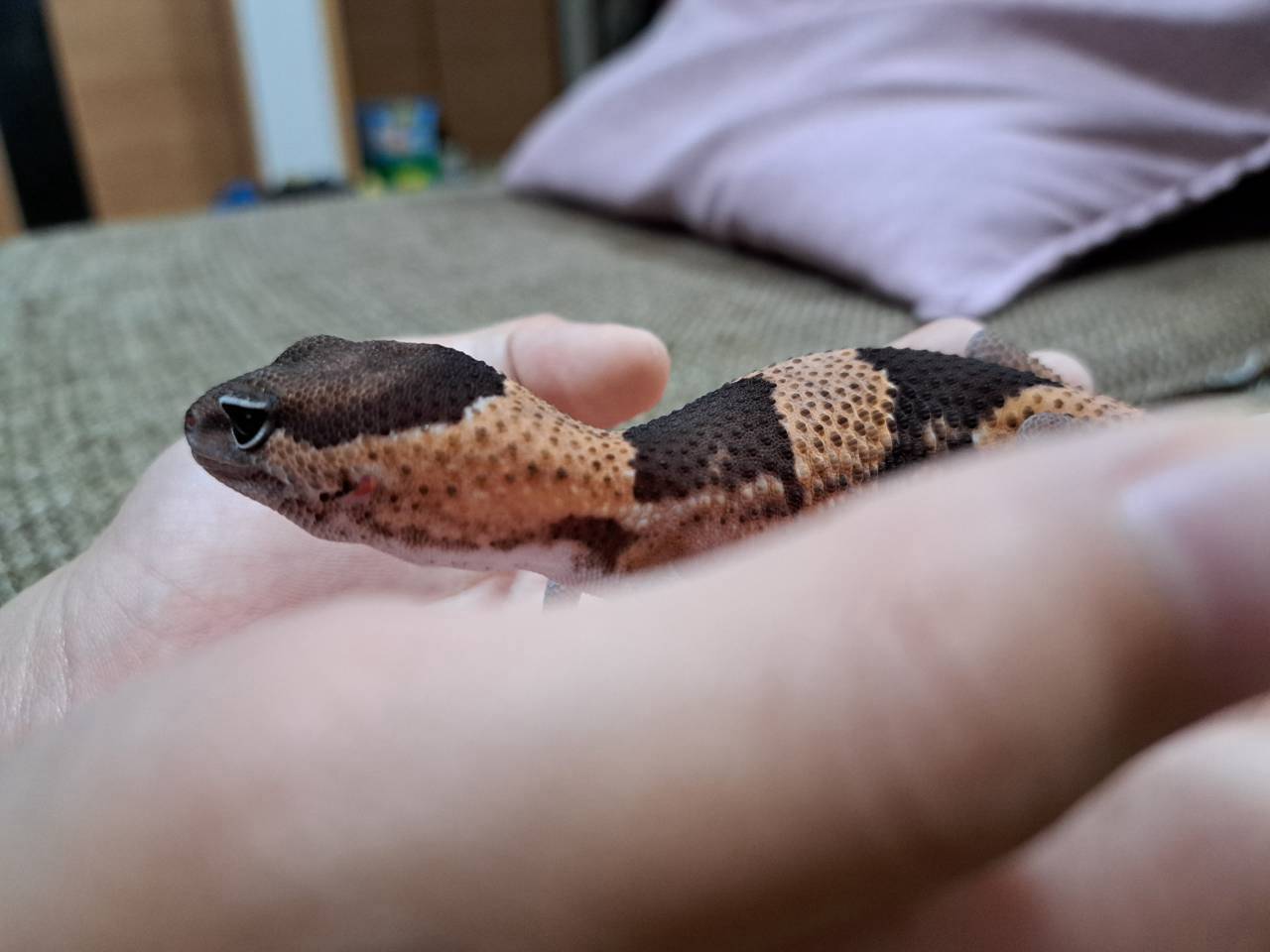
I keep Ohagi, an African fat-tailed gecko, at my home in Japan. Every photo here was taken in my home. Written from my own notes and photos, with AI helping me put it into English.