
Handling an African Fat-Tailed Gecko: Don't "Hold" Him. Let Him Climb On
Let's be honest right up front: fat-tailed geckos do not enjoy being touched. But they can learn that a human hand is nothing to be scared of. Those two things sound alike, and they're completely different.
The goal isn't a gecko that melts when you pet him. It's one that climbs onto your hand on his own and stays calm once he's there. Here's how Ohagi got there, plus the mistakes to steer clear of along the way.
- No gear. What you need is time and patience (seriously)
- HelpfulA treat feeder plus tongs — to teach him "hand = good things happen"
1. The unbreakable rules: never from above, never the tail
2. Taming in four steps
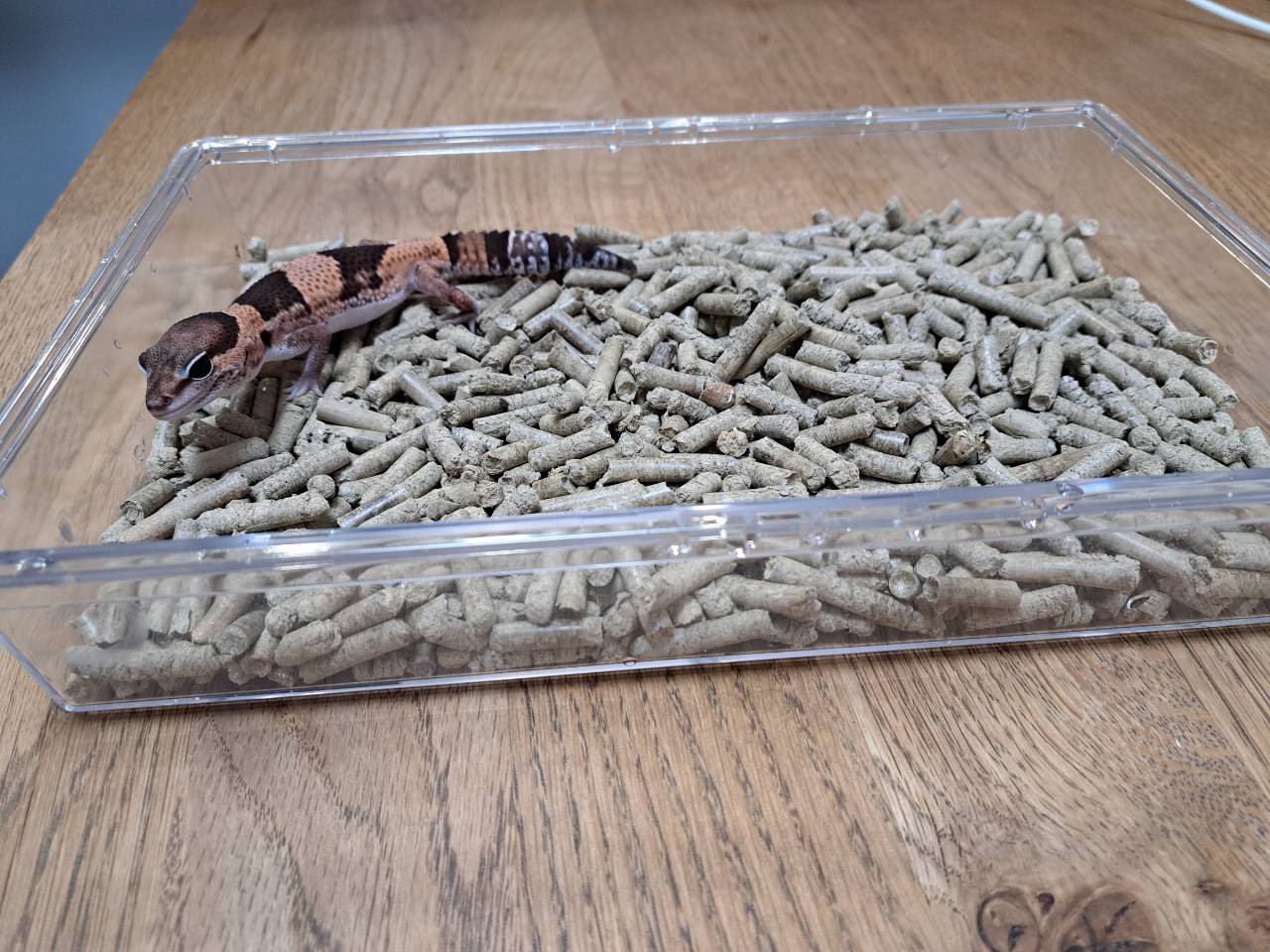
Ohagi somewhere around steps 2–3. When he stops bolting and hiding, that's your cue to move on to the next step
3. My story: getting to "he comes out when the door opens"
Three months after I brought him home, Ohagi now puts his hands on the edge and leans out of the front-opening door the second I open it. He's probably figured out "door opens = food," but whatever the reason, we've hit the point where he comes to me.
And how often did I work at it? Maybe once a week, sometimes not even that. This didn't come from daily petting sessions. It came from piling up "a little bit during chores, and stop the moment he objects." The slow road really was the fast road.
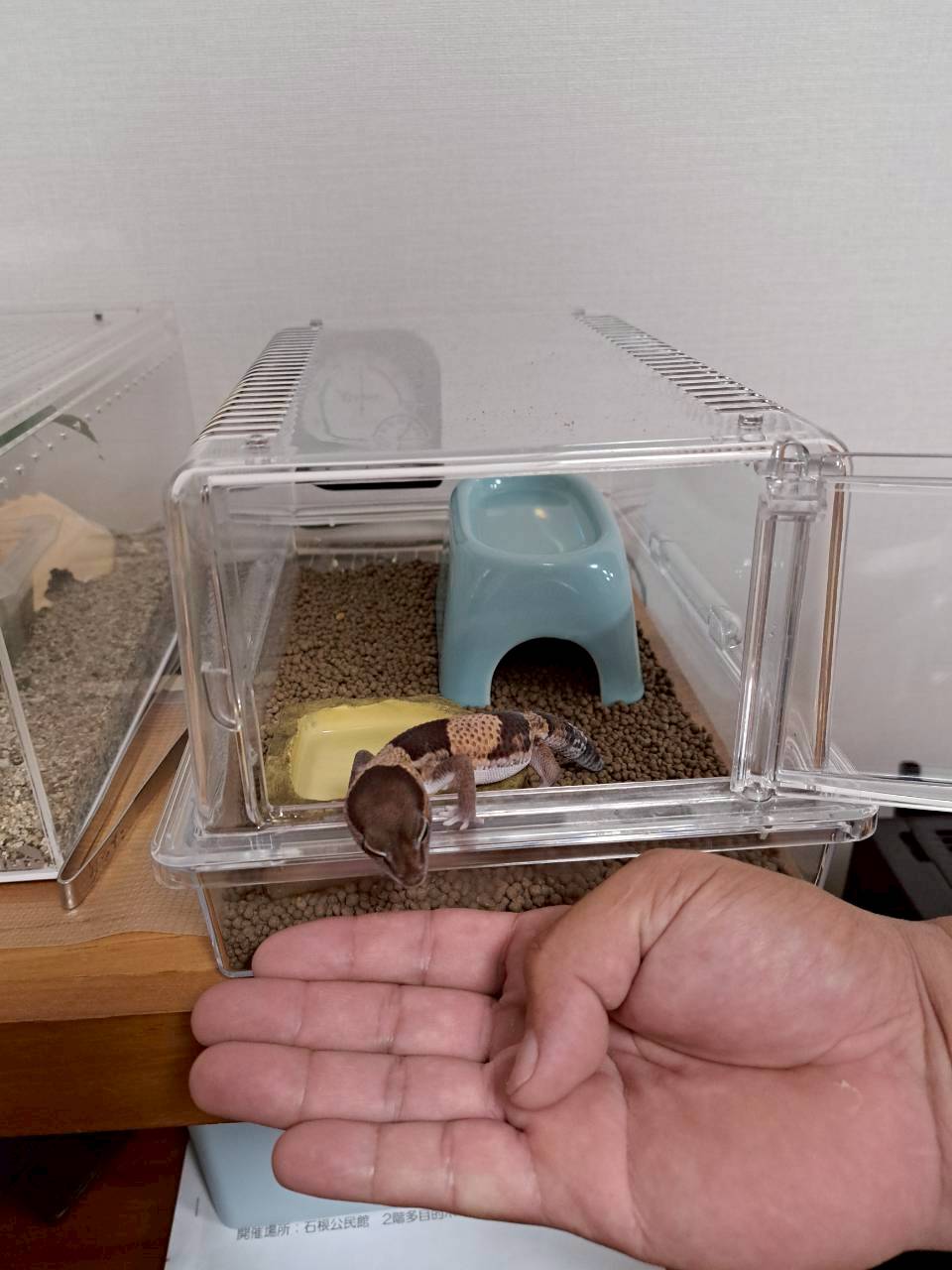
Open the door and this is what I get. "Comes out on his own" was the finish line for handling training in our house
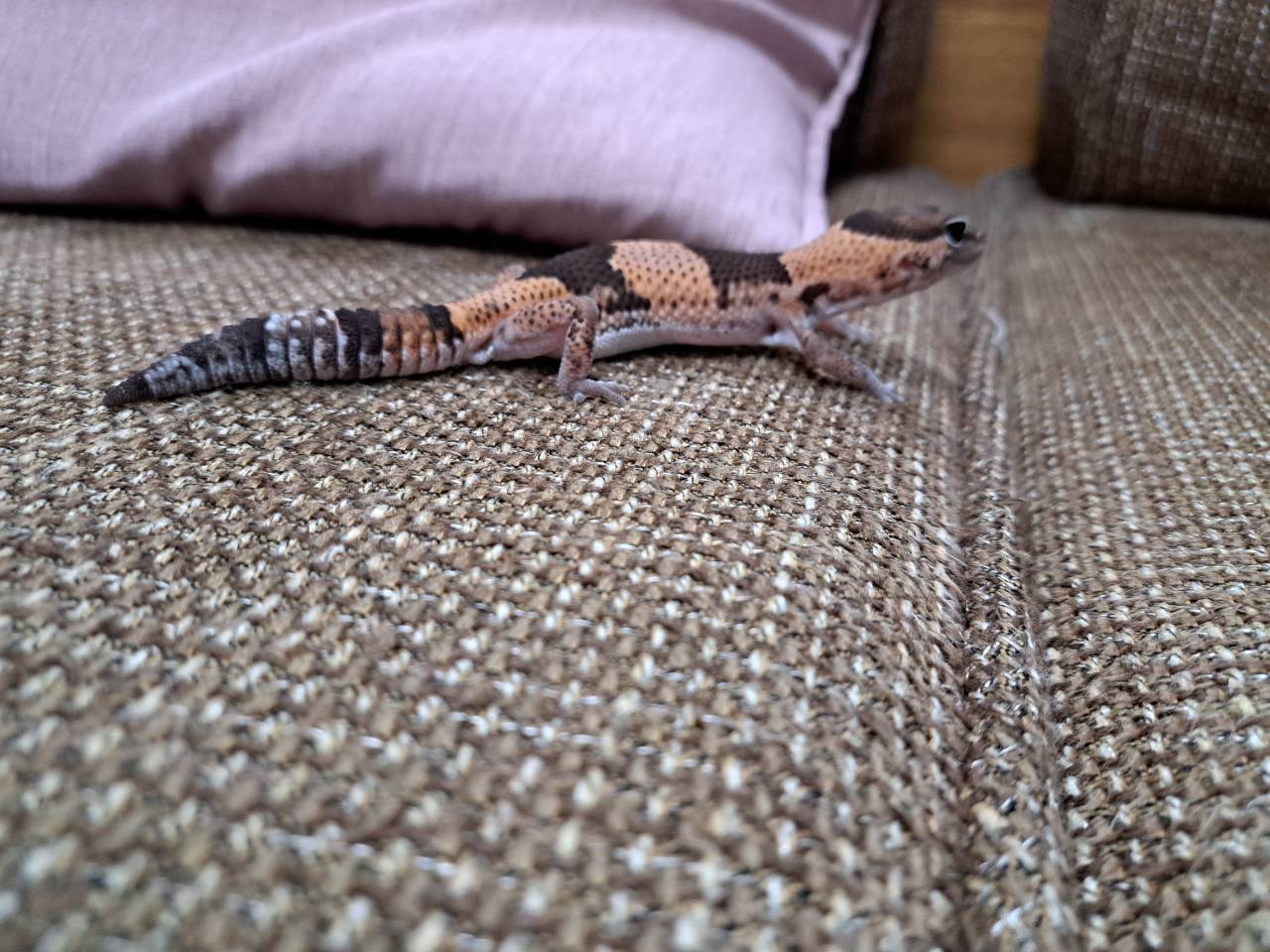
These days there's the occasional stroll across the couch. Never take your eyes off him, never put him anywhere high — those rules never change
4. How often, how long
- How often: once or twice a week is plenty. Daily isn't needed (for me it's once a week, if that)
- How long: 5–10 minutes tops. Skip the long sessions that let his body temperature drop
- When to stop: tail waving, body going stiff, squirming to get away — any of those means you end it right then
- Bad timing: around a shed, right after a meal, right after bringing him home
FAQ
- Do they bite?
- They're gentle and hardly ever bite. When it happens, it's usually a food mix-up or a gecko that's been pushed too far. It barely hurts, but handling that never gets to a bite in the first place is the goal.
- Can my kid hold him?
- Briefly, sitting down, with an adult's hand underneath. For kids still at the "squeeze it" age, "look but don't touch" is the better call for now.
- He just won't tame down.
- Individuals vary enormously. Some geckos never warm up to hands no matter how many months you put in. At the end of the day, you go at that gecko's pace.
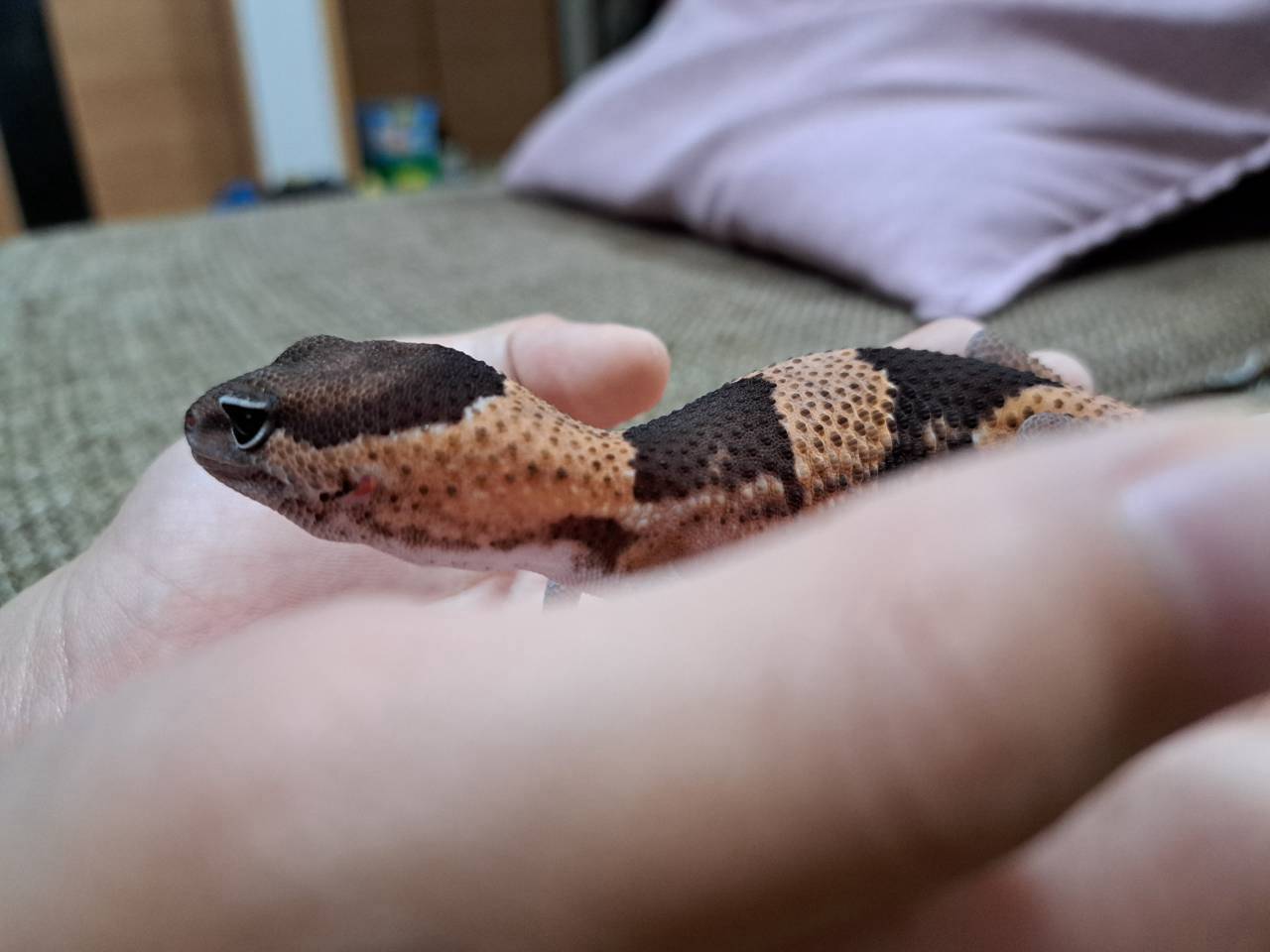
I keep Ohagi, an African fat-tailed gecko, at my home in Japan. Every photo here was taken in my home. Written from my own notes and photos, with AI helping me put it into English.