
Do Fat-Tailed Geckos Get Lonely? Can Two Live Together? What Four Months With One Gecko Taught Me
A few weeks into keeping a fat-tailed gecko, almost everyone has the same thought. "He's hiding all day. Is he lonely?" "Wouldn't a second one be more fun?" I had it too.
Let me say it up front: fat-tailed geckos are fine on their own. They don't need company; if anything, they're calmer without it. And housing two in one enclosure only works in a narrow set of cases, so I don't recommend it for a first-time keeper. This post covers why that's the answer, what my gecko Ohagi's solo life actually looks like, and what to watch for if you're going to keep two anyway.
1. "Lonely" is a human feeling
In the wild, fat-tailed geckos live alone. No groups. Each one keeps to its own territory, hides under rocks or in burrows by day, and comes out at night to hunt insects. There's no instinct to sleep next to a companion and no instinct to look for a playmate.
So a gecko that hides all day isn't lonely. That's just what a normal day looks like for this animal. If you're used to dogs and cats, one gecko by itself looks sad. From the gecko's point of view: it's quiet, it's warm, there's a hide, and food shows up. That's the whole list.
2. Ohagi's life alone (four months)
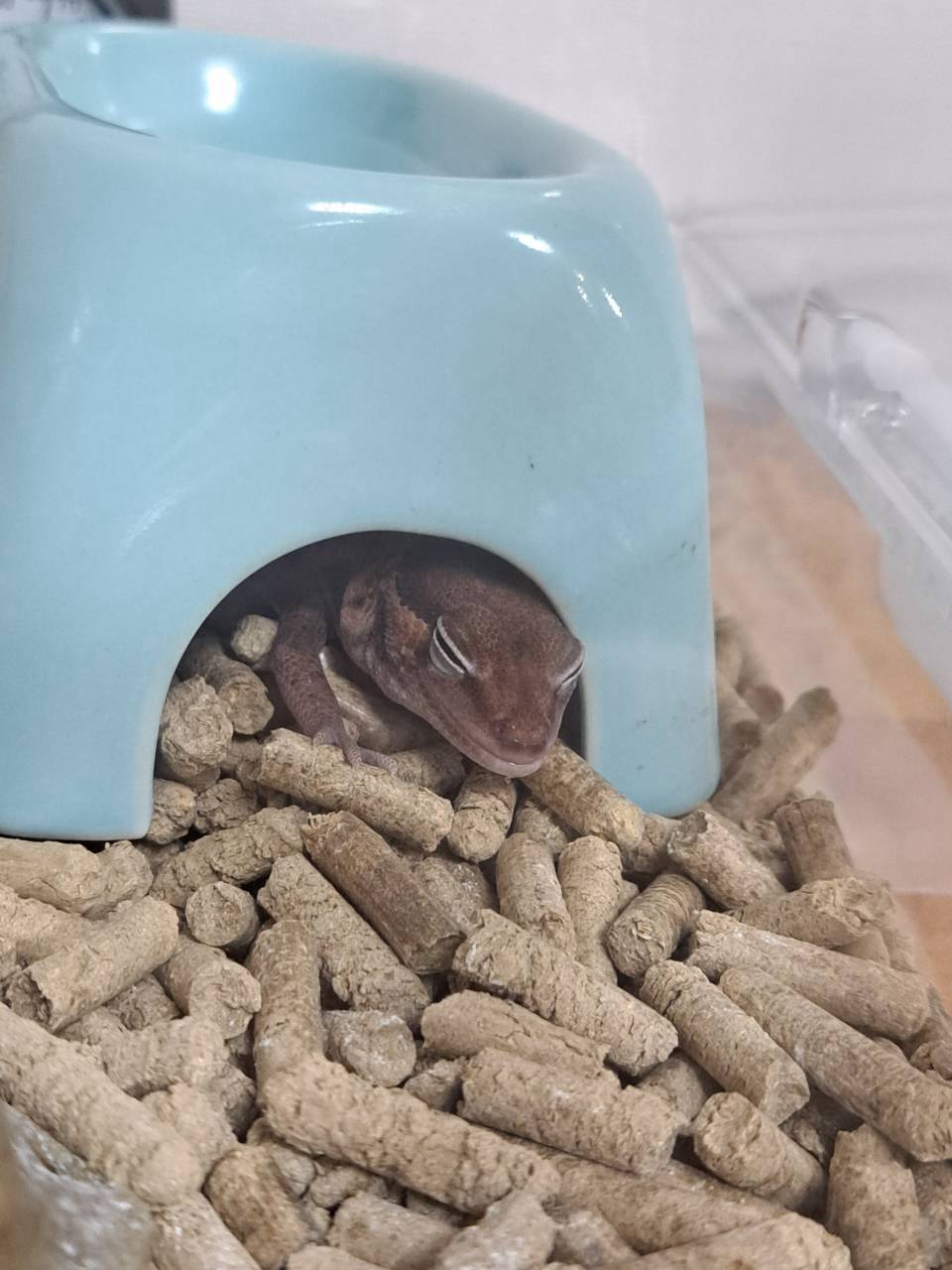
Ohagi in the daytime. This is most of his day. Sleeping with just his head out of the hide is his signature pose
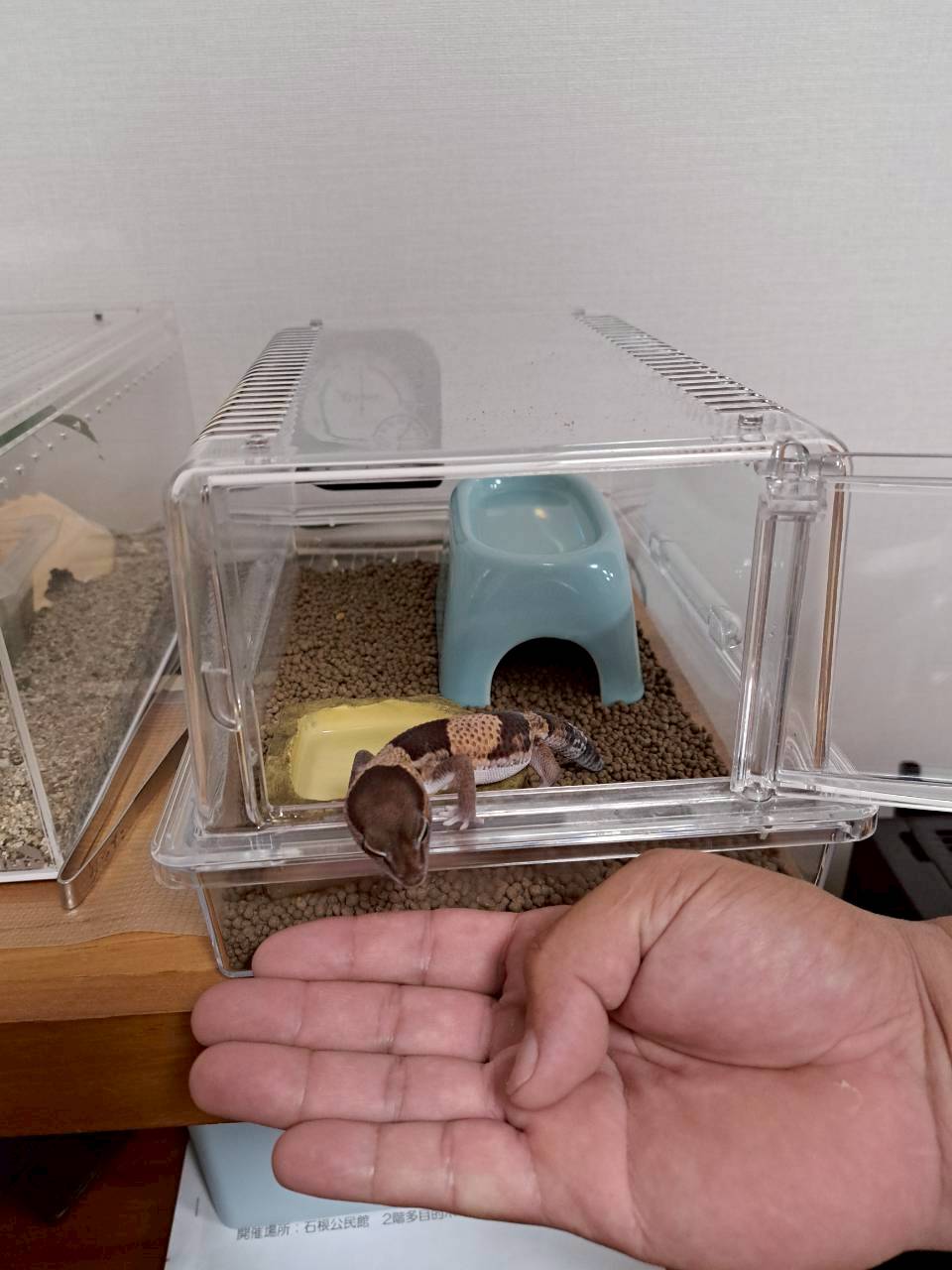
One night in July, he walked right out when I opened the door. These days he comes over and flicks his tongue; climbing onto my hand is occasional. None of this happens during the day
If there's a moment that looks "lonely," it's catching him hidden away in the middle of the day. But that's a nocturnal animal's daytime. Watch him at night and you'll see one gecko who's plenty busy on his own. When you can actually expect to see him gets its own post.
3. What happens when two share an enclosure
This section is general knowledge. I keep one gecko, so I haven't watched this play out myself; this is what's widely known among keepers.
| Pairing | What tends to happen | Verdict |
|---|---|---|
| Male + male | Territorial fighting. Bites, tail damage, injuries | Never |
| Male + female | They breed. The female gets chased whether she wants it or not, and egg-laying drains her. You then need to deal with eggs and find homes for the hatchlings | Not unless you're prepared to breed |
| Female + female | Often works, but if one is bigger, the smaller one loses access to the hide and the food. One of them quietly gets thin | Possible under the right conditions, but not for beginners |
| Two of different sizes | Regardless of sex, the smaller one suffers. In bad cases, tails and toes get bitten | No |
And the biggest problem with cohabitation is this: you stop knowing who ate and whose poop that is. With one gecko, if the poop looks off, it's Ohagi's. If food is left over, Ohagi didn't eat. No guessing. With two, it takes longer to notice when one of them stops eating. And if one gets sick, the other catches it.
The "fun" in "two would be more fun" is on the human side. On the gecko side there's only "competition" and "getting overlooked." That's why experienced keepers steer you away from it.
4. If you're going to keep two anyway
The simple answer is two enclosures. With separate enclosures, every problem in the table above goes away. A single fat-tail doesn't need much space, so running two side by side takes less space and effort than keeping two dogs or two cats.
If you're still set on one enclosure, here's the minimum keepers agree on.
- Two females, close to the same size. Confirm sex by checking the underside (or ask the store to check if you're not sure).
- An enclosure at least twice the size you'd give one gecko. Think 24 inches (60 cm) wide or more. Room for both to use the warm side and the cool side without crowding each other.
- Two of everything: hides, water dishes, moist hides. Nothing to fight over.
- Feed them separately, and watch. Count what each one eats.
- Weigh both every week. If one starts losing weight, separate them immediately.
- Quarantine the new gecko in its own enclosure for at least a month first. So you don't bring in disease or parasites.
You can do all of that and still have it not work. In the end, having a spare enclosure ready from day one is the safest plan.
5. My house: other animals, separate enclosures, separate rooms
Besides Ohagi, I keep a Japanese grass lizard (a small lizard native to Japan) and land hermit crabs. Every animal has its own enclosure. The lizard lives in a separate room by the entryway. It needs daytime lighting, and on a shared shelf that light would spill over onto Ohagi's enclosure. The hermit crab enclosure sits next to Ohagi's, but nobody ever moves between the two.
The reason different species don't share an enclosure isn't really about personality. It's that they need different temperatures, humidity, and light. The lizard is diurnal and basks; Ohagi is nocturnal and wants a dark, damp hide. Put them in one enclosure and one of them always ends up going without. Separating them by room because of the light is the same idea, taken one step further.
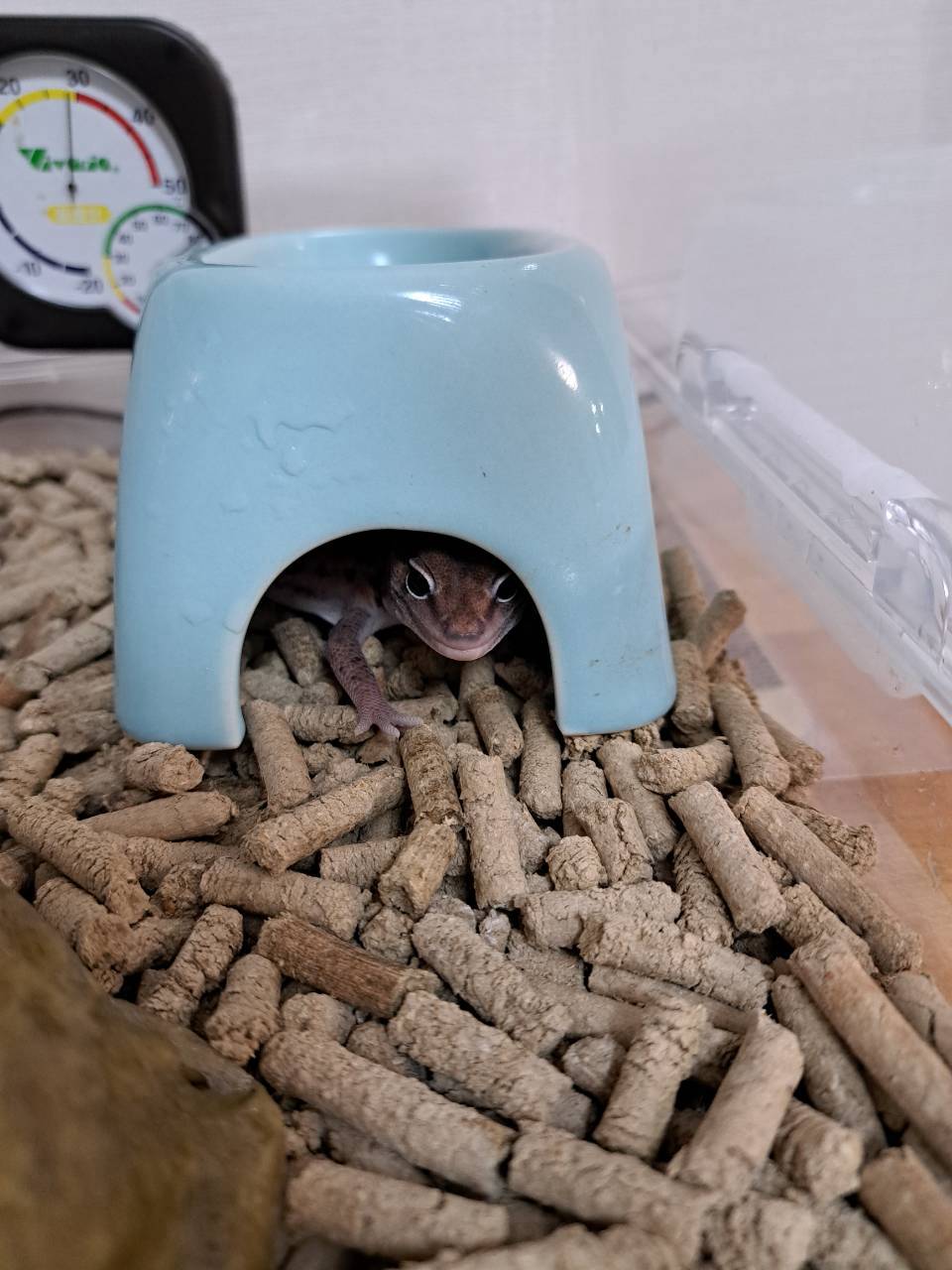
Daytime, one of the days his head is out. Not every day. A human is company enough, and that's my conclusion after four months
For now, Ohagi's "company" is the human who opens the door at night with crickets. That seems to be enough for him.
I'll be honest: Ohagi is a male, and I'd like to bring home a female someday. But that's not because Ohagi is lonely; it's because I'd enjoy having a second gecko to watch. If I do, she gets her own enclosure. Putting them together means breeding, and breeding means thinking about eggs and where the hatchlings go, which is a whole other level of commitment. I'm not there yet.
FAQ
- He hides all the time. Isn't that loneliness?
- No. That's what a nocturnal animal's daytime looks like. If he's coming out at night, eating, and moving around, he's doing fine. A gecko that keeps coming out in the daytime is more likely telling you something's off with the temperature or the hide.
- The pet store had a bunch of them together, though.
- A store tank is a short-term setup, checked daily by people who do this for a living. Years together in your home is a different situation. For what it's worth, Ohagi was in an enclosure by himself at the store too.
- Can a fat-tail live with a leopard gecko?
- I wouldn't. They look alike, but leopard geckos want it dry and fat-tails want it humid. The humidity mismatch means one of them ends up sick. Separate enclosures.
- If I get a second gecko, what's the first step?
- Quarantine in its own enclosure for at least a month. Confirm weight, poop, and appetite are all steady before anything else. That applies whether or not you plan to house them together; I did it with Ohagi as well (it's in the first-week post).
- Any plans to get Ohagi a companion?
- I'd love to, someday. He's a male, and I'd like a female someday. But right now he's healthy on his own, and one gecko's worth of care is exactly the right amount for me. If that happens, she gets her own enclosure; putting them together would only happen if I decided to breed.
• Primary source: my own records for Ohagi, May–September 2026. The cohabitation pairings table and the conditions for housing two together are general husbandry knowledge; I have not kept two geckos together myself
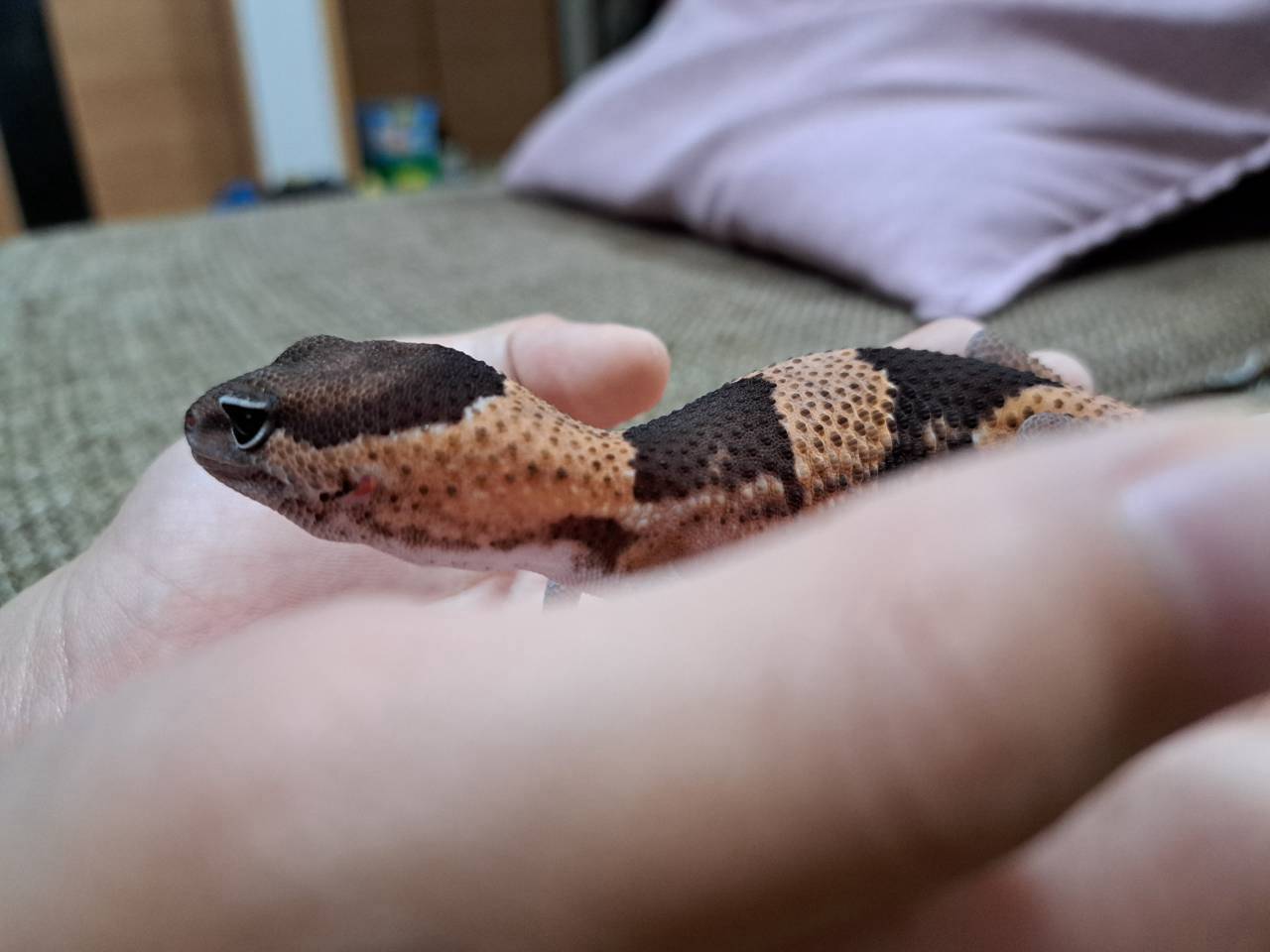
I keep Ohagi, an African fat-tailed gecko, at my home in Japan. Every photo here was taken in my home. Written from my own notes and photos, with AI helping me put it into English.