
Keeping a Fat-Tailed Gecko in Japan: What's Different From the US and UK (Gear, Shops, Climate)
Everything on this site is written from a home in Japan. Reading English-language care guides, I kept catching myself thinking, "huh, that's not how we do it." Which means that from where you're sitting, the Japanese way of keeping a gecko probably has a few surprises in it too.
This is a collection of those differences. Not a "who's right" list. Just proof that another way of doing it is out there, and it works.
1. Buying: in person, and every animal comes with a card
Japan restricts the sale of live animals by mail order, so reptiles are normally bought in person at a shop. The staff bring the animal out, tell you about it, and you choose on the spot. When we picked up Ohagi, the staff brought out three geckos and we picked one with their help (the full story is in the first-week article).
And at the shop I went to, at least, every animal came with its own ID card: morph, sex, arrival date, expected adult size. I suspect most English-speaking keepers would look at this and think, "we should do that."
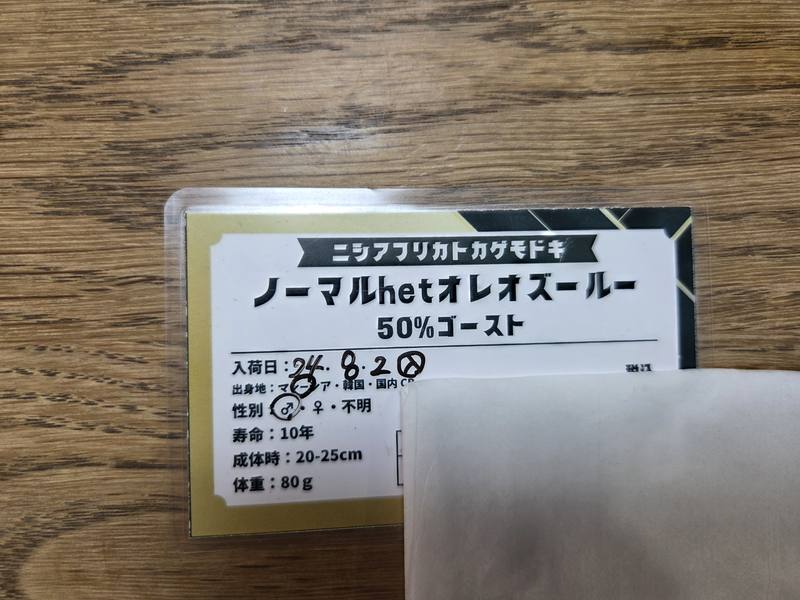
Ohagi's card. It even lists his hets, so there's no forgetting them later. I can't speak for other shops, but this is how the one I used did it
There are also reptile expos held around the country, and plenty of keepers buy straight from breeders there.
2. Gear: the ceramic moist hide and the film-thin heat mat
In English-language guides, a "moist hide" usually means a DIY job: a plastic food container with a hole cut in it and damp moss inside. In Japan the standard is a ceramic hide with a water dish built into the top, sold in almost every reptile shop. Water in the dish seeps into the ceramic and keeps the inside humid. On hot days, Ohagi climbs up and sits in that dish.
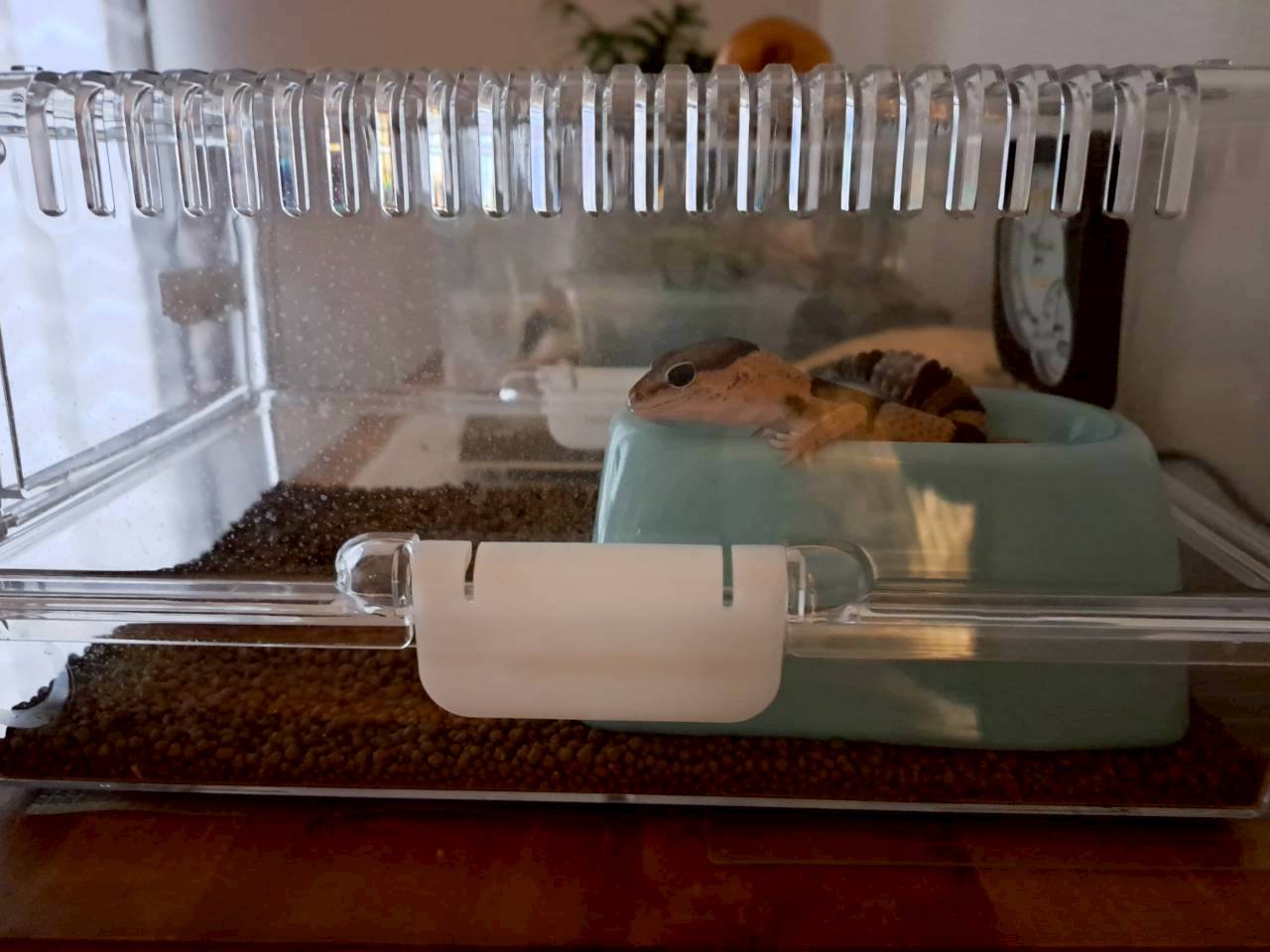
The Japanese standard: a ceramic hide with a dish on top. Three jobs in one: hide inside it, climb on it, soak in the dish
For heat, the standard is a film-thin heat mat slid under the enclosure. Mine is a Japanese product called Pitari Tekion Plus, a few millimeters thick. Same job as a US "heat mat," but the Japanese versions draw little power, and a lot of keepers run them without a thermostat. I do too, for now: it covers only half the floor so he can move away from it. I'll be honest, a thermostat is the better setup, and it's on my list.
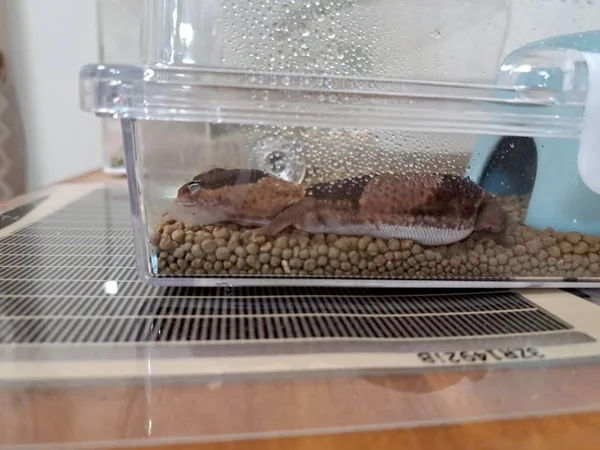
The heat mat under the enclosure, logo showing. A few millimeters thick
3. Food: the rehydratable gecko diet
Japan has several gecko diets you rehydrate with water before feeding. Mine is a product called Leopa Dry: dry pellets that soak up water and turn chewy, served on a small dish. It's calcium-fortified, so no dusting on those days.
Insects as the staple, with the gecko diet as the backup for days I'm out of crickets, or the thing I switch to right before a trip. That's a common pattern among Japanese keepers, and Ohagi eats it off the dish without complaint.
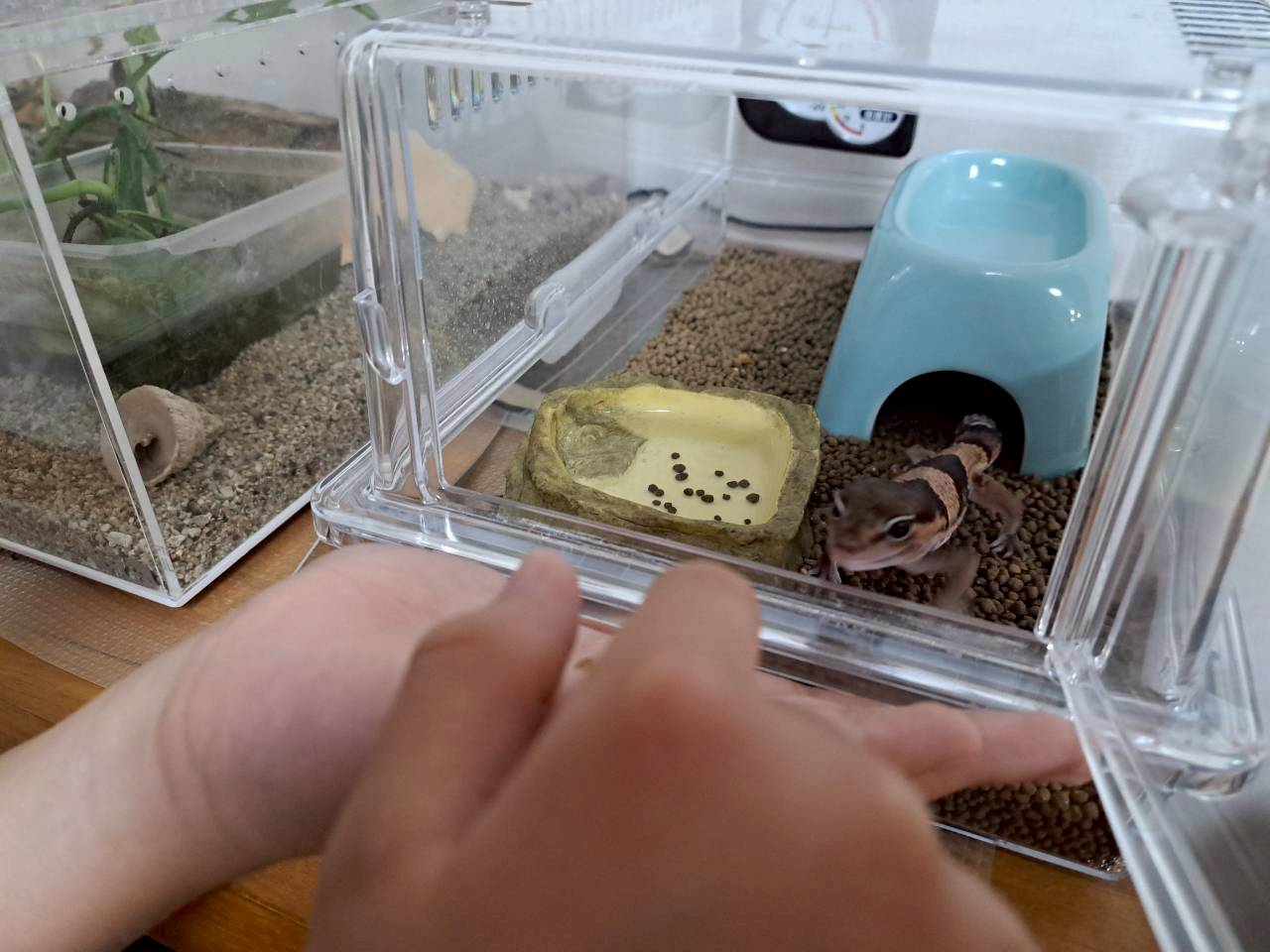
Hand-feeding (a mealworm that day). The routine: gecko diet on a dish, insects by hand or from a cup
4. The 100-yen shop, our secret weapon
Japan has 100-yen shops (our version of the dollar store) on practically every corner, and it's normal to pick up part of your reptile kit there. Three pieces of my kit came from one: the spray bottle, the tweezers I use for picking up poop, and the little dish for the gecko diet.
The feeding tongs, the water dish, and the moist hide came from a reptile shop. "Anything that touches the animal's mouth from the reptile shop, cleaning tools from the 100-yen shop" seems to be where a lot of keepers here draw the line.
5. Climate: humidity comes free. The enemies are summer and winter
Fat-tails like 60–80% humidity. That's the hard part for readers in dry climates. But in a Japanese house, from the rainy season through summer, indoor humidity climbs past 60% on its own. With one misting a day and the ceramic hide, humidity has almost never been a problem for me.
The trade-off is summer, when room temperature tops 86°F (30°C) and humidity hits 80% (there's a whole article on that). And then winter. We haven't been through one with Ohagi yet, but outdoor temperatures here drop into the 30s and 40s Fahrenheit (single digits Celsius), so I expect it to take as much work as summer did. Whether the heat mat alone will be enough, or whether I'll need to add an overhead heater, is an open question. Once we've been through it, that gets its own article.
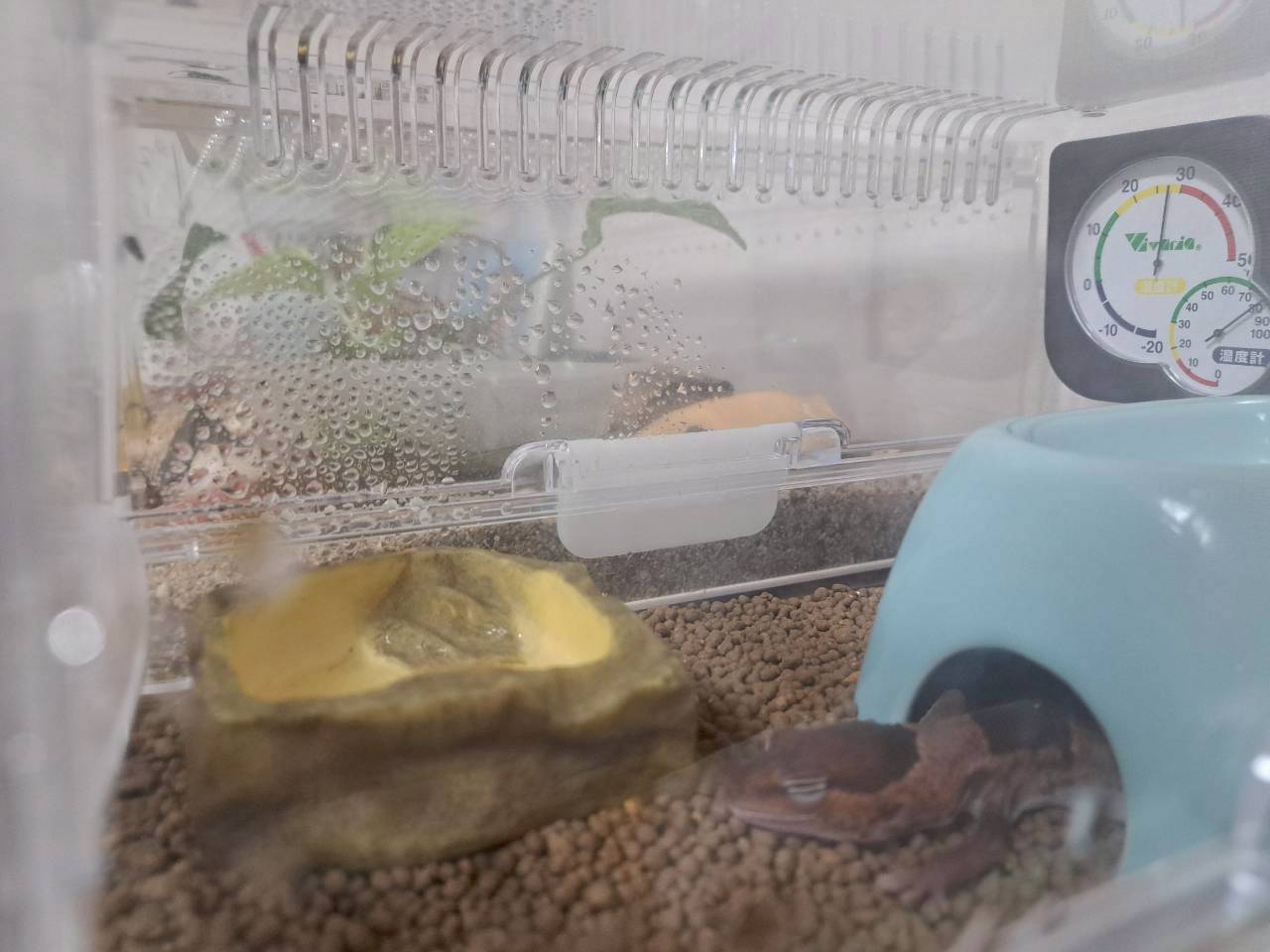
Right after misting. This is plenty. To a keeper in a dry climate it probably looks like too much
6. Units and numbers
| Japan | English-speaking world (mostly the US) | |
|---|---|---|
| Temperature | °C | °F (this site writes °F first, °C in parentheses) |
| Weight | Grams | Grams (the reptile world uses grams everywhere) |
| Enclosures | Width × depth × height in cm | Gallons ("a 20-gallon") or inches |
| Prices | Yen. Fat-tails cost more than leopard geckos here | Dollars |
To keep things readable for English-speaking readers, this site puts °F first and adds inches and gallons for enclosures. Only the units change; the content is the same.
FAQ
- Are fat-tails popular in Japan?
- Leopard geckos outnumber them by a wide margin. Fat-tails are more of an "if you know, you know" species, with fewer shops carrying them, which is also why they cost a bit more.
- Can I buy Japanese reptile gear overseas?
- Ceramic moist hides and rehydratable gecko diets do turn up in online shops overseas now and then. Even if you can't find the exact product, the ideas travel: a ceramic hide with a dish on top, and a diet you rehydrate.
- Japanese homes are small. What about enclosures?
- Most people here start with a smaller enclosure, 12 to 18 inches wide (30–45 cm). Mine is 12 inches. It fits on one shelf, and the idea is to size up as the gecko grows.
• Primary source: my own experience keeping Ohagi in Japan, 2026. The parts about other keepers are my impressions, not a survey
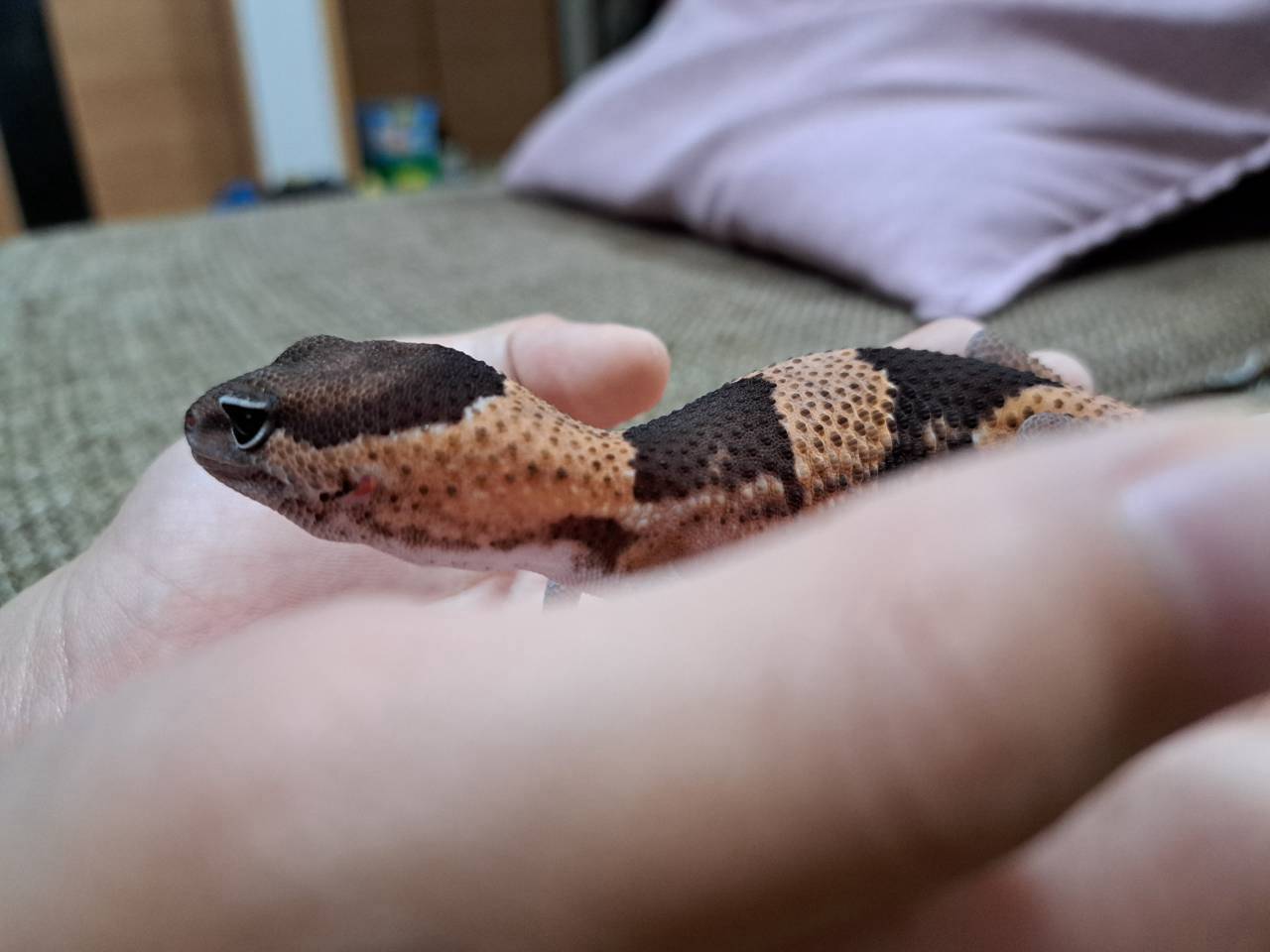
I keep Ohagi, an African fat-tailed gecko, at my home in Japan. Every photo here was taken in my home. Written from my own notes and photos, with AI helping me put it into English.