What Does "Het" Mean? Learning to Read Gecko Morphs From One Pet-Store Card
You see "het" on price tags and in breeder listings everywhere. It was on my gecko Ohagi's card too: "Normal het Oreo Zulu 50% Ghost." I had no idea what it meant on pickup day. I looked it up afterward, had an "oh, I get it" moment, and this is that explanation, the way it finally clicked for me.
No technical terms. Just three ideas: the blueprint's pages, typos, and hidden copies. With those three you can read "het" and "50%" and everything in between.
1. A gecko's blueprint is made of pages, and a morph is a typo
A gecko's colors and pattern are set by a blueprint thousands of pages long. Each page has one job. And every page comes in two copies: one from the father, one from the mother.
A "normal" gecko has no typos on any page. A morph is a gecko with a typo on one page, so that page's job comes out different. Oreo is a typo on the Oreo page; Ghost is a typo on the Ghost page. Different pages, so a gecko can carry both at once.
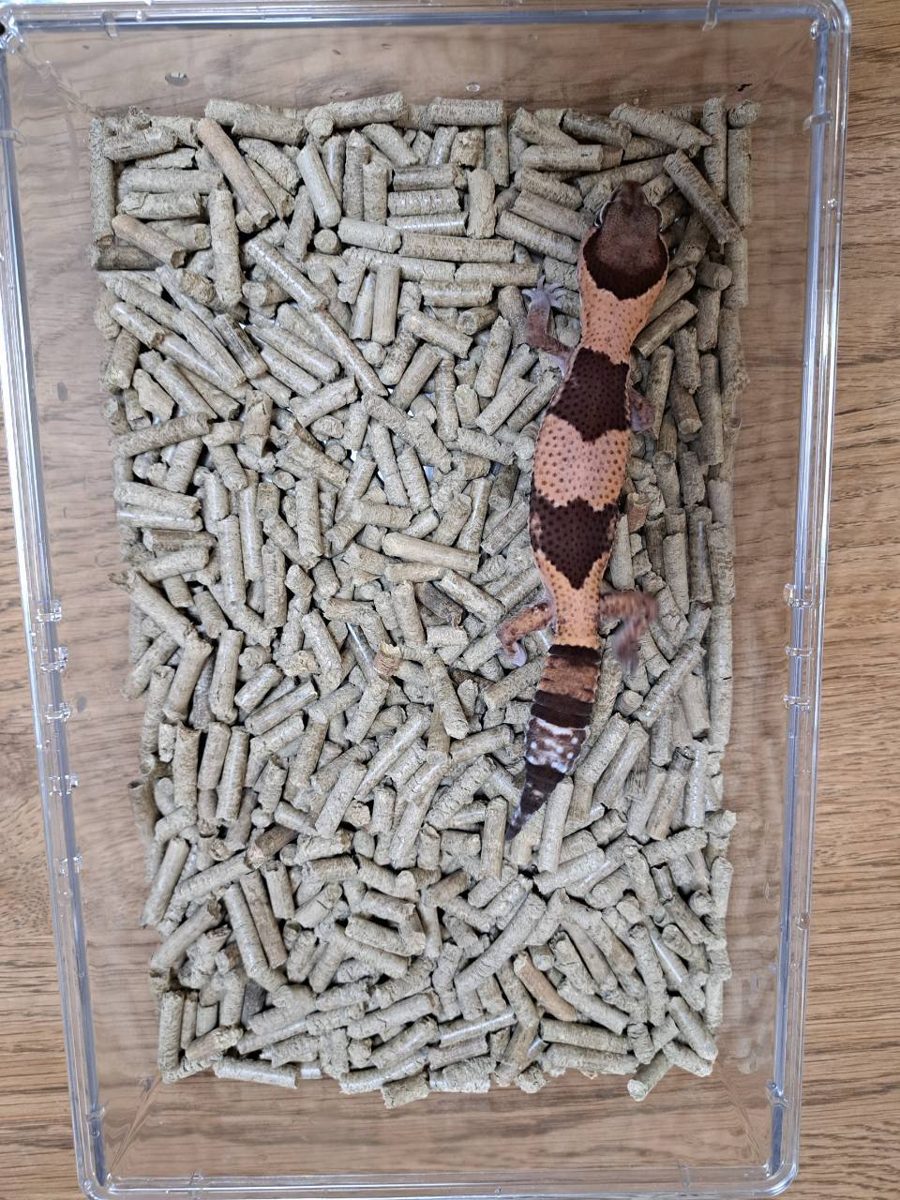
Ohagi looks normal: broad brown bands. According to his card, though, he's carrying invisible typos on two or three pages
2. "Het" means a hidden copy
Here's the heart of it. Since every page has two copies, if only one copy has the typo and the other copy is the normal version, the normal copy still does the job and nothing changes on the outside. That state, where one typo copy is there but isn't showing, is het (short for heterozygous). In plain words: a hidden copy.
When both copies carry the typo, there's no normal version left, and only then does the morph show. Oreo and Ghost work this way. Since it takes both copies, they're called recessive.
| The two copies of that page | What you see | What it's called |
|---|---|---|
| Normal, normal | Normal | — |
| Typo, normal | Normal (hidden) | Het |
| Typo, typo | The morph shows | Visual |
3. Reading Ohagi's card
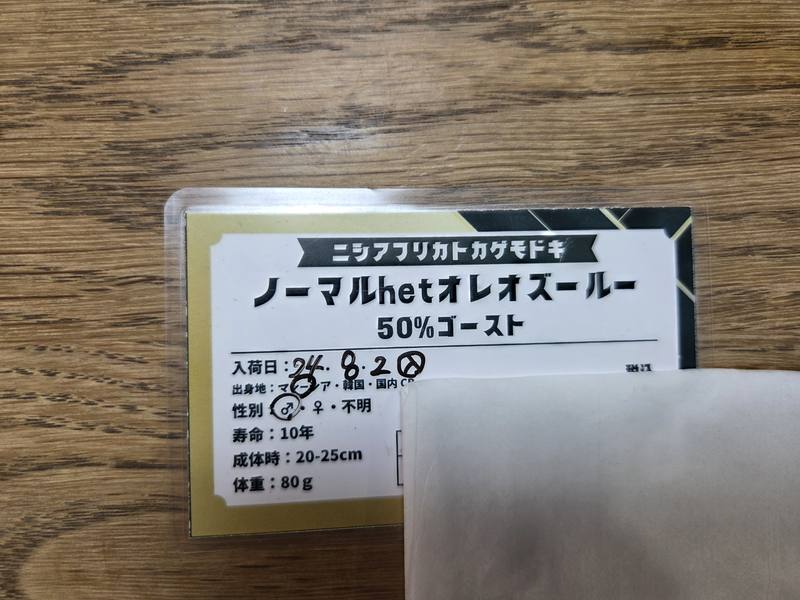
The card that came with Ohagi. Top line is the morph; below it, arrival date, sex, and expected adult size
| What it says | What it means |
|---|---|
| Normal | He looks normal. No typo is showing |
| het Oreo | On the Oreo page he has one typo copy and one normal copy. Hidden |
| (het) Zulu | Listed as a hidden copy on the Zulu page too. See the note below, though |
| 50% Ghost | A 50% chance he carries a hidden Ghost copy. Whether he actually does is unknown |
So Ohagi is a perfectly ordinary-looking brown fat-tail who definitely carries one Oreo typo and one Zulu typo somewhere in his blueprint, and may or may not carry one Ghost typo.
4. What "50%" means
"50% Ghost" doesn't mean "half Ghost-colored." It means a 50% chance that he carries a hidden Ghost copy.
Here's why. Suppose one of Ohagi's parents was het Ghost. That parent had one typo copy and one normal copy, and passes only one of them to each baby. Fifty percent chance it's the typo, fifty percent it's the normal one. So the baby has a 50% chance of being a hidden carrier.
| Label | Chance he carries it | Typical reason |
|---|---|---|
| Het (100% het) | Definitely | A parent was visual for that morph (typo on both copies) |
| 66% het | Two in three | Normal-looking baby from a het × het pairing |
| 50% het | One in two | Only one parent was het |
You can't tell by looking whether a 50% or 66% gecko actually carries the copy. The only way to find out is to breed him and see whether it shows up in the babies. I have no plans to breed Ohagi, so he'll probably stay "50%" forever. I'm fine with that.
5. How to think about "het" when you're buying
- If you just want a pet, het changes nothing about how he looks. Ohagi carries two hets, looks normal, and I keep him exactly like any other fat-tail.
- It does change the price. Hets add breeding value, so they cost more. For a pet, a normal with no hets is the best deal going.
- "50%" and "66%" mean "maybe." That's why they usually cost less than a guaranteed het.
- A card or a written description is worth having. The shop I bought him from attached one to every animal. Photograph it, and you'll never find yourself wondering "wait, what was he het for?"
FAQ
- Will a het gecko ever show the morph later?
- No. A hidden copy stays hidden for life. Only geckos with the typo on both copies show the morph.
- If I breed two hets, how many babies show the morph?
- For the same recessive morph, het × het gives you one in four (25%) visual. Of the whole clutch, half are het and a quarter are completely normal.
- Can a gecko carry lots of hets?
- Yes. Typos on different pages can be carried together with no limit. The only cap is "two copies per page."
- What's a "double het" or "triple het"?
- Two or three morphs, each carried hidden. Ohagi has two he definitely carries (Oreo and Zulu), so going by his card, he's a double het.
• Primary source: Ohagi's shop card and my own notes. The genetics here is standard Mendelian inheritance, explained in plain words
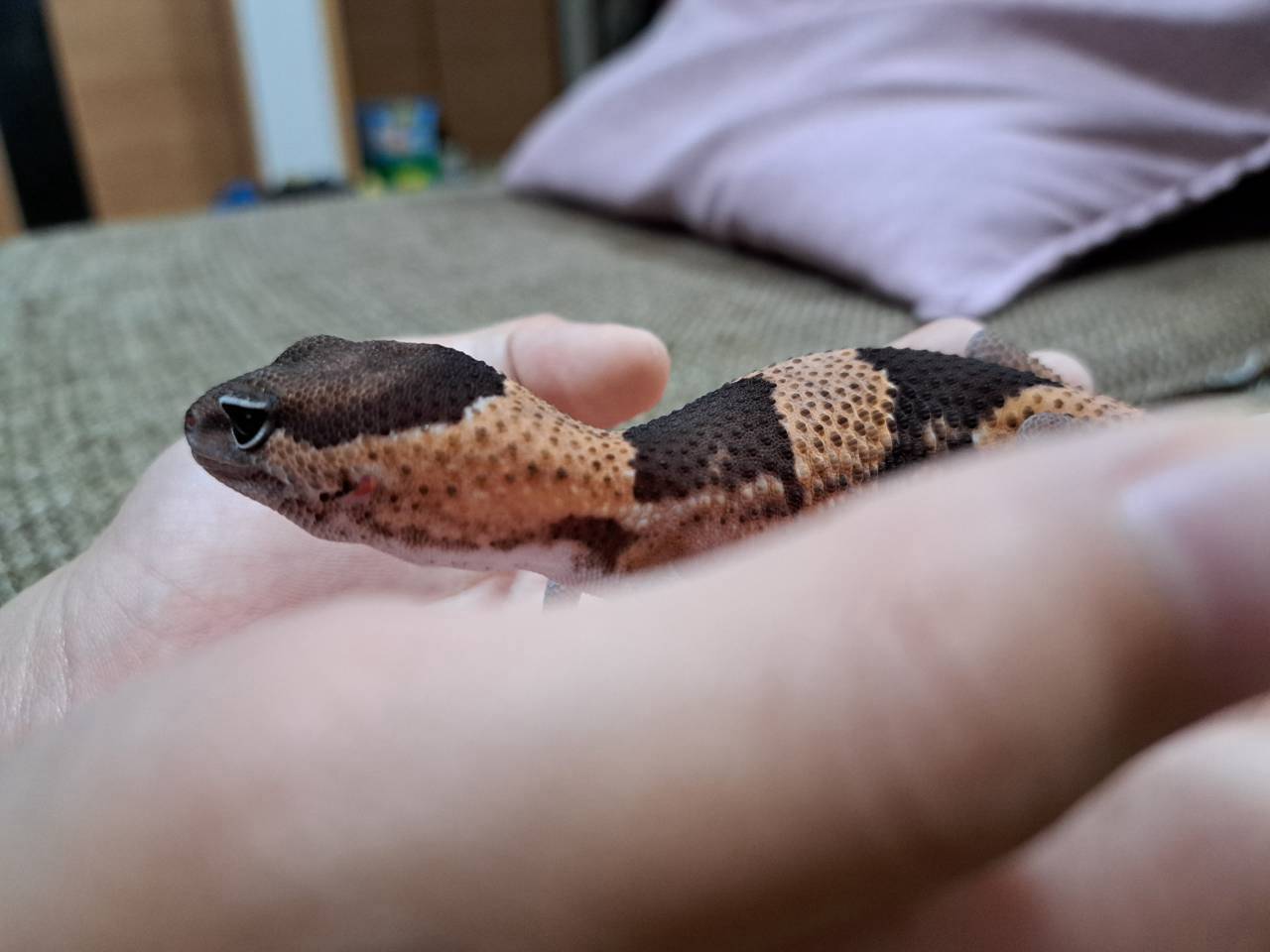
I keep Ohagi, an African fat-tailed gecko, at my home in Japan. Every photo here was taken in my home. Written from my own notes and photos, with AI helping me put it into English.