Are African Fat-Tailed Geckos Good Pets for Beginners? An Honest Answer, Four Months In
Short version: yes, with conditions. A fat-tail was the first reptile I've kept that you can actually hold (before that I'd kept Japanese grass lizards for three years). Four months in, there are things that make me say "this is a beginner's gecko," and things I wish someone had told me before I brought him home.
This isn't a sales pitch that lists only the good parts. It's the honest version I'd have wanted to read before I decided.
1. Five reasons they're good for beginners
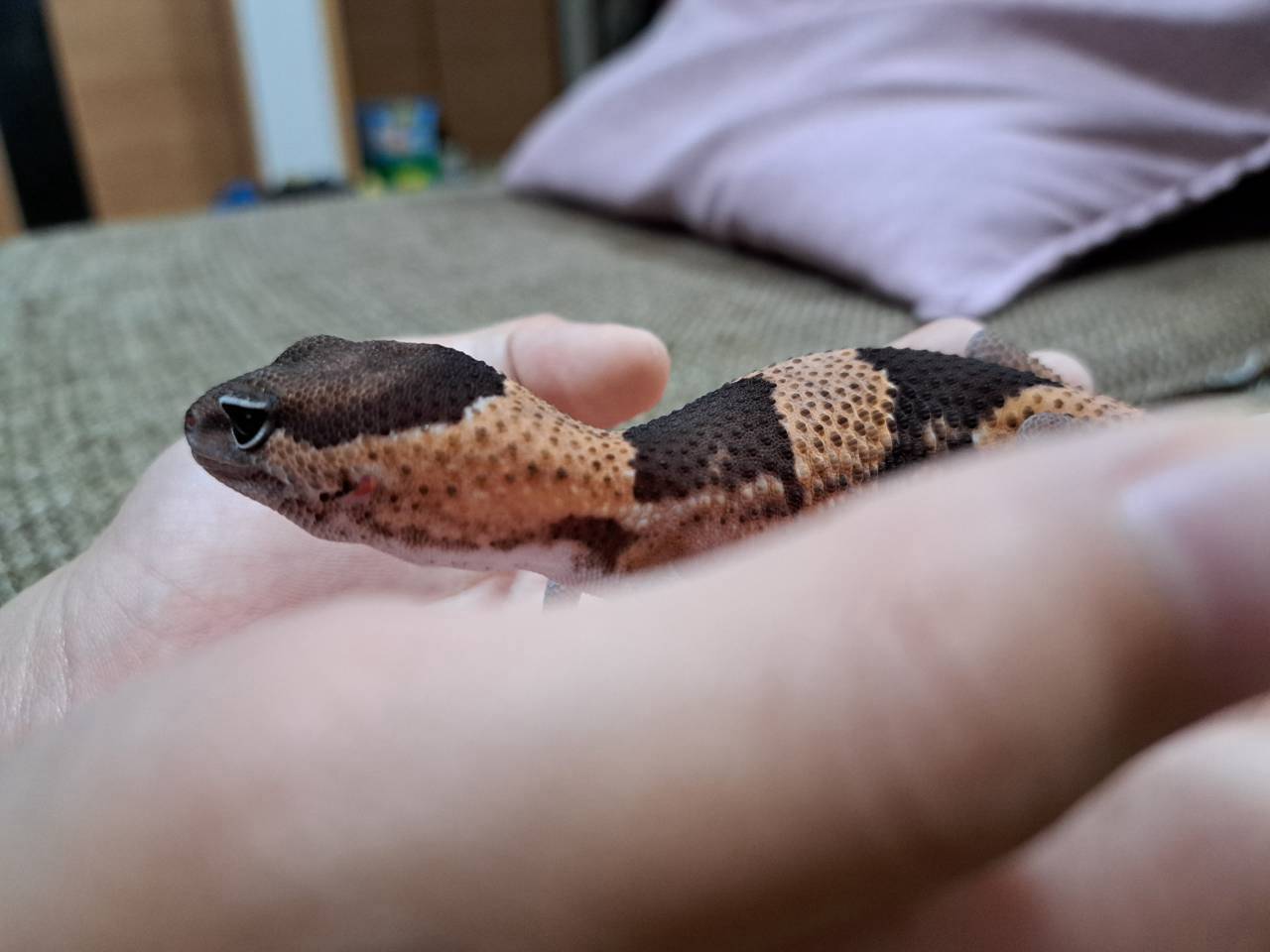
Ohagi on my palm. Doesn't run, doesn't bite, just plods. That calm is his biggest selling point
2. Five things to know first
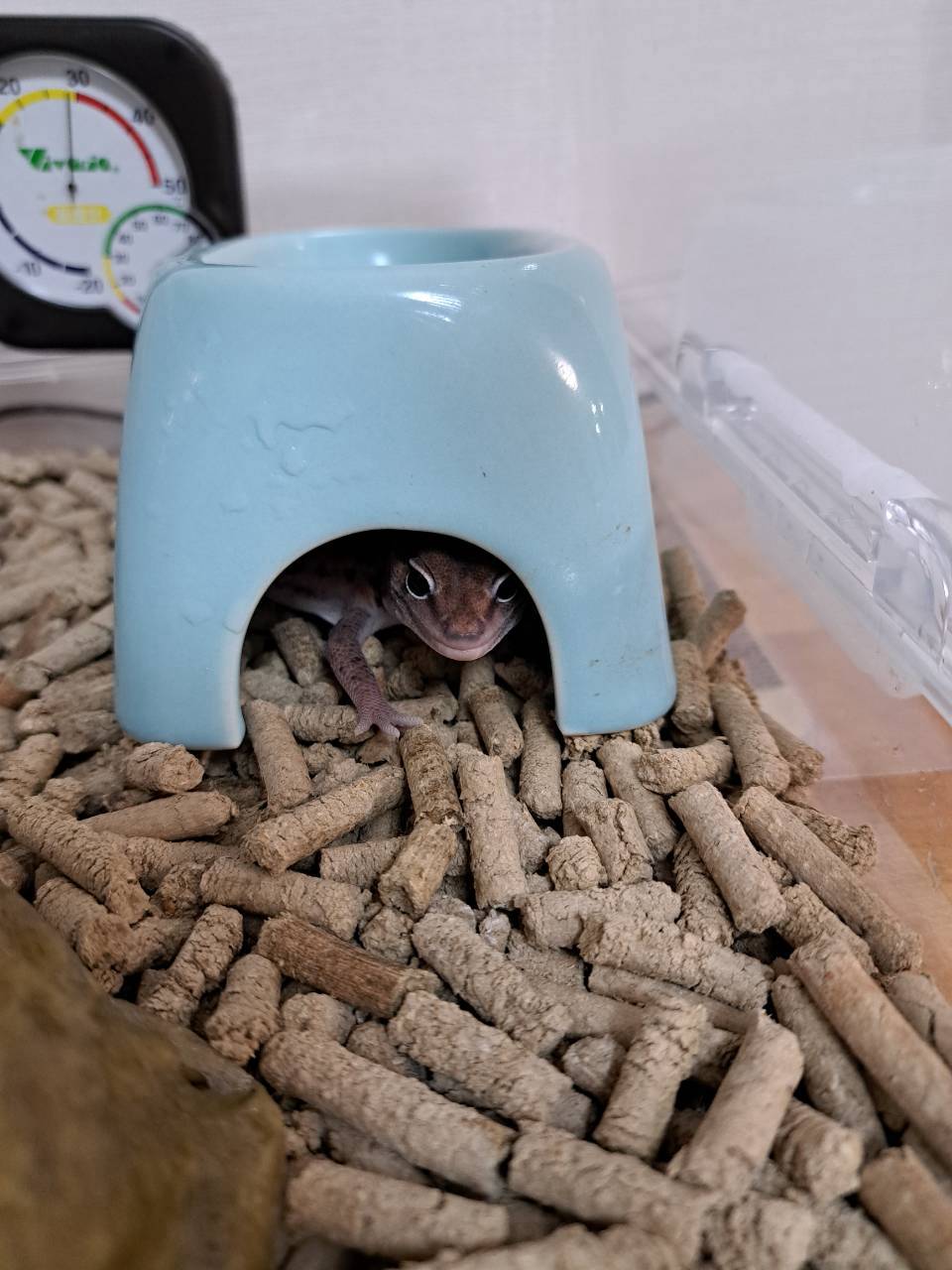
Daytime: at most, a face at the entrance now and then. This is everyday life
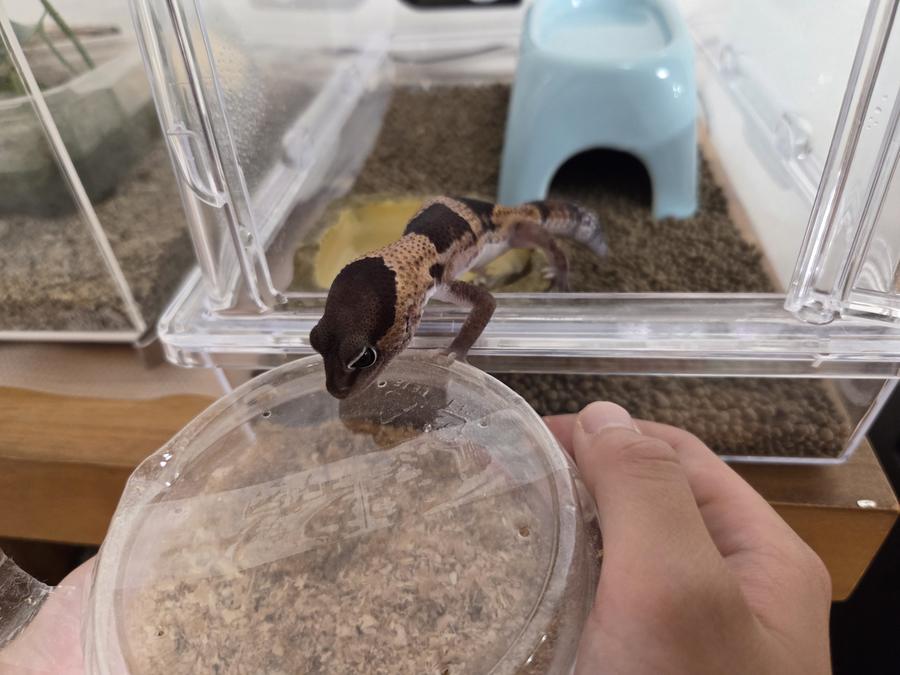
The moment he spots a cup of mealworms. Holding a cup of bugs and offering it: that's everyday feeding. Whether you can do this is the real dividing line
I was the one who wanted a reptile. My kid suggested a goldfish, which is what got me searching. I found the leopard gecko's vertical-slit pupil a little off-putting, and fat-tails with their big dark round-looking eyes won me over. On pickup day the shop staff brought out three, and in the end my kid pointed and said "that one." That's Ohagi.
Now my kid steadies him on the scale at weigh-ins and helps open the door on feeding days. Being calm and not a biter makes him a good animal for kids to help care for. Picking him up is a job for adults, though. Dropping him is the thing I'm most afraid of.
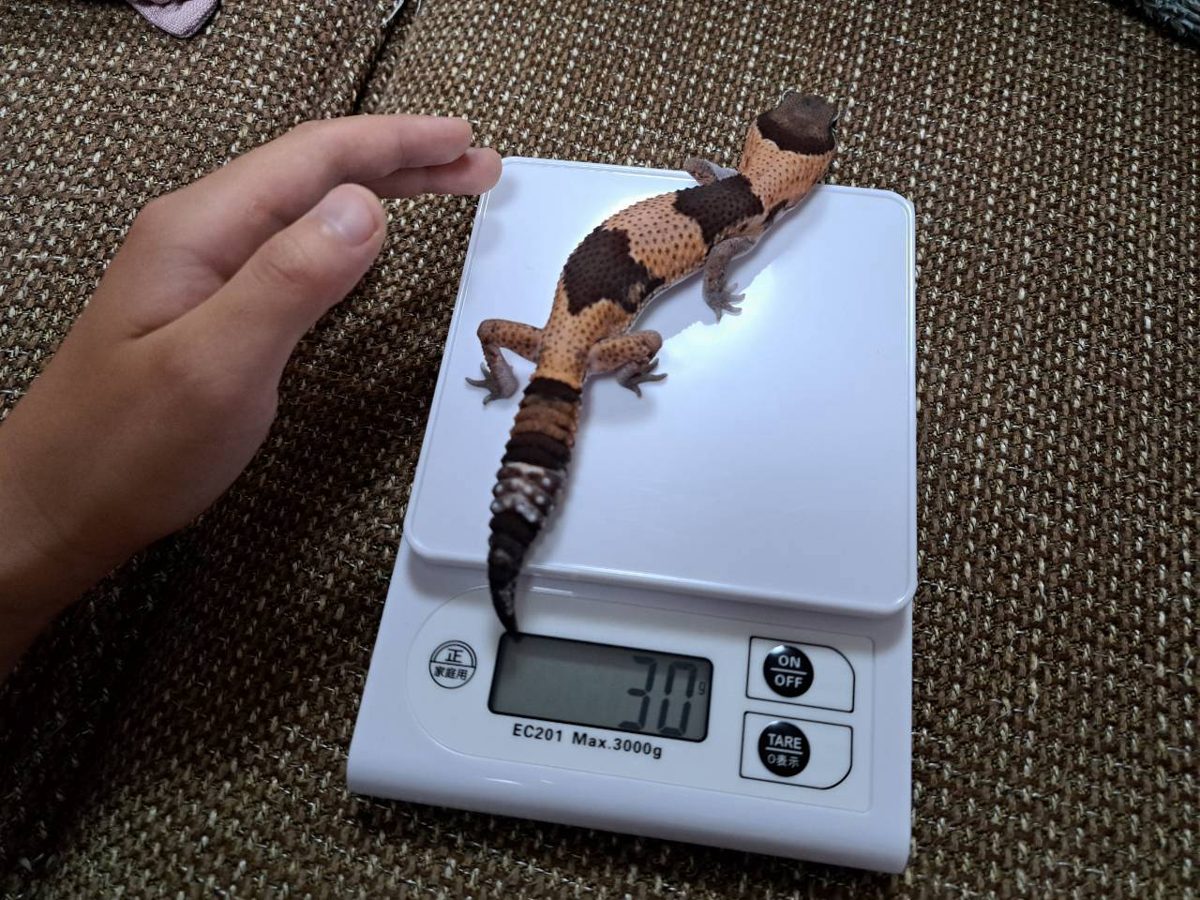
Weigh-ins are (partly) my kid's job. Because he's so calm, this is something we can do together
3. What it really costs, in money and time
| Item | Our reality |
|---|---|
| Startup gear (not counting the gecko) | Enclosure, heat mat, thermometer/hygrometer, hide, water dish, substrate: roughly 20,000–30,000 yen, or about $130–200 |
| The gecko | Depends on the shop and the animal. In Japan they cost more than leopard geckos, and named morphs cost more still |
| Monthly | Crickets plus a little electricity. About 1,000–2,000 yen ($7–14) |
| Time per day | A few minutes for water and a thermometer check. Ten minutes or so on feeding days. Under 20 minutes even with cleaning |
| Smell | The gecko himself is basically odorless. What you might notice is the gecko diet when you open the bag, and the cricket container |
4. Who they're for, and who they're not
| ✅ A good fit if you… | 🚫 Not a good fit if you… |
|---|---|
| Like quiet, mellow animals | Want to watch lots of daytime activity |
| Can handle live insects (or are willing to get used to them) | Can't do bugs, period |
| Can keep up a once-a-day misting | Live somewhere dry and don't want to deal with humidity |
| Can picture a 15-plus-year relationship | Expect big life changes within a few years |
| Have one shelf's worth of space | Have nowhere to put an enclosure (though 18 inches / 45 cm is enough) |
| Want to care for a pet together with your kids | Want the kids to do it alone (adults handle the lifting) |
My answer, one more time: "Yes, provided you know three things first. He's hidden during the day, you'll handle insects, and he needs humidity." If those three don't bother you, I'm not sure there's a friendlier first reptile than a fat-tail.
FAQ
- Fat-tail or leopard gecko for a beginner?
- Dry climate, leopard gecko; humid climate, fat-tail. That's my answer. The fat-tail is the calmer of the two. There's a full comparison article on this site.
- Can kids keep one?
- Kids can absolutely help. Feeding, water changes, and weigh-ins are things we do together. But picking him up and moving him should be an adult's job. Falls are the number-one accident.
- Can I keep one in an apartment?
- The enclosure is 12–18 inches (30–45 cm) wide, he makes no noise, and there's next to no smell. On space and noise, he's about as apartment-friendly as pets get. Do check your lease for pet rules.
- Won't he be lonely on his own?
- They're solitary animals, so one is the right number. Put two together and you get fights, not friendship. Loneliness isn't something they feel.
・Primary source: my own four months of keeping Ohagi, and my notes and photos, 2026
I keep Ohagi, an African fat-tailed gecko, at my home in Japan. Every photo here was taken in my home. Written from my own notes and photos, with AI helping me put it into English.